

Maddy summaryHB 2573 would exempt married individuals or surviving spouses claiming four or more dependent children from paying West Virginia state income tax starting in 2026. The bill applies to taxpayers filing as married or surviving spouse with four or more children who qualify as dependents under federal tax rules (26 U.S.C. §152(c)(1)). It directly affects families meeting these specific filing status and dependent child criteria, removing state income tax liability for their household income. The exemption takes effect for tax years beginning January 1, 2026, and applies to all subsequent years while the filer maintains the qualifying status.
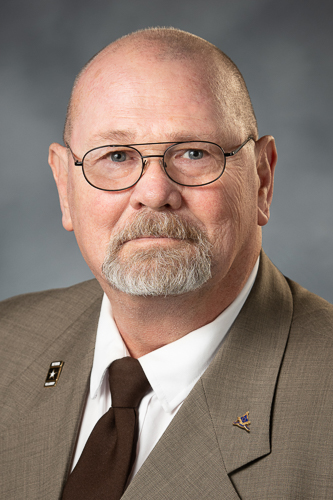
Del. Chuck Sheedy
Sponsored bills
Maddy summaryHB 2586 requires West Virginia to allocate 10% of state tax revenues from sales, excise, severance taxes, and other sources to county highway offices where those taxes were collected. This new funding, in addition to existing highway budgets, must be used to boost worker wages and replace aging equipment, with 2% specifically reserved for equipment replacement. The bill applies to all counties affected by tourism or mineral extraction activity. It becomes effective after the 2025 fiscal year.
Maddy summaryHB 2589 amends West Virginia law to specify how the Commissioner of Highways must handle asphalt grindings or millings removed from highway rights-of-way but not recycled for future projects. It requires these materials to remain the property of the Division of Highways and be stored at a designated site, with contractors only permitted to dispose of them to local residents along the project right-of-way. The bill explicitly prohibits contractors or any third parties from selling these materials for profit. This directly affects highway contractors, local districts, and residents near highway projects where asphalt waste is generated. The policy change clarifies disposal procedures without altering funding or creating new taxes.
Maddy summaryHB 2585 establishes a new merit-based personnel system for employees of the West Virginia Division of Highways (a unit within the Department of Transportation). The bill changes how these employees are classified and paid, setting wages for specific roles - like highway laborers, teamsters (truck drivers), and equipment operators - to match private industry rates for comparable jobs. It also mandates a $200 monthly wage increase annually for Highway employees based on years of service and specifies that employees terminated for failing drug or alcohol tests will not receive severance pay. This bill directly affects Division of Highways staff, including those in road maintenance, equipment operation, and support roles.
Maddy summaryHB 2526 requires West Virginia public schools to designate shared restrooms and changing areas exclusively for students based on the sex assigned at birth, as listed on their original birth certificate. It mandates that schools provide single-occupancy restrooms as a "reasonable accommodation" for students unable to use designated facilities, but prohibits access to restrooms designated for the opposite sex. Violations could result in fines up to $500 for school officials like principals or superintendents, with parents able to sue if students encounter opposite-sex individuals in designated areas without permission. The bill excludes accommodations needed under the Americans with Disabilities Act or for young children requiring physical assistance.
Maddy summaryHB 2588 (West Virginia, 2025) requires drivers operating any motor vehicle 10 miles per hour below the posted speed limit on public roads to display emergency flashers. This directly affects drivers who travel significantly slower than the posted speed, such as those navigating construction zones or slow-moving traffic. The bill mandates the use of flashers as a safety measure in these specific situations and imposes fines of up to $200 for violations (with escalating penalties for repeat offenses). The legislation focuses on a clear, observable safety mechanism without altering speed limits or traffic enforcement standards.
Maddy summaryHB 2581 removes a $10 application fee for honorably discharged veterans applying for special military license plates in West Virginia. The bill amends existing law (§17A-3-14b) to eliminate the exception that previously allowed the fee to be charged for this group, clarifying that no fee applies. This directly affects honorably discharged veterans seeking the "Veteran" plate, as they will no longer pay the $10 fee at application. The change corrects a drafting error in current law, making the existing fee exemption explicit. The bill does not create new benefits but ensures the exemption is properly applied.
Maddy summaryHB 2510 allows hunters to use drones equipped with thermal imaging to locate and recover legally harvested big game (black bear, deer, elk, and turkey) after a legal kill during open season. The bill requires drone operators to get landowner permission before flying, prohibits carrying weapons while drones are in use (except concealed firearms), and bans disturbing wildlife with drones. It exempts drone operators from hunting license requirements (as long as they didn’t kill the animal) and clarifies that drone-assisted recovery doesn’t count as "pursuing" wildlife under existing laws. This directly affects hunters using drones for recovery and landowners who control access to their property for drone operations.
Maddy summaryHB 2506 amends West Virginia law to expand vehicle registration fee exemptions for veterans. It lowers the required service-connected disability percentage from 100% to 50% or greater for veterans to qualify, and adds recipients of the Distinguished Service Cross, Navy Cross, or Air Force Cross to the list of eligible veterans. The bill directly affects veterans with qualifying disabilities or military honors who own non-commercial vehicles. Key provisions include modifying existing exemption criteria (§17A-10-8(5)) and adding new eligibility under subsection (7) for specific medal recipients. This change would allow more veterans to avoid paying annual vehicle registration fees.
Maddy summaryThis House Concurrent Resolution (HCR 38) is a West Virginia legislative resolution supporting the federal passage of the PRIME Act. The PRIME Act would amend federal law to allow farmers to sell custom-slaughtered meat (like beef, pork, or lamb) directly to consumers, restaurants, and stores within their state, without requiring processing at a federally inspected facility. This change would directly affect farmers seeking to sell locally and consumers wanting access to locally sourced meat. The resolution itself does not change any laws but urges the federal government to adopt this policy.