

Maddy summaryHB 2411 updates high school graduation requirements and revises academic content standards for public schools. It directly affects high school students, school districts, and educators by changing the specific courses and assessments needed for graduation. The bill modifies the existing standards to align with updated educational goals, requiring schools to adjust their curriculum and assessment methods accordingly. This law became effective upon the Governor's approval on April 30, 2025.
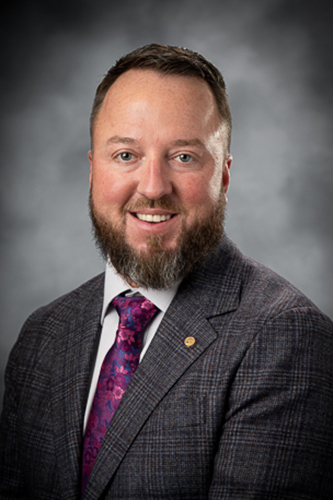
Rep. Jonathan Kyle
Sponsored bills
Maddy summaryHB 3166 requires public school districts to create and annually update detailed safety maps for all school buildings. These maps must show emergency exits, security cameras, communication systems, and other safety features, and be made available to law enforcement upon request. The bill directly affects all public school districts in the state by mandating this standardized safety documentation. It became law on April 29, 2025, after approval by the governor.
Maddy summaryHB 2963 requires that after a bank merger, reorganization, purchase, or assumption of liabilities in West Virginia, the surviving bank entity must be insured by the Federal Deposit Insurance Corporation (FDIC). This directly affects banks undergoing such ownership changes, ensuring depositors' funds remain protected under FDIC insurance without interruption. The bill mandates that the surviving bank maintain FDIC coverage as part of the transaction process, preventing gaps in insurance that could occur during ownership transitions. It does not create new insurance programs but clarifies existing requirements for bank continuity.
Maddy summaryThis symbolic resolution designates November 7th annually as "Pastor Appreciation Day" in West Virginia. It honors clergy members for their community service, spiritual leadership, and roles in life events like weddings, funerals, and disaster response. The resolution does not create new laws, funding, or obligations - it serves solely as ceremonial recognition. It affects no specific individuals or policies, as it is a non-binding declaration of appreciation.
Maddy summaryHCR 99 is a legislative resolution requesting the Joint Standing Committee on the Judiciary to study policies preventing financial fraud and scams in West Virginia. It directs the committee to examine current state laws, review national approaches, and focus on four key areas: reducing robocalls and spoofing, addressing cryptocurrency-related scams (noting $1.4 million in losses in 2023), improving victim restitution, and protecting against property title fraud. The resolution cites data showing 8,000 West Virginians lost $27 million to fraud in 2024, with national losses exceeding $12.5 billion. The committee must report findings and recommendations to the legislature, governor, and attorney general by December 31, 2025. This is a study resolution, not a law, and does not create immediate policy changes.
Maddy summaryHCR 88 is a ceremonial resolution honoring two West Virginia first responders nominated for the Medal of Valor. It specifically recognizes Captain Donald Lawson (New Martinsville Police) for rescuing two people from carbon monoxide poisoning despite his own hospitalization, and Darrell Lambert (Lake Volunteer Firefighter) for entering a burning building without protective gear to save a trapped resident, sustaining burns in the process. The resolution formally confirms the Legislature's approval of their award and directs the House Clerk to send a copy to Governor Morrisey. This is a symbolic honor with no new policy or funding changes, directly affecting only these two nominees. It passed unanimously in both chambers on April 3, 2025.
Maddy summaryHCR 78 is a non-binding resolution urging West Virginia's Division of Highways to prioritize completing I-73 (the "King Coal Highway") across Wayne, Mingo, McDowell, Mercer, and Wyoming counties. It requests the highway agency treat the project as a high priority to improve economic development and emergency access, especially after recent flooding exposed transportation challenges in the region. The resolution asks the state to provide necessary funding and executive support to expedite the highway's completion but does not allocate new funds or create new law. It directly affects the Division of Highways and residents of the five specified counties by formally advocating for this infrastructure project.
Maddy summaryHB 3276 establishes a standardized process for water and sewer utilities in West Virginia to request rate increases from the state Public Service Commission. It requires utilities to follow a defined timeline and procedural steps when seeking rate adjustments, ensuring consistency and transparency. The bill directly affects water and sewer companies operating in the state and their customers, who pay utility bills. This change aims to create a fairer, more predictable system for rate reviews without specifying particular rate amounts.
Maddy summaryHB 2922, the Safer Communities Act, allows West Virginia counties to impose a public safety sales or amusement tax of up to 1% on qualifying purchases, subject to voter approval via referendum. It directly affects counties that meet specific requirements (e.g., current on state fees, utilizing maximum millage rates, and having fire/EMS levies). The tax funds public safety services, emergency response, and school resource officers in unincorporated areas, while excluding municipalities already in the Municipal Home Rule Program or with existing amusement taxes. Counties must notify state tax officials 180 days before implementing the tax.
Maddy summaryHB 2736 creates an Underground Facilities Damage Prevention Board to enforce rules preventing damage to underground utility lines during excavation. It directly affects excavators (e.g., construction crews) and operators of underground facilities (e.g., gas, water, or telecom companies). The bill establishes the board’s authority to investigate damage incidents, assess civil penalties, require training, and collect fines - which must be retained by the board (not the state general fund) for its operations. Key provisions clarify definitions of "damage," "excavation," and "underground facility" to standardize reporting and safety protocols. The law aims to reduce accidental utility line strikes during digging projects.