

Maddy summaryHB 4446 establishes a four-year pilot program in Kanawha, Ohio, Mineral, and Raleigh counties to provide free Fire Fighter I and II training through community colleges. It directly affects eligible high school and college students in those counties by covering tuition and fees for courses meeting West Virginia State Fire Commission standards. The program requires each county to provide at least one certified fire service instructor, funded by the Higher Education Policy Commission, with annual reports tracking participation, certifications earned, costs, and student employment. The pilot runs from July 2026 through June 2030, with mandatory evaluations to determine future expansion or termination.
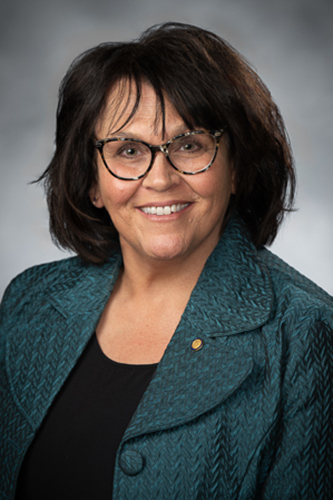
Del. Lori Dittman
Sponsored bills
Maddy summaryHB 5172 establishes the Low Earth Orbit (LEO) Broadband Internet Connection Fund to install LEO satellite equipment at locations already designated for broadband deployment under existing state grant programs. The fund, managed by the West Virginia Department of Commerce, will use state appropriations, grants, and interest earnings to cover installation costs. It provides immediate internet access through LEO connections - though with different speed and latency than traditional broadband - while waiting for full statewide broadband deployment to complete. The fund’s money remains available annually without reverting to general state revenue.
Maddy summaryHB 5104 requires parolees or probationers identified through a standardized risk assessment as having a history of substance abuse to participate in approved support services for a minimum of 60 days. This applies specifically to individuals under supervision whose assessment (mandated under §62-12-6) confirms substance abuse history. The bill adds this as a mandatory condition of release under §62-12-17(a)(4), with participation schedules approved by probation or parole officers. It directly affects individuals on parole or probation in West Virginia whose substance abuse history is documented via the court-mandated assessment process.
Maddy summaryHB 5107 requires West Virginia courts to verify specific conditions before returning a child to a home where they were previously removed due to abuse or neglect. The bill mandates courts confirm that child welfare agencies made reasonable efforts to preserve the family, provided reasonable accommodations for parents with disabilities (per the Americans with Disabilities Act), and documented why reunification isn't safe or appropriate. This applies to all cases where a child is being considered for return home after removal, affecting courts, child welfare departments, parents, and the children involved. The law aims to ensure safety and proper planning before reunification decisions are made.
Maddy summaryThis is a symbolic House Resolution (not a bill), introduced by multiple West Virginia delegates. It designates the month of June as "Fidelity Month" to promote the values of faith, family, and patriotism across the state. The resolution cites declining support for these values in polling and research, and calls for the state to "rededicate" itself to them during June. It has no binding policy requirements or direct impact on specific groups; it is purely a commemorative gesture.
Maddy summaryThis West Virginia House resolution states that the U.S. national debt (over $38 trillion in 2026) poses a national security threat, citing foreign debt ownership, projected Social Security/Medicare shortfalls, and warnings from military/intelligence leaders. It urges Congress to establish regular budgeting procedures but does not create new laws or alter federal spending. As a symbolic resolution, it has no direct legal effect on national debt policy or federal budgets. The resolution focuses on raising awareness rather than implementing concrete changes.
Maddy summaryHB 5098 creates West Virginia's "Mobile ID Act," establishing a program to provide in-home and long-term care facility visits for state-issued identification cards and driver licenses. It directly affects West Virginia residents with medical conditions or disabilities preventing travel to DMV offices, as verified by a licensed medical provider, and those residing in licensed long-term care facilities. The bill requires the DMV to offer these services with two-person visits for safety, schedule appointments within 30 days of request, and maintain medical certification standards. It does not waive existing ID verification or Real ID requirements but mandates rulemaking for application processes, staffing, fees, and annual reporting starting in 2027.
Maddy summaryHB 4508, the Public Utility Stability Act, allows publicly owned water and sewer utilities (like city or county systems) to automatically increase rates annually without needing commission approval or local government ordinances. The bill sets rate increases equal to the annual change in the U.S. Bureau of Labor Statistics' Water and Sewerage Maintenance Index, calculated between specific September dates. Utilities must file revised tariffs and provide notice, but increases matching the index are considered fair and reasonable. Smaller utilities (under 4,500 customers or $3 million revenue) face limited commission review if increases exceed the index, while larger systems may be reviewed by county commissions. The bill aims to simplify rate adjustments tied to inflation for essential water and sewer services.
Maddy summaryHB 4152, the Workforce-Education Partnership Act, allows West Virginia business owners to contract employees to vocational programs or high school classes while the employees retain full-time status and benefits. Businesses receive a 100% tax credit on wages paid during participation, capped at $50,000 per business annually and $5 million statewide yearly. Employees must meet program qualifications and cannot replace certified teachers in core subjects, but may provide specialized training in fields like trade skills or healthcare. The law ensures fiscal responsibility through strict caps and uses existing state resources to minimize administrative costs.
Maddy summaryHB 4467 amends West Virginia law to allow pregnant employees and new mothers working in public school systems to use their existing sick leave bank for maternity leave. It specifically prohibits county school boards from banning this use of sick leave for maternity purposes. The bill clarifies that school employees may contribute up to two days of personal leave annually to the sick leave bank, but cannot be forced to contribute. This policy change directly affects all full-time public school employees in West Virginia who are pregnant or have newborn children.