

Maddy summaryHB 3374 would increase state funding for rural West Virginia schools serving students with individualized education plans (IEPs). It specifically raises the per-child funding ratio from the current standard to a 3:1 student-to-staff ratio for these students in rural counties. This change would directly affect rural school districts and their students with IEPs by providing additional resources to support specialized educational needs. The bill amends education funding formulas to adjust how these schools receive state funds based on enrollment of students requiring IEPs.
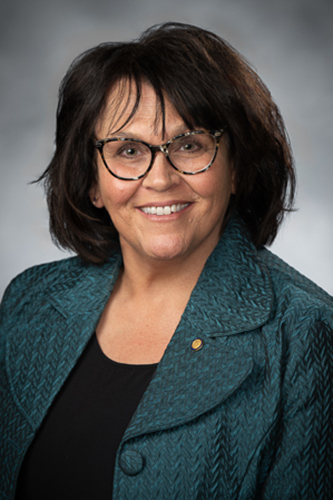
Del. Lori Dittman
Sponsored bills
Maddy summaryHB 3383 creates the Great Expectations Pilot Program to support West Virginia youth aging out of foster care in transitioning to community college. The program pairs eligible foster youth (those who were in foster care when earning their high school diploma or GED) with full-time coaches at a single community college, who provide personalized guidance on college applications, financial aid, transportation, career planning, and accessing support services. It allocates $95,000 annually from state general revenue to cover the coach's salary, benefits, and program resources. The three-year pilot, starting September 2025 at one college, will be evaluated in 2029 to determine potential statewide expansion.
Maddy summaryHB 2934 requires West Virginia's child welfare department to prioritize housing applications (like HUD or government-assisted housing) for youth aging out of foster care who have turned 18 and do not qualify for transitional living services. The bill amends §49-2-129 to mandate that housing search policies ensure dwellings are safe, affordable, and equipped for basic needs like cooking and emergency communication. It directly affects foster youth aged 18+ transitioning to independent living, who often face housing instability. The key mechanism is the new priority system for housing applications, replacing previous eligibility criteria for this vulnerable group.
Maddy summaryHB 3329 amends West Virginia law to strengthen penalties for sex offenses against children under 12 and for filming minors in sexually explicit conduct. It mandates prison sentences without probation for sex offenses involving force, weapons, or moving the victim, with a minimum 20-year sentence for first offenses. Repeat offenders face life imprisonment without parole. The bill also increases penalties for filming minors in sexually explicit conduct, imposing fines up to $10,000 or up to 10 years in prison for violations.
Maddy summaryHB 3314 would require West Virginia to pay teachers in grades 7-12 an additional $25 per day for each student in their class beyond a 30-student limit, effective for the 2024-2025 school year. This applies to core academic classes but excludes physical education, band, chorus, strings, theater, dance, and other artistic performance courses. The bill amends the state's teacher salary schedule to add this incremental pay for qualifying large classes, without changing base salary rates. It directly affects middle and high school teachers in subject areas with class sizes exceeding 30 students during the 2024-2025 school year.
Maddy summaryHB 3315 adds two new salary increments to West Virginia's teacher pay scale: "Bachelor's Plus 30" (for teachers with a bachelor's degree and 30+ years of experience) and "Master's Plus 60" (for those with a master's degree and 60+ years of experience). These new salary steps will be included in the existing State Minimum Salary Schedule, effective for the 2024-2025 school year and beyond. The bill directly affects teachers who meet these specific degree and experience thresholds, providing them with higher salary placement without altering current pay levels for other experience ranges. It creates two additional columns in the salary table to reflect these new pay tiers for eligible educators.
Maddy summaryHB 2697 prohibits all state-funded colleges, universities, and community colleges in West Virginia from charging students, former students, or graduates for academic transcripts. The bill directly affects these institutions and their students by banning transcript fees as a standard practice. Key provision: It amends state law to explicitly state that no such institution may impose a fee for issuing transcripts. This is a concrete policy change eliminating a common administrative cost for students. The bill does not alter other fees or services.
Maddy summaryHB 3066 requires West Virginia's Corrections Commissioner to create an "Orange Alert" system that notifies registered crime victims within a 40-mile radius when a prisoner escapes or is released from a state correctional facility or jail. Victims must proactively register to receive these alerts, with registration details published in local newspapers. The bill mandates this system for all state correctional facilities and jails, making registration the victim's responsibility rather than automatic notification. This policy change establishes a formal notification framework but does not require automatic alerts for all victims.
Maddy summaryHB 3254 establishes the Summer Feeding for All Program to ensure West Virginia students have access to nutritious meals during summer and other non-school periods. It requires each county public school system to conduct an annual survey of students' food access when school is closed and compile a list of community food resources (including charities and religious groups) for families. County school boards may develop local initiatives - such as mentorship programs or entrepreneurship opportunities - to deliver meals and must provide training for feeding site operators. They are also required to report survey results and program activities annually to the West Virginia Office of Child Nutrition.
Maddy summaryHB 3210 modifies West Virginia public school teachers' personal leave procedures. It increases the annual leave without cause from four to five days (effective July 2023) and requires teachers to arrange substitute coverage at least seven days in advance for non-consecutive days off. The bill mandates county school boards to establish leave banks where teachers can contribute up to two days of leave annually, available only to active teachers with fewer than five accumulated days. It also sets rules for principal approval of leave requests (denying if 15% of staff or three employees have already requested the same day) and coordinates leave with workers' compensation benefits.