

Maddy summaryHCR 78 is a non-binding resolution urging West Virginia's Division of Highways to prioritize completing I-73 (the "King Coal Highway") across Wayne, Mingo, McDowell, Mercer, and Wyoming counties. It requests the highway agency treat the project as a high priority to improve economic development and emergency access, especially after recent flooding exposed transportation challenges in the region. The resolution asks the state to provide necessary funding and executive support to expedite the highway's completion but does not allocate new funds or create new law. It directly affects the Division of Highways and residents of the five specified counties by formally advocating for this infrastructure project.
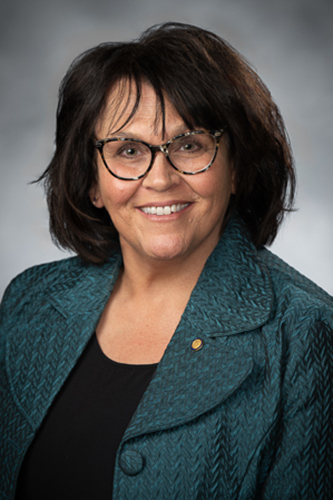
Del. Lori Dittman
Sponsored bills
Maddy summaryHCR 70 is a concurrent resolution requesting the West Virginia Division of Highways name Reedy Bridge (WV 14 over Reedy Creek in Roane County, coordinates 38.90043, -81.42299) the "U.S. Revolutionary War Patriot Private Patrick Board Memorial Bridge." It directly affects the bridge's official designation and signage, commemorating Patrick Board, a Revolutionary War soldier who farmed land granted for his service. The resolution asks the Division of Highways to implement the name change and install identifying signs. This is a commemorative measure with no substantive policy changes beyond the bridge's naming.
Maddy summaryHB 3150 amends West Virginia's medical student loan program to replace scholarship language with loan repayment terms for health science and mental health providers. It clarifies that medical student loans - maxing at $10,000-$20,000 annually for up to four years - will prioritize West Virginia residents, require service in designated shortage areas, and mandate direct payments from the state commission to federal loan servicers. The bill removes licensure requirements for repayment eligibility and updates definitions to align with current health workforce needs, such as specifying "approved service commitment areas" as locations meeting both geographic and specialty shortages. These changes aim to streamline loan administration and better target support for health professionals in underserved communities.
Maddy summaryHB 2514 is a procedural bill that removes outdated references in West Virginia law to two specific one-time reports already submitted to the Legislative Oversight Commission on Education. The bill amends sections of the education code (§18-2-7f and §18-2E-10) that previously required reporting on extended learning programs and early literacy support systems. It does not change any program requirements or student eligibility - it only eliminates redundant reporting language for reports that have already been provided. This is a technical cleanup measure with no direct impact on schools, students, or program operations.
Maddy summaryHB 3438, titled the "Connor Drennan Substitute Teachers' Act," allows retired teachers with specialties in math, science, STEM fields, English, or foreign languages to work as long-term substitutes for up to 180 days per academic year without losing retirement benefits. It directly affects retired educators in these high-need subject areas who fill substitute roles, preventing disruptions to student learning when substitutes must leave due to prior retirement pay restrictions. The bill amends retirement rules to set a clear 180-day limit for such substitute work (up from 140 days) and clarifies that employers won’t make additional retirement contributions during this period. Retired teachers may choose to contribute to their retirement from substitute earnings, but it’s not required. This change aims to stabilize classrooms by retaining qualified retired teachers in critical subject areas.
Maddy summaryHouse Resolution 12 urges West Virginia's members of Congress to oppose a potential federal funding cut for the Local Food for Schools and Child Care (LFSCC) program. The LFSCC program provided $660 million over three years to help schools and child care sites purchase locally grown food, directly supporting farmers, ranchers, and local food businesses. This resolution expresses concern that terminating the program would harm rural economies and child nutrition efforts, as the funding was specifically used for fresh, minimally processed foods in school meals. The resolution does not create new policy but requests action from West Virginia's congressional delegation to preserve existing funding.
Maddy summaryHB 3507 requires counties participating in a 10-county pilot program to ensure every public school has at least one qualified mental health professional (QMHP). A QMHP is defined as a professional registered with the West Virginia Board of Examiners in Counseling, and the bill explicitly classifies school counselors as QMHPs for this purpose. The pilot program, to be administered by the Legislative Oversight Commission on Education and Accountability, will operate for two years in 10 designated counties. This policy change directly affects public school students and staff in those 10 counties by mandating mental health support access in every school. The bill does not apply statewide but is limited to the designated pilot counties.
Maddy summaryHB 3508 modifies West Virginia's school funding formula to provide increased support for public schools in rural counties with low population density. It adjusts how "net enrollment" is calculated for counties where student population density is low (specifically, counties with fewer than 1,400 students), using a formula that accounts for the ratio of students to square miles. This adjustment increases funding for these counties by effectively raising their calculated enrollment, with a specific provision also giving special education enrollment a 1.5 weighting for funding special education aides. The bill directly affects school districts in rural areas, particularly those with sparse populations, by changing the calculation method used to distribute state education funds.
Maddy summaryHCR 40 is a resolution directing West Virginia's Economic Development Authority to identify land near Flatwoods for a tourism and entertainment complex modeled after attractions like Pigeon Forge, Tennessee. It requires the Authority to locate suitable sites, secure funding, and recruit private and public developers to build facilities for tourism, entertainment, and amusement. The bill specifically targets the Flatwoods area near Interstate 79 exit 67, citing its central location and access to major regional cities. This resolution aims to replicate economic benefits seen in neighboring states through new tourism infrastructure, directly affecting Flatwoods and surrounding communities.
Maddy summaryHB 3086 establishes a minimum net enrollment requirement of 1,200 students for West Virginia counties to receive full state school funding. It directly affects smaller counties with fewer than 1,400 students, requiring their enrollment numbers to be adjusted upward to meet this minimum for funding calculations. The bill amends the school aid formula to ensure counties below 1,400 students receive funding based on the adjusted minimum, using a population density calculation to determine the adjustment amount. This policy change modifies how state education funds are distributed to counties with low student populations.