

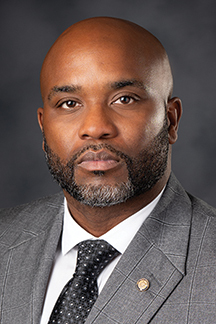
Photo of Hollis Lewis
D West Virginia House of Delegates · District 57 On the 2026 ballot

Del. Hollis Lewis

Compare
Total votes
2,380
all sessions
Attendance
99%
35 missed
Near the chamber average
With party
97%
of cast votes
Higher than 79% of chamber peers
Bipartisan score
2%
crosses aisle rarely
Lower than 85% of chamber peers
Sponsored
170
bills & resolutions
Near the chamber average
Committees
6
assignments
170 bills and resolutions

Sponsored bills

Total
170
Primary
12
Co-sponsor
158
This page
170
matching current filters
Co-sponsor HR 9
Passed · West Virginia House of Delegates · Co-sponsor
Honoring the life and public service of the Honorable Douglas John Skaff Jr.

Maddy summaryHR 9 is a ceremonial resolution honoring the late West Virginia House Delegate Douglas John Skaff Jr. It expresses the House of Delegates' condolences to his family and commemorates his service, including his roles as a delegate representing multiple districts and as Minority Leader. The resolution has no policy impact - it is purely symbolic, acknowledging his career in public service, business, and community leadership. It was unanimously adopted by the House on February 5, 2026, the same day it was introduced.

Passed Feb 5, 2026 1 co-sponsor
Co-sponsor HB 5269
In committee · West Virginia House of Delegates · Co-sponsor
The Young Professional Tax Credits

Maddy summaryHB 5269 creates two tax credits for West Virginia residents aged 18-40 who are college graduates. It provides a credit equal to accumulated student loan interest (or up to $1,000 annually for graduates without debt) and a refundable child care credit tied to federal dependent care deductions. To qualify, taxpayers must reside in West Virginia for at least three years and have student loan debt (or be debt-free). The credits apply to tax years beginning January 1, 2026, reducing state income tax liability for eligible individuals.

In committee Feb 5, 2026 1 co-sponsor
Primary HB 5178
In committee · West Virginia House of Delegates · Lead sponsor
To provide asset preservation for minors who earn income from artistic or creative services for us of their name, image, or likeness

Maddy summaryHB 5178 requires employers to deposit 15% of a minor’s gross earnings from artistic/creative work (like acting, music, or content creation) or name/image/likeness (NIL) use into a blocked trust account. It directly affects minors under 18 who earn income through these activities, including social media content creators and student-athletes. The funds remain inaccessible until the minor turns 18, with employers mandated to provide monthly records to parents/guardians and open the account within 7 business days of qualifying activity. The bill also specifies that independent content creators are excluded from these requirements.

In committee Feb 4, 2026 0 co-sponsors
Co-sponsor HB 5183
In committee · West Virginia House of Delegates · Co-sponsor
Directing the Supreme Court of Appeals to create a pilot domestic violence court in Kanawha County

Maddy summaryHB 5183 directs West Virginia’s Supreme Court of Appeals to establish a single pilot domestic violence court in Kanawha County. This specialized court would handle specific misdemeanor domestic violence cases involving family or household members, including violations of laws related to assault, protective orders, and related offenses. The Supreme Court must collect data on the court’s effectiveness and report findings to lawmakers by 2027 and 2028. The pilot is limited to Kanawha County and applies only to misdemeanor cases (felony cases require a circuit judge).

In committee Feb 4, 2026 1 co-sponsor
Co-sponsor HB 5181
In committee · West Virginia House of Delegates · Co-sponsor
Relating to removing the Certificate of Need moratorium on opioid treatment facilities

Maddy summaryThis bill repeals a law that paused Certificate of Need (CON) requirements for opioid treatment facilities. By removing the moratorium, it ends the temporary exemption allowing these facilities to bypass state approval for expansion. Now, opioid treatment centers in West Virginia would need to obtain a Certificate of Need before expanding services or opening new locations. This directly affects opioid treatment facilities seeking to grow or add services within the state.

In committee Feb 4, 2026 1 co-sponsor
Co-sponsor HB 5184
In committee · West Virginia House of Delegates · Co-sponsor
Prohibiting expanding drug and alcohol treatment facilities and services in certain counties

Maddy summaryHB 5184 would prohibit adding new licensed substance abuse treatment beds in any West Virginia county that already has more than 250 such beds. This directly affects counties meeting that bed threshold by restricting the expansion of drug and alcohol treatment facilities. The bill amends existing law to specifically bar new bed additions in these high-capacity counties, while exempting certain approved clinical trials for opioid treatment programs. It does not change rules for counties with fewer than 250 beds or affect existing facilities. The change creates a clear threshold limiting new treatment capacity in areas already serving high demand.

In committee Feb 4, 2026 1 co-sponsor
Co-sponsor HB 5094
In committee · West Virginia House of Delegates · Co-sponsor
Prohibiting the private ownership or operation of a prison

Maddy summaryHB 5094 bans private ownership and operation of prisons in West Virginia, effective July 1, 2026. The bill prohibits private companies from running correctional facilities, removing existing approval requirements for private prison operations that would otherwise apply. It explicitly allows state-run facilities and specifies that foreign court inmates sentenced abroad cannot be held in private prisons. This directly affects private prison companies operating in West Virginia and changes the state's correctional system by eliminating private contracting for prison management.

In committee Feb 3, 2026 1 co-sponsor
Co-sponsor HB 5092
In committee · West Virginia House of Delegates · Co-sponsor
Relating to certification of a patient’s eligibility for medical cannabis

Maddy summaryHB 5092 clarifies definitions and eligibility rules for West Virginia's medical cannabis program. It revises the definition of "patient" to require a serious medical condition, meeting certification requirements, and state residency, while updating terms like "certified medical use" and "caregiver." The bill focuses on standardizing terminology in existing law rather than changing who qualifies for medical cannabis. It does not establish new eligibility criteria or alter access for current patients. This definitional update aims to improve consistency in how the program's rules are applied.

In committee Feb 3, 2026 1 co-sponsor
Co-sponsor HB 5093
In committee · West Virginia House of Delegates · Co-sponsor
Permitting certain felons to work in licensed behavioral health facilities

Maddy summaryHB 5093 allows individuals convicted of nonviolent felonies to work in licensed behavioral health facilities after completing their criminal sentences, provided they meet conditions set by new rules. The West Virginia Department of Health must create these rules for legislative approval, focusing on patient and staff safety while not overriding existing professional licensing requirements under Chapter 30. The bill directly affects formerly incarcerated individuals seeking employment in this sector and facilities that hire them. It requires specific safety-focused regulations but does not change current licensing standards for regulated professions.

In committee Feb 3, 2026 1 co-sponsor
Co-sponsor HB 5095
In committee · West Virginia House of Delegates · Co-sponsor
Providing tax credits to provide vehicles to certain persons

Maddy summaryHB 5095 provides tax credits to help low-income workers access reliable vehicles by supporting charitable programs. It allows individual donors who give vehicles to qualified charities to claim up to $6,000 per vehicle (based on fair market value), and licensed auto dealers who sell/donate eligible vehicles through these programs to claim up to $6,000 per vehicle (based on price reductions). Vehicles must meet strict safety standards (no salvage titles, no open recalls, 90-day warranty) and be certified by nonprofits that provide affordable financing, financial counseling, and vehicle safety checks for households earning at or below 150% of the federal poverty level. The program is capped at $300,000 annually for 2026-2027 and $1 million thereafter, with the Tax Commissioner tracking credit usage and allocating funds among qualifying charities.

In committee Feb 3, 2026 1 co-sponsor
Showing 41 to 50 of 170 bills
Previous 1 … 4 5 6 … 17 Next