

Maddy summaryHB 5186, the West Virginia Public Participation Act, creates a legal process to dismiss lawsuits filed against individuals or groups for speaking out on public issues. It directly affects citizens, activists, journalists, and organizations who engage in protected speech about matters like health, safety, government, or community well-being. The bill allows defendants to file a motion to dismiss within 60 days if a lawsuit targets their lawful exercise of free speech, petitioning, or association on a public concern, requiring an expedited court hearing. If dismissed, the plaintiff may face penalties including attorney fees. The law aims to prevent "strategic lawsuits" meant to silence public participation, while still allowing valid claims for actual harm.
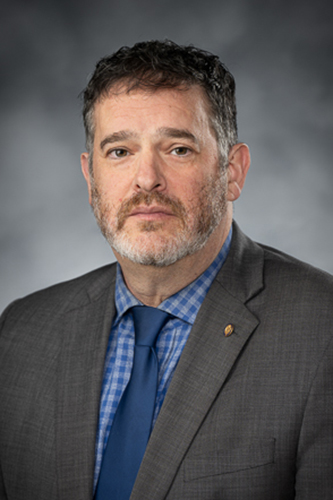
Del. Mike Pushkin
Sponsored bills
Maddy summaryHB 5183 directs West Virginia’s Supreme Court of Appeals to establish a single pilot domestic violence court in Kanawha County. This specialized court would handle specific misdemeanor domestic violence cases involving family or household members, including violations of laws related to assault, protective orders, and related offenses. The Supreme Court must collect data on the court’s effectiveness and report findings to lawmakers by 2027 and 2028. The pilot is limited to Kanawha County and applies only to misdemeanor cases (felony cases require a circuit judge).
Maddy summaryHB 5185 requires most health insurance plans in West Virginia to cover contraceptive drugs, devices, and related services without cost-sharing (like copays or deductibles) for enrollees. It mandates coverage for all FDA-approved contraceptives (including therapeutic equivalents), up to a 12-month supply at once, and includes sterilization procedures, counseling, and follow-up care. The law applies to plans renewed or delivered on or after January 1, 2027, and does not affect coverage for contraceptives prescribed for non-contraceptive medical reasons (e.g., treating ovarian cancer). This bill directly affects health insurance plans and their enrollees, excluding dependent children from the definition of "covered person."
Maddy summaryHB 5188 allows certified patients and their caregivers to legally possess and smoke medical cannabis in West Virginia under specific conditions. It authorizes only certain forms (like pills, oils, topicals, vaporized products, and flowers), prohibits dry leaf/plant forms initially, and requires identification cards issued by the state bureau. Certified patients may have up to two caregivers, who can serve no more than five patients each. The bill explicitly permits smoking - previously prohibited under state law - and mandates that unused cannabis remain in original packaging. It affects only those with valid medical cannabis certifications and identification cards.
Maddy summaryThis bill repeals a law that paused Certificate of Need (CON) requirements for opioid treatment facilities. By removing the moratorium, it ends the temporary exemption allowing these facilities to bypass state approval for expansion. Now, opioid treatment centers in West Virginia would need to obtain a Certificate of Need before expanding services or opening new locations. This directly affects opioid treatment facilities seeking to grow or add services within the state.
Maddy summaryHB 5184 would prohibit adding new licensed substance abuse treatment beds in any West Virginia county that already has more than 250 such beds. This directly affects counties meeting that bed threshold by restricting the expansion of drug and alcohol treatment facilities. The bill amends existing law to specifically bar new bed additions in these high-capacity counties, while exempting certain approved clinical trials for opioid treatment programs. It does not change rules for counties with fewer than 250 beds or affect existing facilities. The change creates a clear threshold limiting new treatment capacity in areas already serving high demand.
Maddy summaryHB 5094 bans private ownership and operation of prisons in West Virginia, effective July 1, 2026. The bill prohibits private companies from running correctional facilities, removing existing approval requirements for private prison operations that would otherwise apply. It explicitly allows state-run facilities and specifies that foreign court inmates sentenced abroad cannot be held in private prisons. This directly affects private prison companies operating in West Virginia and changes the state's correctional system by eliminating private contracting for prison management.
Maddy summaryHB 5092 clarifies definitions and eligibility rules for West Virginia's medical cannabis program. It revises the definition of "patient" to require a serious medical condition, meeting certification requirements, and state residency, while updating terms like "certified medical use" and "caregiver." The bill focuses on standardizing terminology in existing law rather than changing who qualifies for medical cannabis. It does not establish new eligibility criteria or alter access for current patients. This definitional update aims to improve consistency in how the program's rules are applied.
Maddy summaryHB 5093 allows individuals convicted of nonviolent felonies to work in licensed behavioral health facilities after completing their criminal sentences, provided they meet conditions set by new rules. The West Virginia Department of Health must create these rules for legislative approval, focusing on patient and staff safety while not overriding existing professional licensing requirements under Chapter 30. The bill directly affects formerly incarcerated individuals seeking employment in this sector and facilities that hire them. It requires specific safety-focused regulations but does not change current licensing standards for regulated professions.
Maddy summaryHB 5095 provides tax credits to help low-income workers access reliable vehicles by supporting charitable programs. It allows individual donors who give vehicles to qualified charities to claim up to $6,000 per vehicle (based on fair market value), and licensed auto dealers who sell/donate eligible vehicles through these programs to claim up to $6,000 per vehicle (based on price reductions). Vehicles must meet strict safety standards (no salvage titles, no open recalls, 90-day warranty) and be certified by nonprofits that provide affordable financing, financial counseling, and vehicle safety checks for households earning at or below 150% of the federal poverty level. The program is capped at $300,000 annually for 2026-2027 and $1 million thereafter, with the Tax Commissioner tracking credit usage and allocating funds among qualifying charities.