

Maddy summaryHB 2436 requires judicial officers to conduct mental health evaluations before setting bonds for individuals charged with specific misdemeanors in West Virginia. It directly affects people accused of crimes like violent misdemeanors, offenses against minors, drug violations under the Uniform Controlled Substances Act, sexual abuse, serious traffic offenses, or property crimes exceeding $250 in value. The bill mandates that for these offenses, judges must consider mental health evaluations when determining bond conditions, potentially requiring home incarceration, electronic monitoring, or other restrictions to ensure court appearance and community safety. It amends existing bond procedures to add this evaluation step as a standard consideration for the listed misdemeanor charges. The bill is currently pending in the House Judiciary Committee after its introduction on February 17, 2025.
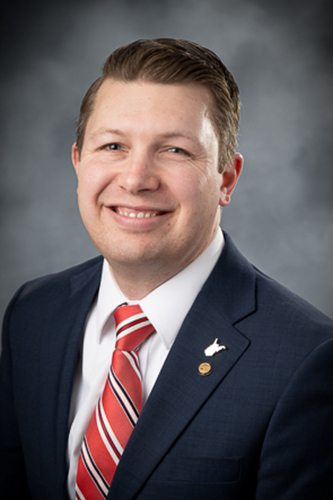
Del. Tristan Leavitt
Sponsored bills
Maddy summaryHB 2460 requires state permitting agencies, counties, and municipalities to treat private and parochial schools the same as public schools for all construction-related requirements. This includes building permits, fees, safety standards, wastewater management, septic systems, and the speed of permit approvals. The bill directly affects private and parochial schools (non-public, often religiously affiliated institutions) and the government entities that regulate construction processes. It mandates equal application of these rules to end current disparities where private schools faced stricter or different requirements than public schools.
Maddy summaryHB 2459 expands eligibility for West Virginia secondary school athletic and extracurricular activities to home-schooled students, Hope Scholarship participants, and microschool learners. It requires the West Virginia Secondary School Activities Commission to create rules allowing these students to join public school activities if they meet academic standards (fourth stanine test results), are under 19 by August 1, participate as amateurs, and comply with commission rules. Private school students may also join public school activities if their private school doesn't offer the same activity. The bill mandates that all participants pay reasonable fees and adhere to the same requirements as public school students. This policy directly affects non-public school students seeking athletic and extracurricular participation.
Maddy summaryHB 2525 requires all West Virginia public elementary and secondary schools to display a durable poster or framed copy of the Ten Commandments in every classroom starting in the 2025-2026 school year. The display must be at least 16 inches wide by 20 inches tall, include the exact biblical text listed in the bill (including the full wording from "I AM the LORD thy God" to "nor anything that is thy neighbor's"), and be visible from anywhere in the classroom. Schools must accept private donations meeting these specifications if they lack compliant displays, and may replace non-compliant existing displays using public funds or donations. The bill directly affects all public K-12 schools in West Virginia, mandating a specific religious text in every classroom.
Maddy summaryHB 2343 requires the West Virginia State Auditor to conduct financial audits of all county boards of education. The bill mandates these audits cover every source of income or funds received by school districts, including local property taxes, state allocations, and federal grants. This policy change directly affects all 55 county school boards across West Virginia by expanding audit requirements beyond previous limitations. The State Auditor must now review all financial records related to these funds, ensuring comprehensive oversight of public education funding. The bill aims to standardize financial accountability for school district finances statewide.