

Maddy summaryHB 5389 creates a 30% transferable tax credit for nonprofit organizations that convert existing hotels, motels, or commercial buildings into housing for homeless veterans. The credit covers 30% of qualified redevelopment costs (like renovation and infrastructure) but excludes land acquisition, and can be applied against corporate income, personal income, or business franchise taxes. Nonprofits can sell or transfer the unused credit to other taxpayers to generate funding, with credits carrying forward up to 10 years. This aims to incentivize supportive housing without creating new state spending or entitlements, targeting veterans facing homelessness through adaptive reuse of underutilized properties.
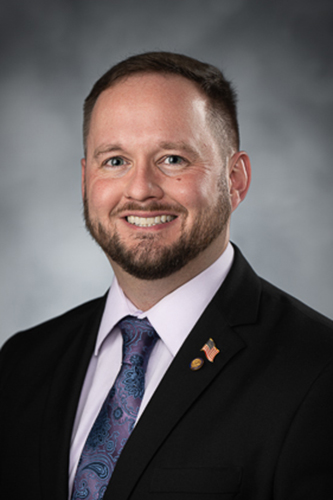
Del. Elliott Pritt
Sponsored bills
Maddy summaryHCR 17 is a concurrent resolution requesting the Joint Committee on Government and Finance to study pedestrian safety measures for the New River Gorge Bridge. It directs the committee to examine the feasibility, costs, and federal funding options for installing safety features, while ensuring Bridge Day events can continue. The resolution requires a 2027 report with findings and potential legislation, but does not mandate any safety changes or allocate funds. It directly affects the committee conducting the study and the Bridge Day Commission through consultation. This is a procedural request for research, not a bill implementing safety measures.
Maddy summaryHB 5425 amends West Virginia law to clarify how urban renewal authorities and land reuse agencies can acquire property. It specifically allows these agencies to purchase tax-delinquent properties meeting certain criteria (such as being valued under $100,000, vacant for 24+ months, or having municipal liens exceeding back taxes) with priority over other buyers. The bill requires municipalities to provide lists of qualifying properties to agencies and grants them the right to buy these properties by paying outstanding taxes. This directly affects urban renewal authorities, municipalities, and property owners with tax-delinquent properties in redevelopment zones.
Maddy summaryHB 5387 amends West Virginia's high school graduation requirements by removing a mandatory stand-alone computer science course. Instead, it establishes a computer literacy proficiency requirement that students must meet to graduate. The bill restores local flexibility for school districts to determine how to implement this requirement while preserving advanced computer science pathways. This change directly affects all West Virginia high school students by altering one of their required graduation courses.
Maddy summaryHB 5058 requires restaurants in West Virginia to clearly label any menu item containing or made from "analogue products," "cell-cultured products," or "food products" (as defined in state law) with specific terms. This directly affects restaurants serving lab-grown or lab-made food alternatives, such as cultivated meat or plant-based substitutes. The key provision mandates that these labels appear prominently on all menus to inform consumers about the product type before purchase. The bill aims to ensure transparency for dining choices without specifying how restaurants must implement the labeling. It does not change food safety standards or restrict the sale of these products.
Maddy summaryHB 5355 requires West Virginia public school districts to place any teaching position held by an uncertified individual up for public bidding every school year. This applies directly to school districts and teachers currently working without valid teaching certification. The bill mandates that such positions remain open for bid annually until filled by a certified educator, ensuring only qualified staff occupy teaching roles. It does not change certification requirements but adds a recurring annual bidding process for uncertified positions.
Maddy summaryHB 5384 authorizes West Virginia's Higher Education Policy Commission (HEPC) to annually adjust the required composite ACT/SAT scores for the PROMISE scholarship program. This change directly affects West Virginia students applying for PROMISE scholarships, which cover tuition costs at state colleges and universities. The bill allows HEPC to modify the minimum test score thresholds each year to maximize the number of eligible students, without altering the $4,750 award cap or other eligibility requirements like GPA or citizenship. The goal is to ensure scholarship funds are distributed to the highest number of qualifying students based on annual testing data.
Maddy summaryHB 5343 establishes a three-year medical adult day care pilot program in Fayette County for older adults and adults with disabilities who need daytime medical supervision but don’t qualify for nursing home care. The program, funded with $750,000-$1.25 million, provides licensed medical oversight, health monitoring, therapeutic activities, and daily support during weekday hours at a community facility. It targets individuals with chronic conditions, cognitive impairments, or those at risk of needing long-term care, aiming to reduce hospital visits, ease caregiver burden, and delay nursing home placement. If successful, the program could expand statewide after evaluation of outcomes like health stability and cost-effectiveness.
Maddy summaryHB 5369, the West Virginia Rural School Protection Act, aims to prevent the closure or consolidation of qualifying rural schools by establishing strict requirements. It defines "protected rural schools" as those in low-population counties, where students would exceed one-way transportation limits (under §18-5H-7), or are the sole school in their area. The bill mandates detailed public impact statements (including transportation times, enrollment trends, and rejected alternatives), a two-thirds vote by county school boards, and voter approval via referendum before any closure or consolidation can proceed. These measures ensure decisions consider student transportation burdens, community impact, and reasonable alternatives before closing a rural school.
Maddy summaryHB 5377, the Burial Equity Act, expands eligibility for burial in West Virginia's state veterans' cemetery to include former National Guard and military reserve members (such as IMA, AGR, ART, and TR) who served at least four years, were West Virginia residents for two years before death, or served in the West Virginia National Guard, with retroactive application to deaths after March 15, 2022. It creates a Burial Equity Grant Program administered by Veterans Affairs, providing up to $1,000 per family to cover burial costs on a first-come, first-served basis. The bill also establishes a dedicated Burial Equity Fund in the state treasury, initially funded with $50,000 from the legislature, plus federal funds and private donations, to sustain the grant program without annual budget reversion.