

Maddy summaryHB 2619 would prohibit outdoor advertisements in West Virginia from featuring "lewd public content," defined as content related to adult entertainment venues (including gentleman's clubs), images of people in undress, or sexually explicit language. The bill amends existing outdoor advertising laws to ban such content on all signs, displays, and devices, directly affecting businesses that use outdoor advertising for adult entertainment services. Introduced on February 19, 2025, and referred to the House Judiciary Committee, the bill would require advertisers to remove prohibited content from all outdoor advertising materials statewide. This is a content-based restriction, not a location-based one, applying broadly to all outdoor advertising formats.
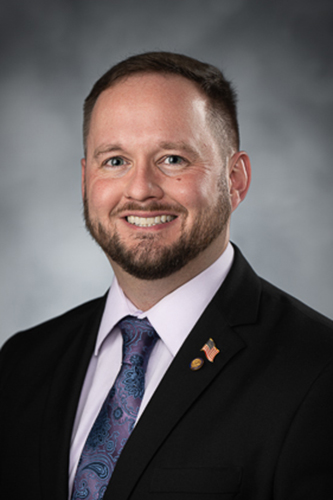
Del. Elliott Pritt
Sponsored bills
Maddy summaryHB 2616 would allow public service districts (PSDs) to combine federal and state violation notices into a single publication when a federal violation also triggers a state violation, instead of requiring two separate notices. Currently, PSDs must issue distinct notices for federal and state violations, but this bill streamlines that process by permitting one notice to cover both. The change applies specifically to cases where a federal violation notice indicates or triggers a state violation, without altering the underlying violation requirements. This simplifies administrative steps for PSDs while maintaining transparency about violations.
Maddy summaryHB 2600 would exempt active and volunteer firefighters in West Virginia from paying state income taxes and real and personal property taxes. The bill amends existing tax exemption laws (§11-3-9) to add firefighters to the list of groups already exempt from these taxes, such as churches, schools, and fire department equipment. This change would directly affect all eligible firefighters by reducing their personal tax burden. The bill does not specify implementation details but would require legislative approval to take effect. (Note: Bill introduced February 19, 2025, currently in the House Finance Committee.)
Maddy summaryHB 2599 would abolish West Virginia's personal income tax for tax years beginning in 2026 and later. This bill removes the tax requirement on individual income, estates, and trusts for all taxpayers subject to the current tax under state law. The change is implemented by amending the state tax code to eliminate the tax provision entirely, meaning residents and nonresidents who currently pay the tax would no longer owe it starting in 2026. The bill does not specify how the state would replace the lost revenue from this tax.
Maddy summaryHB 2620 would change West Virginia's reckless driving law to classify driving more than 25 miles per hour over the posted speed limit as reckless driving, lowering the current threshold from 30 mph over. This directly affects drivers who exceed speed limits by 25+ mph on public roads, including streets, highways, and school or park properties. The bill maintains existing penalties: a first offense is punishable by up to 90 days in jail or a $500 fine, with harsher penalties for repeat offenses or if serious injury occurs. It does not apply to temporarily closed racing areas or designated recreational zones.
Maddy summaryHB 2603 would exempt the personal income earned by teachers working in West Virginia's primary and secondary schools from state income tax. The bill amends Section 11-21-12 of the state tax code to remove teachers' earnings from taxable income. This change would directly affect all K-12 public and private school teachers in West Virginia. The exemption applies to all income earned by eligible educators under the state's tax system.
Maddy summaryHB 2621 establishes a legal process for involuntary treatment of individuals with drug or alcohol abuse in West Virginia. It requires petitions from family members, friends, or guardians to initiate court proceedings, with strict criteria: the person must have a substance use disorder, pose an imminent danger to self/others, and be able to benefit from treatment. The bill mandates a 72-hour court hearing, a 24-hour medical evaluation by two health professionals (one a physician), and a guarantee from the petitioner covering all treatment costs. This process applies only to those meeting the danger criteria and directly affects individuals with severe substance use disorders who meet the legal thresholds for involuntary care.
Maddy summaryHB 2606 would increase payments to therapists and other non-state-employed professionals contracted to provide early intervention services through West Virginia's Birth-to-Three program by 25 percent. This applies to providers delivering services for children with developmental delays, effective July 1, 2025. The bill amends existing law to require this payment adjustment for all contracted services under the program. The change directly affects contracted service providers in the Birth-to-Three program, improving their compensation for delivering early intervention care.
Maddy summaryHB 2537 would amend West Virginia law to allow landlords to serve eviction notices by posting them conspicuously on the rental property (e.g., on the front door) with photographic evidence, instead of requiring personal delivery, if a tenant refuses to accept service. This change directly affects landlords seeking evictions and tenants who avoid being served personally. The bill specifies that landlords must attach photos of the posted notice to court filings as proof. It does not alter eviction standards but streamlines the service process for landlords when tenants evade contact. The bill is currently pending in the House Judiciary Committee.
Maddy summaryHB 2423 prohibits individuals or entities from charging fees for assisting veterans with benefits claims, except as allowed under federal law. It specifically bans compensation for preparing, presenting, or advising on veterans' benefits claims, referring clients to such services, guaranteeing specific benefit amounts, or charging excessive fees (using federal fee guidelines). The bill requires written agreements outlining fees before services begin, aligning with federal regulations (38 C.F.R. §14.636). Violations would be treated as breaches of West Virginia’s Consumer Credit and Protection Act. This directly affects veterans’ service providers (e.g., attorneys, advocates) and veterans seeking assistance with VA claims.