

Maddy summaryThis bill directs the West Virginia Office of the Attorney General and Office of the Treasurer to conduct a study of state budget spending from the current year and the previous five years. The study will categorize expenditures into four groups: spending required by the state constitution, spending for core government functions, spending for policy goals not constitutionally required, and spending with unclear or speculative purposes. The findings and recommendations will be reported to the Joint Committee on Government and Finance by December 21, 2026. This resolution does not change how money is spent but instead asks officials to analyze and categorize existing budget items to better understand how taxpayer dollars are allocated.
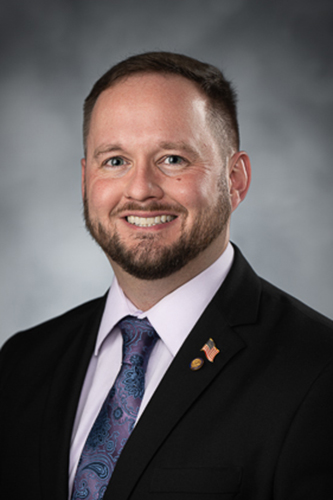
Del. Elliott Pritt
Sponsored bills
Maddy summaryThis bill asks a state committee to study whether West Virginia should create a flexible respite care program for seniors and their caregivers. The proposed program would allow families to schedule short-term, on-demand assistance for specific needs like medical appointments or personal obligations, rather than being limited to fixed weekly service blocks. The study will examine costs, potential savings from delaying nursing home placement, and how to fund and manage the program, especially in rural areas with fewer resources. If the committee finds the idea feasible, it will recommend new legislation to establish the program.
Maddy summaryThis resolution urges the U.S. Congress to pass the Major Richard Star Act, which would allow disabled veterans to receive both their full military retirement pay and full VA disability compensation without any dollar-for-dollar offset. The bill directly affects approximately 50,000 medically retired combat-wounded veterans who currently lose over $1,000 per month in benefits due to existing federal offset rules. It seeks to amend federal law to recognize that military retirement and disability benefits compensate for two distinct forms of service and sacrifice. The resolution is a formal request from the West Virginia Legislature to federal lawmakers to address this policy change.
Maddy summaryHB 5525 creates the "Southern West Virginia Clean Water Fund" to improve drinking water in 13 specific counties (Boone, Fayette, Greenbrier, Lincoln, Logan, McDowell, Mercer, Mingo, Monroe, Raleigh, Summers, Wayne, and Wyoming). The bill requires water utilities to conduct quarterly contaminant testing, replace lead service lines by 2035 (with financial help for low-income households), and implement advanced filtration systems where water quality fails state standards. It appropriates $10 million in state funds for infrastructure upgrades, mandates public reporting of test results within 30 days, and imposes fines (reinvested into the fund) for violations of safe drinking water limits. The law also requires annual infrastructure assessments and updates to contaminant standards every three years based on scientific research.
Maddy summaryHB 5260 adds "edible" as an allowable form of medical cannabis in West Virginia, with strict requirements for safety and regulation. It requires processors to obtain bureau approval for each edible product, mandates specific shapes (like squares or circles), limits edibles to lozenges or gelatins, and caps THC content at 10mg per serving with a 15% potency variance. The bill prohibits color additives in edibles and requires all medical cannabis dispensing to be reported to the state's controlled substance monitoring database. This directly affects patients using medical cannabis, caregivers, and licensed processors who must comply with these new edible-specific rules.
Maddy summaryHB 5629 updates West Virginia's Unclaimed Property Act to extend the time nursing homes must wait before reporting abandoned resident funds to 180 days (from 30 days) after a resident's death. It requires safety deposit boxes and other depositories to deliver contents to the State Treasurer within specific timeframes, clarifies claim filing processes, and prohibits finders from claiming property immediately. The bill also allows the Treasurer to waive reciprocal claim forms with other states and clarifies that estate executors must liquidate personal property before transferring proceeds. These changes primarily affect nursing homes, financial institutions holding unclaimed property, and the State Treasurer's office.
Maddy summaryHB 4772 requires West Virginia's Medicaid agency to verify enrollee status monthly by matching Medicaid records against state death records (from the Office of Vital Statistics) and the federal Social Security Death Master File. If a person has died, their Medicaid coverage must be terminated immediately, effective the date of death, stopping all future payments. The bill mandates data-sharing agreements with federal agencies, annual audits by the state Inspector General, and yearly reports to the legislature on the number of deceased enrollees removed and estimated cost savings. This directly affects deceased Medicaid recipients (whose records are automatically removed) and aims to prevent unnecessary payments, saving state funds.
Maddy summaryHB 4977 allows West Virginia municipalities to recover costs for demolishing unsafe structures by imposing special tax assessments on the property owners. It applies to properties deemed unsafe, unsanitary, dangerous, or detrimental to public safety - such as those with structural damage, fire hazards, or abandonment - after a code enforcement agency determines they require demolition. Municipalities must formally adopt ordinances designating an enforcement agency (like building inspectors or health officials) to manage this process. The bill clarifies that these special taxes are separate from regular property taxes and apply only to properties ordered demolished for public safety reasons. It does not create new demolition requirements but streamlines cost recovery for existing code enforcement actions.
Maddy summaryHB 4986 amends West Virginia law to clarify when parental abandonment is presumed, especially for incarcerated parents. It states that abandonment is presumed when a parent is jailed for a significant portion of the child's minority (considering the child's age and need for stability) or for serious crimes like sexual assault, murder, or violent offenses. The bill also requires child welfare agencies to seek termination of parental rights when a child has been in foster care for 15 of the last 22 months, or when a court finds the child abandoned, abused, or when a parent committed specific violent or sexual crimes against the child. This directly affects parents facing incarceration for certain offenses and children in foster care or abuse cases.
Maddy summaryHB 5475 would change West Virginia's Public Service Commission from an appointed body to an elected one. The bill requires three commissioners to be elected to six-year nonpartisan terms from three districts corresponding to the state's three congressional districts, with staggered terms for the first election cycle. It maintains existing requirements, including one commissioner needing a law license with at least 10 years of experience and prohibitions against financial ties to public utilities or holding other elected office. The bill eliminates the Governor's appointment authority and Senate confirmation process for commission members.