

Maddy summaryHB 4943 requires all West Virginia high school students to learn proper American flag handling, folding, treatment, honoring, display, and retirement procedures as part of their required civics education. This would be integrated into existing civics courses mandated for graduation, with students needing to pass an exam on this topic. The bill directly affects all high school students in West Virginia public, private, parochial, and denominational schools. It amends existing curriculum requirements (§18-2-9) to add flag etiquette as a specific component of civics instruction.
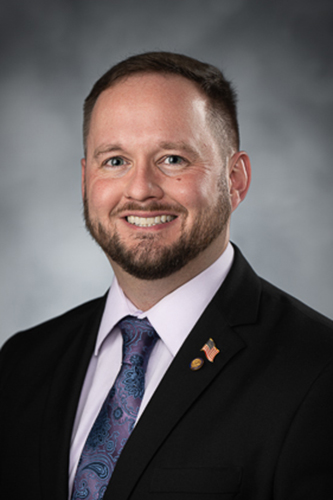
Del. Elliott Pritt
Sponsored bills
Maddy summaryHB 4945 prohibits the use of electronic devices like tablets, laptops, or computers for learning and testing in classrooms for students in grades three and below. The bill directly affects elementary schools, teachers, and students in these grade levels by banning device use during instructional activities. It explicitly excludes calculators from the prohibition. The law aims to limit screen time for young learners during classroom instruction. This is a direct policy change requiring schools to remove such devices from early-grade classrooms for educational purposes.
Maddy summaryHB 4941 increases pay for special education staff in West Virginia. It requires special education aides (specifically Aide V) to be paid at the same rate as Early Childhood Classroom Assistant Teachers, plus an additional 5% raise. Self-contained special education teachers receive a 10% salary increase. The bill also defines a "critical vacancy" as a position needed for student success and safety, mandating that certified staff fill such roles until a permanent hire is made.
Maddy summaryHB 4905 removes all fees West Virginia teachers pay to the state for obtaining or renewing teaching licenses, certifications, and registering continuing education credit hours. The bill requires the West Virginia Department of Education to eliminate these fees by January 30, 2027, and to reimburse teachers for tuition and fees related to courses taken for certification renewal or additional endorsements in subject areas with teacher shortages. Reimbursement is capped at 15 semester hours per teacher per year for either purpose. This directly affects West Virginia teachers seeking to maintain or expand their teaching credentials through state-recognized pathways.
Maddy summaryHB 4909 prohibits deceptive telephone solicitation in West Virginia by requiring prior written consent for automated calls (like robocalls) and banning caller ID spoofing, blocking, or calls between 8 PM and 8 AM. It directly affects consumers (protecting them from scams), businesses (requiring consent for sales calls), and telecom providers (mandating anti-spoofing technology like STIR/SHAKEN within 12 months). Violators face civil penalties of $100 per spoofed call, full reimbursement for customer damages, and a 5x restitution fee - 75% of which funds local fire and emergency medical services. Exemptions include charities, business-to-business calls, and communications within existing customer relationships.
Maddy summaryThis bill defines a "critical vacancy" as a teaching position essential for student success, safety, and compliance with certification standards. It requires school districts to have certified staff fill these vacancies immediately - without waiting for permanent hires - by assigning them to the relevant classroom. The bill also establishes a process for recruiting new teachers through posted critical need positions, temporary employment of recent graduates, and optional financial incentives like signing bonuses.
Maddy summaryHB 4942 requires a second adult to be present on West Virginia county school buses when elementary students (pre-kindergarten through 4th grade) are riding with middle or high school students (5th grade and above). This applies specifically to bus routes where younger children are mixed with older students. The bill mandates this additional adult to maintain order and safety during transportation. It directly affects county school bus systems operating routes with mixed-age groups in the specified grade ranges. The requirement is triggered only when elementary-aged children are present alongside middle/high school-aged students on the same bus route.
Maddy summaryHJR 28 is a constitutional amendment proposal (not a bill) that would require voter approval to allow West Virginia's legislature to later create a law exempting owner-occupied primary residences from property tax once the mortgage is paid off. It does not create the exemption itself but would permit future legislation to do so for homes with no outstanding mortgage. This would directly affect homeowners who pay off their mortgages and occupy the property as their primary residence. The amendment must be approved by voters in the 2026 general election to take effect.
Maddy summaryHB 4939 would provide West Virginia classroom teachers with a $10,000 annual salary increase for holding National Board Certification (NBC) through the National Board for Professional Teaching Standards, for up to 10 years. The increase would be paid in addition to the state’s minimum salary schedule in equal monthly installments. Teachers would also receive reimbursement of up to $600 for initial certification fees and for renewal certification fees.
Maddy summaryHB 4933 would create a 100% tax credit against West Virginia personal income tax for the cost of spaying or neutering a dog or cat. It directly affects West Virginia residents who pay for these veterinary procedures, allowing them to reduce their tax bill by the full amount paid in the year the service was performed. To claim the credit, taxpayers must provide a receipt from a licensed veterinarian. This credit applies only to dogs and cats, not other pets, and reduces the tax owed rather than the taxable income.