

Maddy summaryHB 3283 (the "GRAM'S Act") allows residents of West Virginia long-term care facilities, or their legal representatives (guardians or attorneys-in-fact), to install video or audio monitoring devices in their private rooms. The bill requires residents to pay for the device and installation (excluding electricity), obtain consent from other residents sharing the room (or their representatives), and use facility-provided forms for authorization. Facilities must accommodate residents who withdraw consent and may face license violations for noncompliance. This bill directly affects residents in nursing homes, personal care homes, and similar facilities by expanding their ability to monitor their living spaces with consent requirements.
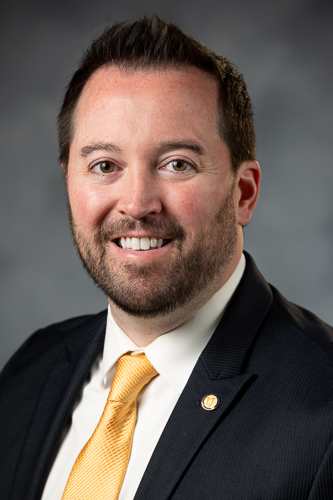
Del. Shawn Fluharty
Sponsored bills
Maddy summaryHB 3285 amends West Virginia's PROMISE Scholarship Program to provide full tuition, room, and board coverage for students majoring in STEM fields (science, technology, engineering, and mathematics) at state institutions of higher education. Currently, the program caps scholarships at $4,750 per year (or tuition cost, whichever is lower) for most students, but this bill removes that cap specifically for STEM majors. The change applies only to students enrolled in state institutions pursuing qualifying STEM degrees, while maintaining existing eligibility requirements like a 3.0 GPA and citizenship status. The bill does not alter the overall annual funding limit for the scholarship program.
Maddy summaryHB 3287 proposes a tax credit for retail food distributors who donate surplus food to nonprofit organizations serving people in need. It allows a credit equal to 10% of the original retail value of donated "apparently fit" food products, up to a $5,000 annual limit per taxpayer, applicable against corporate or personal income tax. Distributors must maintain receipts as proof of donation, and the Tax Commissioner must create rules and notify distributors through the Department of Human Services. The bill aims to incentivize food donation by reducing tax liability for participating businesses, building on existing liability protections under West Virginia’s Good Samaritan Food Donation Act.
Maddy summaryHB 3284 creates a tax credit against West Virginia personal income tax for residents who graduate from in-state colleges and stay in the state. It allows individuals or their employers to claim credit for student loan payments made while working in West Virginia, with special provisions for STEM degree holders (who get a refundable credit). The credit is calculated based on actual loan payments during the taxable year while employed in the state, and transfers from out-of-state schools qualify for reduced credit amounts. The bill also establishes eligibility rules, defines "qualified individual," and requires the credit to be tied to the financial aid package. It directly affects recent West Virginia college graduates and their employers who pay for qualifying student loans.
Maddy summaryHB 3286 prohibits West Virginia insurers from using a person's credit history to make decisions about specific insurance policies. It directly affects residents applying for or holding passenger vehicle, residential property, or other personal insurance policies. The bill bans insurers from refusing coverage, canceling policies, increasing premiums, setting rates (including discounts or rating tiers), or requiring payment plans based on credit history. This creates a concrete policy change requiring insurers to base decisions solely on other factors, not credit data. The law applies to all insurers operating in West Virginia for these covered insurance lines.
Maddy summaryHB 3282, the "Child Support from Conception Act," would require non-custodial parents to cover medical expenses related to a child's pregnancy and birth as part of child support payments. The bill amends West Virginia law to explicitly include "medical expenses associated with the pregnancy and birth of the child" in the definition of "medical care" for support purposes. This means costs like prenatal visits, hospital delivery, and related medical services would now be included in child support orders. The change applies to all existing and future child support cases in West Virginia where a non-custodial parent is ordered to pay medical support.
Maddy summaryHB 3255 would authorize West Virginia counties to establish public daycares through a voter-approved process. Counties needing to fund daycares would require a petition signed by at least 10% of registered voters to trigger a countywide referendum on creating and funding the facility. If approved, counties could fund daycares through local taxes, fees, or levies, or choose to operate without new funding. The bill also allows adjacent counties to jointly create shared daycare services. This legislation directly affects county residents, particularly parents seeking affordable childcare, by providing a structured process for local governments to develop these services.
Maddy summaryHB 3237 requires local governments in West Virginia to report demolition liens against property owners to major credit bureaus when ordering the demolition of unsafe, dilapidated, or abandoned properties. This applies to property owners (including landlords or trustees) facing mandatory demolition orders for structures deemed hazardous to public safety. The bill amends existing law to mandate that governing bodies file these liens with credit reporting agencies, meaning the debt could appear on the owner’s credit report. This policy change directly links property demolition costs to credit history, potentially affecting the owner’s credit score.
Maddy summaryHJR 33 is a constitutional amendment proposal that would require West Virginia to provide free early childhood education to all children in the state. It seeks to amend Article XII of the West Virginia Constitution by adding a new section stating the legislature must provide "a thorough and efficient system of free schools including early childhood education." This would not immediately create new programs but would require future legislation to establish such a system, subject to voter approval in the 2026 general election. The amendment is currently pending referral to the House Education Committee.
Maddy summaryHB 2966 requires individuals and groups spending over $1,000 annually on independent election activities (like ads not coordinated with candidates) to disclose detailed information publicly. This includes the spender's name, the source of funds (reporting contributors who gave over $1,000), and specific details about each contribution (like donor occupation and employer). The bill mandates these disclosures within 48 hours for certain last-minute spending before elections, with tighter 24-hour deadlines for large expenditures targeting specific candidates. It directly affects political committees, advocacy groups, and donors engaging in election-related spending, aiming to increase transparency in campaign finance. The law also clarifies that federal entities must comply with these state disclosure rules.