

Maddy summaryHB 2664 changes how county school board members are elected in West Virginia. It requires each school board to have five members: two elected by all voters in the county ("at large"), and three elected based on the voter's magisterial district (local voting area). The bill specifies that the three district members cannot all come from the same magisterial district, though it doesn't require every district to have representation. This directly affects county school boards and voters across West Virginia, altering the election process to include more localized representation.
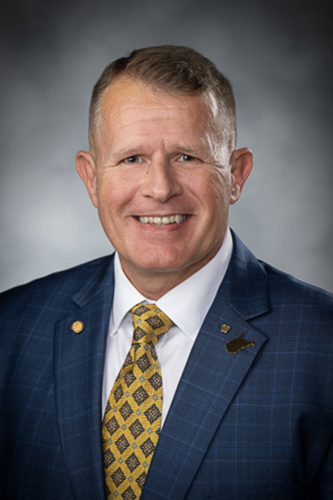
Del. Eric Brooks
Sponsored bills
Maddy summaryHB 3319, the "Restoring Sanity Act," prohibits West Virginia public schools and state universities from requiring instruction, course content, or statements about specific concepts deemed "factual" or "beliefs" related to race, gender, or sexuality. It bans diversity, equity, and inclusion (DEI) offices at public colleges and redirects funds from such offices to merit scholarships for lower-income, first-generation, or in-state students. The bill also requires schools to report complaints about violations and prohibits employees from being required to use a student's preferred pronoun if it conflicts with their biological sex, while clarifying that using biological sex-based pronouns does not create legal liability. These provisions apply directly to school districts, public charter schools, the West Virginia Board of Education, and state universities.
Maddy summaryHB 3302 requires all organizations contracting with West Virginia to distribute state funds for homeless shelters to include one regional representative on their board of directors. This applies directly to entities administering homeless shelter funding under state contracts. The bill mandates that each board must have members representing every region of the state, ensuring geographic representation in decision-making. The policy change focuses solely on board composition requirements for these specific contracts.
Maddy summaryHB 3236 requires West Virginia's Secretary of Health to establish a new long-term psychiatric and mental health facility specifically designed to serve homeless individuals. The bill mandates this facility as part of state-owned health infrastructure, directly affecting homeless residents needing sustained mental health care. Key provisions include the Secretary adopting operational rules for the facility and implementing performance metrics by January 1, 2025. This policy change creates a dedicated state-run resource for homeless individuals with mental health needs, rather than relying on existing services.
Maddy summaryHB 2863 clarifies West Virginia sheriffs' authority to hire within their offices by amending civil service rules for deputy sheriffs. It explicitly allows sheriffs to appoint multiple chief deputies with county commission approval (per §7-7-7) and clarifies that current or future chief deputies and jailers retain all civil service rights, including having time in those roles count toward promotion eligibility. The bill does not change existing hiring standards but resolves ambiguity about seniority and appointment flexibility for these positions. It directly affects sheriffs, county commissions, and deputy sheriff staff across West Virginia counties.
Maddy summaryHB 2187 would allow K-12 teachers in West Virginia who hold valid concealed handgun permits to carry concealed firearms on school grounds when designated as "school protection officers" by their school. The bill amends state law to create this exception, explicitly permitting teachers (but not all staff) to carry concealed weapons as part of their role, provided they meet standard concealed carry requirements. This changes existing rules that generally prohibit firearms on school premises, except for specific exemptions like law enforcement. The bill is currently under review by the House Judiciary Committee after initial referral to Education.
Maddy summaryHB 3261 clarifies the qualifications for Certified Registered Nurse Anesthetists (CRNAs) to administer anesthesia in West Virginia. It requires CRNAs to hold both a registered nursing license and an advanced practice nursing license, complete a nationally accredited anesthesia program, and maintain national certification. The bill defines "cooperation" between CRNAs and physicians/dentists as a collaborative process where each contributes based on their expertise, and specifies that physicians are not liable for CRNA actions under this framework. This directly affects CRNAs, physicians, dentists, and healthcare facilities by standardizing practice requirements and supervision protocols for anesthesia administration.
Maddy summaryHB 3178 would amend West Virginia law to allow female inmates to work on state convict road crews, currently restricted to males. The bill removes the existing provision stating "no road crew assembled under this article shall be composed of both male and female persons" from §17-5-1 of the Code. This change would directly affect female inmates in state correctional facilities who are currently ineligible for these road maintenance and construction jobs. The policy shift makes all inmates, regardless of gender, eligible for this specific work program under the state road commissioner's supervision.
Maddy summaryHB 2542 requires Child Protective Services (CPS) workers to record audio during all investigation visits with individuals under investigation for child abuse or neglect allegations. This applies to every interaction between CPS staff and a person under investigation, with exceptions: audio recording must have the person's informed consent or a court order during home visits or private interviews. The bill mandates that CPS must conduct a face-to-face interview with the child within 14 days of receiving a report. This law directly affects CPS workers who must implement the recording requirement and families involved in active investigations.
Maddy summaryHB 3191 requires people to maintain a 25-foot distance from law enforcement officers, probation officers, firefighters, or emergency responders while they are performing their duties, particularly when someone is recording interactions. It prohibits approaching or staying within 25 feet after receiving a verbal warning, if the person intends to interfere with the officer’s work, threaten them, or intentionally distress them. Violating this rule is a misdemeanor punishable by a $50-$500 fine, up to one year in jail, or both. The bill directly affects members of the public who record police or emergency interactions near the scene.