

Maddy summaryHB 5376 requires toxicology tests to be performed on drivers involved in any vehicle crash that results in death. The bill mandates these tests be conducted "as soon as possible" following a fatal accident. It directly affects drivers involved in crashes causing death, ensuring their blood or urine is tested for drugs or alcohol. The law, named "Erin’s Law" in the bill, adds this requirement to existing West Virginia traffic safety statutes without changing penalties for hit-and-run offenses.
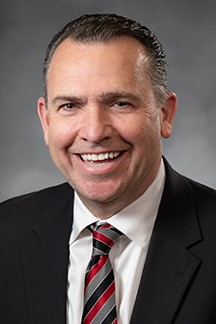
Del. John Jordan
Sponsored bills
Maddy summaryHB 5199 requires West Virginia county courts to establish County Parks, Entertainment, and Recreation Commissions (PERCs) for managing public parks and recreation facilities. The bill mandates that each commission consist of 11 members (adjusted by county population), who must be county residents owning local real estate, serving three-year terms with staggered appointments. Existing park commissions continue under this new structure until their terms expire. The law provides clear rules for membership qualifications, appointment procedures, and vacancy handling, ensuring consistent oversight of county recreational systems.
Maddy summaryThis House Resolution (HR 11) encourages West Virginia's K-12 students to design a new state highway route number shield for the 2026 anniversaries of the U.S. founding (250th) and the U.S. numbered highway system (100th). It directs the West Virginia Division of Highways and Department of Tourism to hold a statewide student design competition, requiring the shield to maintain federal safety standards for legibility while incorporating West Virginia identity. The winning design would be implemented gradually on state highways starting July 2027, replacing existing signs only as they wear out, and the student designer would receive legislative recognition. The resolution is procedural and non-binding, focusing on celebration and civic engagement rather than new policy.
Maddy summaryHR 9 is a ceremonial resolution honoring the late West Virginia House Delegate Douglas John Skaff Jr. It expresses the House of Delegates' condolences to his family and commemorates his service, including his roles as a delegate representing multiple districts and as Minority Leader. The resolution has no policy impact - it is purely symbolic, acknowledging his career in public service, business, and community leadership. It was unanimously adopted by the House on February 5, 2026, the same day it was introduced.
Maddy summaryThis is a symbolic House Resolution (not a bill), introduced by multiple West Virginia delegates. It designates the month of June as "Fidelity Month" to promote the values of faith, family, and patriotism across the state. The resolution cites declining support for these values in polling and research, and calls for the state to "rededicate" itself to them during June. It has no binding policy requirements or direct impact on specific groups; it is purely a commemorative gesture.
Maddy summaryThis West Virginia House resolution states that the U.S. national debt (over $38 trillion in 2026) poses a national security threat, citing foreign debt ownership, projected Social Security/Medicare shortfalls, and warnings from military/intelligence leaders. It urges Congress to establish regular budgeting procedures but does not create new laws or alter federal spending. As a symbolic resolution, it has no direct legal effect on national debt policy or federal budgets. The resolution focuses on raising awareness rather than implementing concrete changes.
Maddy summaryHB 4987 requires all West Virginia public schools serving students in grades K-12 to provide annual evidence-based social inclusion training (at least one hour per year), and schools serving grades 6-12 must also provide annual youth violence prevention training (at least one hour per year). The West Virginia Department of Education must develop and maintain publicly available lists of proven effective programs for both trainings, including no-cost options, with updates every 36 months. Schools may optionally form student-led violence prevention clubs focused on awareness and leadership, though public charter and nonpublic schools can opt out of the training requirements. The bill encourages seeking state or federal funding to cover implementation costs but does not mandate new state spending.
Maddy summaryHB 4729 requires West Virginia's Secretary of State to issue state tax identification numbers to businesses during registration, replacing the current process handled by the State Tax Department. This affects all new and existing businesses registering in West Virginia, as they would receive their tax ID number directly from the Secretary of State's office after July 1, 2026. The bill creates a "one-stop" online portal for businesses to handle permits, fees, and tax-related filings (though not tax payments or returns), with the Secretary of State coordinating with the Tax Department to obtain and issue the tax IDs. The change streamlines business registration by centralizing this step under the Secretary of State’s office.
Maddy summaryHB 4727 would increase all state teacher salaries in West Virginia by 25% across every salary scale and experience level, effective for the 2024-2025 school year. It directly affects all public school teachers paid under the state minimum salary schedule, including those with varying certifications (like A.B., M.A., or special education) and years of experience. The bill amends the existing salary schedule by adding 25% to every base salary figure shown in the table, such as raising a 0-year experience 4th Class teacher's salary from $39,057 to approximately $48,821. This is a direct pay increase applied uniformly to all teacher classifications without changing certification requirements or adding new benefit categories.
Maddy summaryHB 4613 establishes the State Resiliency Office and requires the State Resiliency Officer to update West Virginia's Flood Resiliency Plan every two years (by June 30 in even-numbered years). The plan must include recommendations for high-impact flood prevention measures and prioritize the five most critical flood prevention projects in each regional planning zone, with estimated costs for each project. The State Resiliency Officer must also provide quarterly reports to the Joint Legislative Committee on Flooding, coordinate flood mitigation efforts with federal and state agencies, and maintain a centralized website for flood-related information. This bill directly affects the State Resiliency Office, the Governor's office, and the legislative committee, aiming to improve statewide flood preparedness and resource allocation.