

Maddy summaryHB 5538 creates a new "Master Esthetician" license in West Virginia for professionals seeking to perform advanced, noninvasive skin treatments beyond basic esthetics. To qualify, applicants must hold a current esthetician license, complete 600 hours of advanced training (including skin analysis and safety protocols), pass an exam, and pay fees. The bill defines the scope of practice to include advanced services affecting the epidermis/superficial dermis but explicitly prohibits medical procedures or deeper skin penetration. It establishes renewal requirements with continuing education and grants the Cosmetology Board authority to set safety rules for these advanced services. This directly affects estheticians aiming to expand their practice and aims to enhance consumer safety through clearer licensing standards.
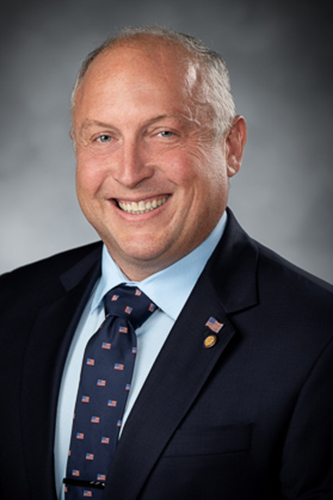
Del. Bill Flanigan
Sponsored bills
Maddy summaryHB 5607 would amend West Virginia's PROMISE Scholarship Program to cover full tuition, room, and board for students majoring in science, technology, engineering, and mathematics (STEM) at state institutions of higher education, replacing the current $4,750 annual cap for these students. This change applies to new recipients and continues existing awards for STEM students who received the scholarship before January 1, 2010. The bill does not alter other eligibility requirements, such as maintaining a 3.0 grade point average or applying for federal student aid. The policy directly increases financial support for eligible STEM students at West Virginia's public colleges and universities.
Maddy summaryHB 5632 sets a 60-day deadline for West Virginia municipalities and counties to approve or deny permit applications for property development. If a local government misses this deadline, the permit is automatically approved, unless the request requires prior state or federal agency approval (extending the deadline to 120 days total). The bill also requires local officials to provide written reasons for denials or claims that an application is incomplete. It aims to give applicants more time for review while aligning with existing legal notice requirements under Chapter 8A.
Maddy summaryThis is a commemorative House resolution honoring former West Virginia House Speaker and Chief Justice Timothy P. Armstead following his passing. It memorializes his service, names a conference room in the House as the "Speaker Tim Armstead Memorial Conference Room," and extends condolences to his family. The resolution does not create new laws or affect policy - it formally recognizes his legacy and contributions to West Virginia.
Maddy summaryHB 5535 amends West Virginia law to allow tow trucks and wreckers to use one or more flashing or revolving blue lights in addition to their existing yellow lights. This change specifically permits blue lights only on the rear of the vehicle, while the tow truck is stationary on the roadside or responding to a disabled vehicle, and prohibits their use while the vehicle is in motion. The bill does not alter lighting restrictions for other emergency vehicles like police, ambulances, or fire trucks, which retain their existing color-specific rules. It directly affects tow truck operators by expanding their permitted warning light options under strict, limited conditions.
Maddy summaryHB 5605 requires West Virginia legislators to pass annual drug tests for illegal drugs and unprescribed legal drugs to receive compensation or expense reimbursement. The bill mandates testing by December 31 each year, with legislators covering their own testing costs. Failure to pass or complete the test results in the loss of all legislative pay and reimbursements for that session. This policy directly affects all state legislators, linking their financial compensation to drug test compliance under the new provision.
Maddy summaryHB 5571 provides a $6,000 pay equity adjustment over three years ($2,000 annually) for non-uniformed administrative staff in West Virginia's Division of Corrections and Rehabilitation. The increases begin July 1, 2026, and apply to full-time equivalent employees not in uniformed roles, such as office or support positions. Funding comes from general revenue appropriations for state divisions, while regional jail staff receive funding from a special revenue fund. This bill directly affects non-uniformed correctional facility employees who face recruitment and retention challenges, without altering existing pay grade maximums.
Maddy summaryHB 5517 requires West Virginia's Office of Insurance Commissioner to create and maintain centralized, geographically specific lists of licensed bail bondsmen for each county and detention facility. The bill mandates that these lists - showing only bondsmen operating within 50 miles of the facility - be posted prominently in jails and police stations, with detainees given immediate access to select a bondsman from the list. It also establishes a statewide master list containing all licensed bondsmen's details, which facilities must provide upon request. The legislation grants the Insurance Commissioner exclusive authority to manage these lists, replacing local efforts, and ensures detainees can contact any licensed bondsman statewide.
Maddy summaryHB 5526 clarifies rules for purchasing tax-abandoned land at public auctions held by West Virginia's State Auditor. It requires all bidders - individuals and businesses - to register in advance or submit a notarized affidavit confirming eligibility, with disqualifications for those with unpaid taxes, code violations, or prior auction defaults. The bill specifically allows 501(c)(3) nonprofit housing organizations to win auctions if their bid is no more than 5% below the highest non-profit bid, excluding for-profit entities or religious groups. It also mandates that businesses (foreign or domestic) must provide proof of valid registration to participate in these land sales.
Maddy summaryHB 4003 creates the WV First Small Business Growth Act, offering tax credits to investors who fund certified "growth funds" that invest in eligible West Virginia small businesses. The program, administered by the West Virginia Department of Commerce, provides a 15% annual tax credit (after the first two years) against insurance premium taxes for qualified investments. To qualify, growth funds must use 100% of investment proceeds within three years to make "qualified investments" in businesses with fewer than 250 employees operating primarily in West Virginia. This directly affects growth investors (who receive tax credits), growth funds (which must be certified), and eligible small businesses receiving capital.