

Maddy summaryHB 4977 allows West Virginia municipalities to recover costs for demolishing unsafe structures by imposing special tax assessments on the property owners. It applies to properties deemed unsafe, unsanitary, dangerous, or detrimental to public safety - such as those with structural damage, fire hazards, or abandonment - after a code enforcement agency determines they require demolition. Municipalities must formally adopt ordinances designating an enforcement agency (like building inspectors or health officials) to manage this process. The bill clarifies that these special taxes are separate from regular property taxes and apply only to properties ordered demolished for public safety reasons. It does not create new demolition requirements but streamlines cost recovery for existing code enforcement actions.
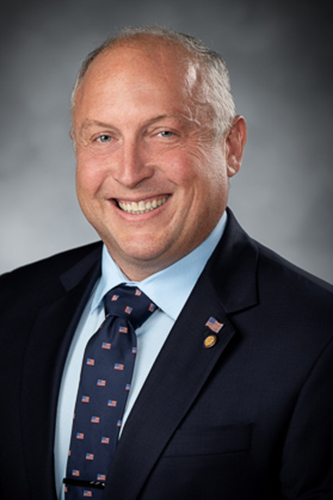
Del. Bill Flanigan
Sponsored bills
Maddy summaryHB 5413 creates a Central Abuse Registry managed by the West Virginia State Police to track individuals convicted of abuse, neglect, or misappropriation of property involving children, incapacitated adults, or adults receiving behavioral health services in specific settings like residential care facilities, day care centers, or home care. It requires registrants to provide personal details (name, DOB, SSN) and pay an annual $125 fee to the circuit clerk, with fees funding mental health services for State Police employees. The registry combines existing requirements, so those already registering as sex offenders only pay one $125 fee instead of separate fees. Failure to pay the fee does not violate supervised release, but unpaid fees may result in a recorded judgment lien.
Maddy summaryThis House Resolution honors the life and legacy of the late West Virginia legislator Larry D. Kump, who passed away on February 28, 2026. The resolution formally expresses the House of Delegates' condolences to Kump's family and acknowledges his service as a representative for Berkeley County across three different terms. It recognizes his career in criminal justice and mediation, his commitment to limited government, and his role as a devoted family member and church leader. The document is a ceremonial tribute rather than a law that changes policy or affects public programs.
Maddy summaryHouse Resolution 13 is a West Virginia legislative resolution endorsing federal legislation (H.R. 5966), which would create the Ohio River Basin Restoration Program. If enacted, the program would fund projects to improve water quality, restore fish habitats, enhance flood resiliency, and expand recreational access across the Ohio River basin. It directly affects West Virginia residents who rely on the river for drinking water (700,000 people), economic activity, and recreation along its 277-mile border. The resolution clarifies the program would be non-regulatory, not creating new permits or legal claims, and aims to deliver clean water and economic benefits to communities in the Ohio River watershed.
Maddy summaryHB 5630 requires West Virginia counties and municipalities to provide 30 days' notice before amending zoning ordinances that change land classifications or density rules. Affected landowners must receive written notice (via certified mail or alternatives like email, regular mail, or public posting) and the proposal must be published in a local newspaper. The bill specifies that notice must be given before enactment or an election on the amendment, with alternatives to certified mail allowed if they reasonably reach landowners. This directly affects property owners in areas where zoning changes are proposed and local governments managing zoning processes.
Maddy summaryThis House Resolution urges the Capitol Building Commission and Department of Administration to assess and address hazardous trees along California Avenue and Kanawha Boulevard on the State Capitol Complex grounds. The resolution requests an immediate evaluation of trees that have caused property damage through falling limbs and broken trunks over the past two years. It specifically asks officials to trim trees back to the grass side of sidewalks or remove and replace hazardous trees to protect public safety and state property. This non-binding resolution directs state agencies to take preventative maintenance actions without mandating specific enforcement measures.
Maddy summaryHB 4971 requires new high-voltage electric transmission lines (400kV or greater) needing West Virginia Public Service Commission approval to include a substation near industrial parks if the line runs within five miles of one. It limits this requirement to one substation per 40-mile segment of the line within the state, with the substation needing completion within two years after the line becomes operational. The law applies to transmission developers and the Public Service Commission, aiming to boost economic development by linking grid infrastructure directly to industrial areas. Key provisions include evaluating substation locations based on expected job creation and tax benefits, and prohibiting route choices designed to avoid industrial park proximity.
Maddy summaryHB 5449 repeals three sections (§62-15A-1, §62-15A-2, and §62-15A-3) of West Virginia's code that previously established the Addiction Treatment Pilot Program. The bill formally removes these outdated legal references because the pilot program itself no longer exists. This is a procedural update to the state code, not a policy change affecting current programs or individuals. The bill does not create new requirements or alter existing services.
Maddy summaryHB 5105 creates a legal cause of action for vulnerable individuals - including those in recovery, elderly persons (65+), protected persons, and incapacitated adults - who suffer financial exploitation. The bill defines "financial exploitation" as the intentional misuse of funds or assets through undue influence (excluding good-faith financial assistance) and prohibits defenses based solely on a legal relationship (e.g., being a guardian or attorney). Courts can issue protective orders, freeze assets, award increased damages, and impose stricter criminal penalties for violations - especially for repeat offenses or losses of $1,000+ - without requiring proof of criminal intent.
Maddy summaryHB 5198 amends West Virginia's hate crime law to explicitly include "disability" as a protected class alongside race, sex, and other characteristics. It increases penalties for crimes motivated by disability bias - such as violence or intimidation - by classifying such acts as felonies punishable by fines up to $5,000 or 10 years in prison. The bill applies to all individuals with disabilities as defined under state law (§16B-17-3), directly affecting victims of disability-targeted crimes and holding perpetrators accountable under existing hate crime provisions.