

Maddy summaryHB 3185, the Taxpayer Protection Act, prevents employers from misclassifying workers as independent contractors when they should be treated as employees for tax purposes. It requires West Virginia’s Tax Commissioner to apply an "ABC test" to determine worker status: whether the worker has no employer control, performs unusual work for the business, and operates as a separate business. Employers must prove all three criteria to classify a worker as independent; otherwise, the worker is presumed an employee. This directly affects individual taxpayers (workers) and employers who may have misclassified workers, ensuring the state collects proper employment taxes. The bill aims to clarify tax obligations without changing tax rates or creating new revenue streams.
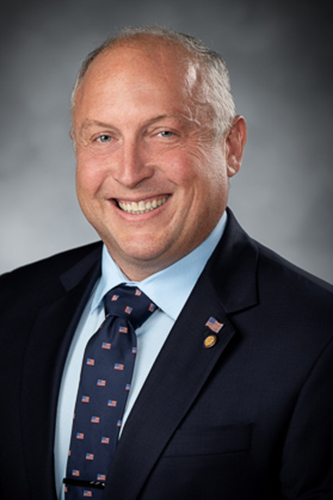
Del. Bill Flanigan
Sponsored bills
Maddy summaryHB 3201 amends West Virginia's medical cannabis law to permit edible forms (such as gummies and lozenges) for the first time, adding them to the list of approved product types. The bill establishes strict safety rules for edibles, including a 10-milligram THC limit per serving (with a 15% variance), mandatory bureau approval for each product, and prohibitions on candy-like appearance, color additives, or additives that increase potency. It also requires dispensaries to report all medical cannabis sales to the state's controlled substance monitoring database. This bill directly affects patients and caregivers using edibles, as well as businesses that produce or sell medical cannabis products.
Maddy summaryHB 3178 would amend West Virginia law to allow female inmates to work on state convict road crews, currently restricted to males. The bill removes the existing provision stating "no road crew assembled under this article shall be composed of both male and female persons" from §17-5-1 of the Code. This change would directly affect female inmates in state correctional facilities who are currently ineligible for these road maintenance and construction jobs. The policy shift makes all inmates, regardless of gender, eligible for this specific work program under the state road commissioner's supervision.
Maddy summaryHB 3159 makes syringe service programs illegal in West Virginia, which are programs providing sterile needles without a prescription. The bill prohibits these programs statewide, requiring existing programs to cease needle exchanges after the effective date (with a 120-day transition period to assist patients in moving to other services, but no needle exchanges during this time). It allows harm reduction services (like overdose prevention education and wound care) but explicitly separates them from syringe exchanges. Violations carry civil penalties up to $2,500 per day, and the bill repeals all existing legal provisions governing syringe programs. This directly affects needle exchange programs and their operators across the state.
Maddy summaryHB 3160 requires medical directors at West Virginia nursing homes to hold certification from the American Board of Post-Acute and Long-Term Care Medicine or an equivalent organization approved by the state health department. Existing medical directors have until January 1, 2030, to obtain certification, and nursing homes must report their directors' certification status to the health department by June 30, 2026. Nursing homes operating as part of an acute care hospital are exempt from the certification requirement but must designate a physician board-certified in a relevant specialty (e.g., rehabilitation or pulmonology) and approved by hospital leadership.
Maddy summaryHB 3158 would remove licensing requirements for medication-assisted treatment (MAT) programs in West Virginia, effectively ending the legal operation of clinics providing MAT for opioid use disorder. The bill targets all publicly and privately owned opioid treatment programs and office-based MAT clinics, which currently operate under state licensing. By amending licensing statutes, the bill would abolish the legal framework allowing these clinics to function, directly affecting patients receiving MAT and clinics currently licensed under the state’s program. It does not criminalize methadone use but eliminates the authorization for clinics to provide it through MAT. The bill is currently in the House Health and Human Resources committee after being introduced on March 5, 2025.
Maddy summaryHB 3163 requires West Virginia's Department of Health to add the names of nursing home medical directors to the existing public Health Care Facility Lookup page on the Office of Health Facility Licensure and Certification (OHFLAC) website. This affects the general public, especially during emergencies like pandemics, by making medical director contact information readily available. The bill amends state law to update the current online tool, which already provides facility names, addresses, and phone numbers. It does not change licensing requirements but expands the public information already accessible through OHFLAC's existing system.
Maddy summaryHB 3161 clarifies and updates verification requirements for sex offenders in West Virginia. It requires all registered sex offenders to verify their address and online information annually (or monthly based on birth month), while sexually violent predators must verify quarterly. The State Police must verify addresses every 90 days for high-risk offenders and annually for others, and may request new fingerprints or photos during verification. The bill does not create new registration rules but streamlines existing processes to ensure accurate and timely updates to public registries.
Maddy summaryHB 3113 increases the percentage of precincts required to undergo manual ballot audits during election canvassing in West Virginia. The bill mandates that a higher random selection of precincts (beyond the current threshold) must have voter-verified paper ballots manually counted. If discrepancies exceed 1% or change the election outcome in an audited precinct, all ballots in that precinct must be manually recounted, with the manual count becoming the official record. This directly affects election officials conducting canvasses and candidates who may demand recounts. The bill amends existing election code sections to implement these audit requirements.
Maddy summaryHB 3114 prohibits lobbyists from receiving compensation for lobbying West Virginia state officials on behalf of designated "foreign adversaries," such as governments of China, Russia, Iran, Cuba, and other entities listed in the bill. It requires lobbyists representing these entities to self-identify as agents of foreign adversaries and creates penalties including civil fines, court-ordered return of payments ("disgorgement"), and injunctive relief for violations. The bill defines "foreign adversaries" broadly to include specific countries, terrorist organizations, and entities controlled by them, with the list updated annually by the Secretary of Homeland Security. It directly affects lobbyists and lobbying firms working with these designated foreign entities within West Virginia. The bill is currently in the introduction phase, having been filed with the House Judiciary Committee on March 4, 2025.