

Maddy summaryThe Disaster Recovery Acceleration Act allows West Virginia homeowners to rebuild or repair homes damaged by natural disasters up to 125% of the original square footage without triggering new development standards or lengthy environmental reviews. It requires rebuilding to follow current building codes, while preserving any grandfathered rules (such as older construction standards) that applied to the original property. This applies directly to individuals restoring their own residential property after a disaster, aiming to simplify and speed up recovery efforts. The bill does not alter building code requirements but removes additional regulatory barriers for reconstruction.
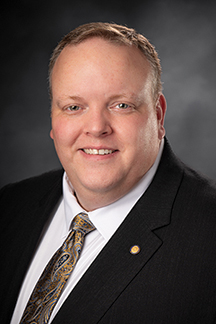
Del. David Green
Sponsored bills
Maddy summaryHB 4443 would allow West Virginia municipalities to suspend a person's driver's license if they fail to pay traffic fines or enter a payment plan within 90 days after a court judgment. The bill requires courts to offer payment plans based on 2% of annual net income (minimum $10 monthly), with a $25 setup fee, and imposes a $10 late fee per month for missed payments. After 90 days of nonpayment, clerks may suspend licenses, place judgment liens, or refer debts to collections (with limits on collection fees). This directly affects individuals with unpaid municipal court fines for traffic violations or related offenses.
Maddy summaryHB 4434 increases criminal penalties for bribery and corrupt practices in West Virginia. It upgrades violations of bribery provisions (Section 3) to a felony punishable by 1-10 years in prison or fines up to $250,000 for corporations, while misdemeanor violations (Sections 4-5) carry up to 1 year in jail or $105,000 in fines. All convicted individuals face permanent disqualification from holding any state office or government position. The bill also extends the statute of limitations for misdemeanor corruption cases to six years. This directly affects public officials, contractors, and others engaging in bribery or corrupt acts under state law.
Maddy summaryHB 4436 requires that child abuse and neglect investigations by West Virginia's Child Protective Services (CPS) must conduct face-to-face interviews with children at designated Child Advocacy Centers (CACs), where available. This directly affects children involved in CPS cases, CPS workers, and local CACs that would serve as the mandated interview location. The bill amends existing law to specify that interviews must occur at a CAC under county protocol, aiming to provide a more child-friendly environment during sensitive questioning. It does not create new centers but mandates using existing ones when accessible, focusing on improving interview conditions for child safety.
Maddy summaryHB 4052, known as the HALO Act, makes it a misdemeanor to approach within 14 feet of a first responder after being warned not to, if the person intends to interfere with their duties, threaten them with harm, or harass them. The bill defines "first responder" to include police officers, correctional probation officers, and emergency medical personnel. It criminalizes specific actions like disrupting emergency operations or causing emotional distress, with penalties under existing obstruction laws. The law aims to protect first responders at active emergency scenes by creating clear boundaries for public conduct.
Maddy summaryHB 2451 exempts home-based business owners (specifically sole proprietors and independent contractors) earning under $2,500 annually in gross revenue from requiring a municipal business license, provided they don't maintain a permanent physical location within city limits. It also establishes a revenue threshold for exempting small businesses from municipal business and occupation taxes. The bill amends existing tax codes to clarify these exemptions and creates the "Small Business Protection Act" to formalize these changes. This directly affects low-revenue home-based entrepreneurs in West Virginia municipalities. The law takes effect July 11, 2025.
Maddy summaryHB 3338, now law as Chapter 52 of the 2025 Regular Session, allows child witnesses to testify remotely in court proceedings when a judge determines in-person testimony would be traumatic for them. This directly affects minors involved in sensitive cases, such as abuse or violence, by providing an alternative to testifying in the courtroom. The key provision gives judges the authority to decide if remote testimony is necessary for the child's well-being, without requiring a separate motion. The bill does not change existing procedures for adult witnesses or alter the legal standards for admissibility of testimony.
Maddy summaryHB 3456 modifies the Commissioner of the Division of Corrections and Rehabilitation's authority specifically concerning Stevens Correctional Center. It changes the Commissioner's powers and duties related to that facility, directly affecting the Commissioner's management of Stevens Correctional Center. The bill became law on April 28, 2025, as Chapter 65 of the 2025 Regular Session. (Note: The context provides the bill's title and enactment date but does not specify the exact policy changes made to the Commissioner's duties.)
Maddy summaryHB 2571 requires West Virginia's Department of Motor Vehicles to provide towing companies with immediate 24/7 access to vehicle owner information. This directly affects towing businesses and vehicle owners, as it eliminates delays in contacting owners of towed or impounded vehicles. The bill mandates the DMV to create or adjust a portal system so tow companies can quickly verify owner details, preventing unnecessary charges that accumulate while seeking this information. The key provision (Section 17A-2A-7(7)) specifically authorizes this access "for use in providing notice to the owners of towed or impounded vehicles." This is a procedural change to DMV services, not a new tax or regulation.
Maddy summaryHCR 88 is a ceremonial resolution honoring two West Virginia first responders nominated for the Medal of Valor. It specifically recognizes Captain Donald Lawson (New Martinsville Police) for rescuing two people from carbon monoxide poisoning despite his own hospitalization, and Darrell Lambert (Lake Volunteer Firefighter) for entering a burning building without protective gear to save a trapped resident, sustaining burns in the process. The resolution formally confirms the Legislature's approval of their award and directs the House Clerk to send a copy to Governor Morrisey. This is a symbolic honor with no new policy or funding changes, directly affecting only these two nominees. It passed unanimously in both chambers on April 3, 2025.