

Maddy summaryHB 2688 would exempt overtime pay from West Virginia's personal income tax. The bill directly affects workers who earn overtime wages by removing the tax on that specific income. It adds a new provision (§11-21-12o) to the tax code stating "Overtime pay shall be exempt from the tax imposed by this article." This changes the tax treatment of overtime earnings without altering other tax rules or affecting non-overtime income.
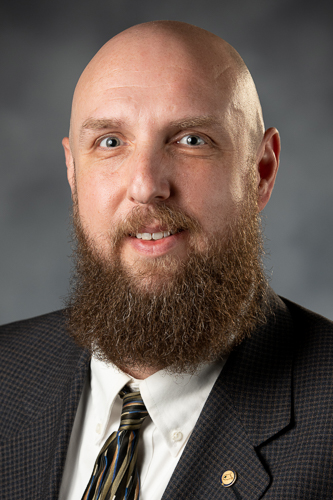
Del. Mark Dean
Sponsored bills
Maddy summaryHB 3289 allows individuals convicted of nonviolent felonies or multiple misdemeanors to petition for expungement of their records after completing specific programs. Eligible individuals must successfully complete 90 days of approved substance abuse treatment, graduate from a state-approved job readiness training course, or finish a drug court program. The bill waives the $100 expungement fee for these petitions and sets timeframes: one year after completion for multiple misdemeanors, and three years for nonviolent felonies. This change directly affects people with qualifying convictions who complete these rehabilitation or training programs.
Maddy summaryHB 2780 would require West Virginia's child care department to provide state-funded child care subsidies for the children of employees working at least 20 hours per week in licensed child care centers or certified family child care homes. This directly affects child care workers in these settings, regardless of their household income level. The bill eliminates income requirements for eligibility, ensuring all qualifying employees can access subsidized child care for their children. The key mechanism is a direct state subsidy administered by the department for child care services provided to these employees' children.
Maddy summaryHB 2876 increases the Natural Resources Commission from seven to eleven members by adding four new positions. These additional members must be Division of Natural Resources staff wildlife biologists, each specializing in a specific wildlife area: deer, bears, turkeys, or fisheries. The bill directly affects the commission's structure and operations, requiring specialized expertise in key species management. This change takes effect with appointments in 2025, expanding the commission's capacity to address species-specific conservation needs.
Maddy summaryHCR 40 is a resolution directing West Virginia's Economic Development Authority to identify land near Flatwoods for a tourism and entertainment complex modeled after attractions like Pigeon Forge, Tennessee. It requires the Authority to locate suitable sites, secure funding, and recruit private and public developers to build facilities for tourism, entertainment, and amusement. The bill specifically targets the Flatwoods area near Interstate 79 exit 67, citing its central location and access to major regional cities. This resolution aims to replicate economic benefits seen in neighboring states through new tourism infrastructure, directly affecting Flatwoods and surrounding communities.
Maddy summaryHB 3310 requires all West Virginia utility companies to cover the full costs of maintaining, upgrading, and repairing their infrastructure - including pipes, cables, poles, and electrical lines - without passing these expenses to consumers through rate increases. The bill directly affects utility companies operating in the state and all customers who pay utility bills. Key provisions mandate that companies absorb these costs entirely, maintain records proving costs weren’t factored into future rate hikes, and prohibit any financial burden on consumers for infrastructure maintenance. This policy change ensures no rate increases can be justified by infrastructure costs alone.
Maddy summaryHB 2730 proposes a three-year pilot program to make childcare more affordable for working parents in West Virginia. The bill would require the state, employers, and employees to each pay one-third of childcare costs for children under 18, targeting households earning 150-250% of the Federal Poverty Level who don’t qualify for existing subsidies. The program would launch in 2025 across three urban and two rural counties, with the Department of Human Services developing guidelines and reporting annually on participation and outcomes. If successful, it could lead to a statewide expansion of this cost-sharing model. The bill focuses on improving childcare access, stability, and quality without changing existing subsidy programs.
Maddy summaryHB 3086 establishes a minimum net enrollment requirement of 1,200 students for West Virginia counties to receive full state school funding. It directly affects smaller counties with fewer than 1,400 students, requiring their enrollment numbers to be adjusted upward to meet this minimum for funding calculations. The bill amends the school aid formula to ensure counties below 1,400 students receive funding based on the adjusted minimum, using a population density calculation to determine the adjustment amount. This policy change modifies how state education funds are distributed to counties with low student populations.
Maddy summaryHCR 72 designates March 20, 2025 as "Black Lung Awareness Day" in West Virginia. It honors coal miners affected by black lung disease (coal worker's pneumoconiosis), a preventable occupational lung condition caused by coal dust exposure. The resolution does not create new laws, funding, or policy changes - it serves as a ceremonial observance recognizing the disease's impact and existing protections like the Black Lung Benefits Act. It follows the Federal Coal Mine Health and Safety Act's emphasis on miner safety without altering current regulations.
Maddy summaryHB 2939, the Remote Schools Support Act, creates a new definition for "extremely remote schools" in West Virginia and provides specific state funding to support them. The bill requires counties to keep these schools open by providing additional state aid, with enrollment in such schools counted as 2.5 students for funding calculations. It mandates state funding to cover building operations, extreme weather preparedness, and professional development for staff at these schools. This directly affects rural schools in sparse-density counties by altering how they receive state education funding to prevent closures.