

Maddy summaryHB 5224 creates a personal income tax credit for West Virginia election officials who serve in elections. It provides a $100 credit per election (capped at $200 annually) that directly reduces the tax bill of eligible officials who meet service requirements. To claim the credit, officials must obtain certification from their county commission documenting their election service, which must be submitted to both the Tax Commission and Secretary of State. The credit is nonrefundable, cannot be carried forward to future years, and applies only to taxable years beginning after December 31, 2028.
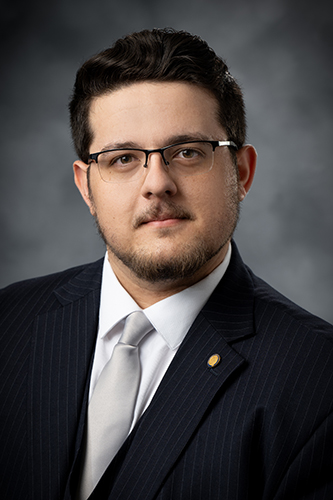
Del. Josh Holstein
Sponsored bills
Maddy summaryHB 5209 creates a state registry for individuals convicted of animal abuse (misdemeanor or felony) in West Virginia. It requires these individuals to register with the West Virginia State Police and pay an annual $125 fee, which funds mental health services for state police employees. The registry is integrated into an existing "Central Abuse Registry" that already includes records for child abuse, elder abuse, and sex offenses. This bill directly affects only those with final convictions for animal abuse crimes, not suspected abusers or general animal cruelty cases.
Maddy summaryHB 5218 requires the West Virginia Secretary of State to notify individuals or entities named as respondents in election law complaints. Respondents must then submit a written response within 10 business days of receiving this notice. The bill applies to all complaints filed under West Virginia election law regarding alleged violations of campaign finance or election rules. This change establishes a clear timeline for respondents to address allegations before the Secretary of State proceeds with further action.
Maddy summaryThis bill prohibits operating any drone within 100 feet of a polling place entrance or above polling grounds on election day. It makes such violations a misdemeanor, punishable by fines up to $1,000 or up to one year in jail. The law specifically targets drone activity near voting locations to prevent potential disruptions, without affecting commercial drone operators with FAA approval or law enforcement use. It applies only to election day operations at designated polling sites.
Maddy summaryHB 5217 requires write-in candidates for most elected offices in West Virginia (excluding delegates to national conventions) to pay a filing fee and submit a sworn certificate of announcement. This certificate must include the candidate's name, address, intent to run, and sworn statement, and must be filed with election officials by specific deadlines (49 days before an election, or by the 5th day before an election if a vacancy occurs). Candidates who qualify as indigent (with very low income and limited resources) may be exempt from the fee. Once filed, the Secretary of State and county election officials will post the names of certified write-in candidates so that valid write-in votes can be counted.
Maddy summaryThis House Resolution (HR 11) encourages West Virginia's K-12 students to design a new state highway route number shield for the 2026 anniversaries of the U.S. founding (250th) and the U.S. numbered highway system (100th). It directs the West Virginia Division of Highways and Department of Tourism to hold a statewide student design competition, requiring the shield to maintain federal safety standards for legibility while incorporating West Virginia identity. The winning design would be implemented gradually on state highways starting July 2027, replacing existing signs only as they wear out, and the student designer would receive legislative recognition. The resolution is procedural and non-binding, focusing on celebration and civic engagement rather than new policy.
Maddy summaryHR 9 is a ceremonial resolution honoring the late West Virginia House Delegate Douglas John Skaff Jr. It expresses the House of Delegates' condolences to his family and commemorates his service, including his roles as a delegate representing multiple districts and as Minority Leader. The resolution has no policy impact - it is purely symbolic, acknowledging his career in public service, business, and community leadership. It was unanimously adopted by the House on February 5, 2026, the same day it was introduced.
Maddy summaryThis bill clarifies and expands cooperation between law enforcement agencies within West Virginia and with agencies in neighboring states. It defines key terms such as "criminal justice enforcement personnel" and "law-enforcement agency" to establish who can participate in joint efforts. The legislation allows agency heads to request temporary assistance for investigations, including sharing personnel, equipment, and technical resources, with written requests required except in emergencies involving immediate danger to life. Personnel assigned to other agencies retain their original benefits and jurisdiction while operating under the operational command of the host agency's leadership. Agreements must be filed with local circuit clerks to remain in effect.
Maddy summaryHB 5172 establishes the Low Earth Orbit (LEO) Broadband Internet Connection Fund to install LEO satellite equipment at locations already designated for broadband deployment under existing state grant programs. The fund, managed by the West Virginia Department of Commerce, will use state appropriations, grants, and interest earnings to cover installation costs. It provides immediate internet access through LEO connections - though with different speed and latency than traditional broadband - while waiting for full statewide broadband deployment to complete. The fund’s money remains available annually without reverting to general state revenue.
Maddy summaryHB 5173 creates the West Virginia Rural Littering and Illegal Dumping Prevention Act, targeting individuals who improperly dispose of litter on public or private property, including near waterways. It establishes tiered penalties based on litter quantity: fines from $100 for small amounts (under 100 lbs) up to $50,000 for large dumps (over 500 lbs), with enhanced fines (50% higher) near protected waters. The bill also allows courts to order community service (cleaning litter for 8-200 hours) instead of or alongside fines, and creates a Rural Illegal Dumping Prevention Fund for cleanup programs. It directly affects anyone who illegally discards litter, imposing specific criminal penalties for repeat offenses and violations near water.