

Maddy summaryThis concurrent resolution (HCR 47) requests that West Virginia's Division of Highways rename the Etam Bridge (Bridge Number 39-072/00-001.85) in Preston County as the "Clinton 'Randy' Dean 101st Airborne Vietnam Veterans Memorial Bridge." It honors Clinton "Randy" Dean, a West Virginia native and Vietnam War veteran who served with the 101st Airborne Division, received a Purple Heart, and later died from Agent Orange-related illness. The resolution specifically directs the Division of Highways to name the bridge and install prominent signage identifying it with this commemorative name. This is a ceremonial resolution, not a policy change affecting legislation or funding.
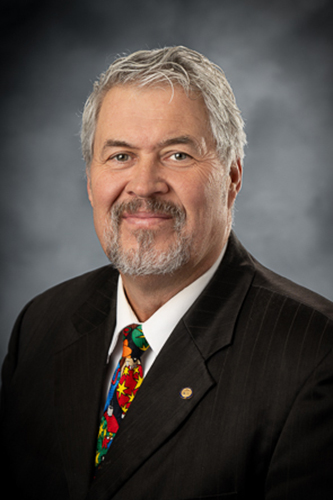
Rep. Jeff Eldridge
Sponsored bills
Maddy summaryHB 2878 requires railroad companies to provide alternative access routes when their maintenance or construction work blocks a state road that serves as the sole entry/exit for residents for more than six hours (for emergency vehicles) or more than 24 hours (for all vehicles). The bill specifically applies to state roads where rail companies are conducting work, mandating that they coordinate with the Division of Highways to minimize disruptions. It directly affects railroad companies, which must arrange these alternatives, and residents who rely on the blocked road for daily access. This policy change focuses on preventing prolonged community isolation during rail infrastructure work.
Maddy summaryHB 2609 requires device manufacturers and app stores to verify users' ages and obtain parental consent before allowing children under 16 to download applications. It mandates developers to provide parental controls - such as time limits, content filters, and account management tools - based on real-time age data provided by the app store. The law applies to new devices starting January 1, 2026, with older devices needing compliance by January 1, 2027. This directly affects parents/guardians, device makers (like Apple or Google), app developers, and children under 16.
Maddy summaryHB 3116 updates West Virginia's incest statute to clarify and expand the definition of family relationships covered under the law. It specifically adds "aunt" and "uncle" to include relatives by marriage (e.g., a person's wife of an uncle or husband of an aunt) and ensures the law applies equally to same-sex marriages. The bill directly affects individuals in familial relationships involving married aunts/uncles or same-sex spouses, making the legal definitions more inclusive. It does not change penalties (5-15 years imprisonment or fines) but ensures the statute applies to all qualifying familial relationships, including those formed through marriage.
Maddy summaryHB 3457 increases tax credits for property owners rehabilitating certified historic buildings in West Virginia from 10% to 25% of eligible costs for projects starting after December 2017. It allows owners to claim credits incrementally as each phase of a renovation is completed (rather than waiting for the full project), provided they submit final certification within 60 months. To qualify, owners must not be behind on state, local, or property taxes and must have the building designated as historic by the National Park Service. The credit applies to both residential and commercial properties meeting federal historic preservation standards.
Maddy summaryHB 3416 requires oil and gas operators to secure funds for plugging new wells before they are permitted, effective July 1, 2026. Operators must provide either a single-well bond covering full plugging costs or set aside money in an escrow account managed by the state treasurer. This prevents "orphaned wells" - unplugged wells left on land without a responsible operator to pay for closure, which currently threaten landowners' property, safety, and groundwater. The law directly affects new well operators and protects surface landowners from future liabilities. It replaces outdated bonding methods that contributed to thousands of unplugged wells in West Virginia.
Maddy summaryHB 3415, the Orphan Well Prevention Act of 2025, requires oil and gas operators to secure financial guarantees before obtaining new well permits or transferring existing wells. For new wells (after July 1, 2025), operators must provide either a bond or an escrow account to cover future plugging costs. For transferred wells, the previous operator remains liable until the new owner provides a similar financial guarantee. This directly affects oil and gas companies and landowners by preventing wells from becoming "orphaned" (unplugged with no responsible operator), reducing state or community costs for cleanup. The bill aims to address West Virginia’s thousands of existing orphaned wells by making operators financially accountable upfront.
Maddy summaryHB 3328 requires hospitals and healthcare facilities to provide effective communication tools for deaf or hard-of-hearing patients and their families when ASL interpreters aren't available on staff. Specifically, facilities must offer technology like hearing loops, captioning services, or video relay systems to enable communication. The bill also mandates that any ASL interpreters used must be approved by the West Virginia Commission for the Deaf and Hard of Hearing. This applies to all hospitals, ambulatory care facilities, and extended care centers under West Virginia law, aligning with the Americans with Disabilities Act.
Maddy summaryHB 3288 requires that 5% of all elk hunting permits issued in West Virginia be reserved for West Virginia residents who are honorably discharged veterans of the U.S. armed forces. This applies specifically to permits under the state's elk restoration program in designated counties, including Logan, Mingo, McDowell, and Wyoming. The bill does not change the total number of permits but sets aside a fixed percentage for veterans, with the remaining permits available through standard application processes. The Division of Natural Resources will administer this allocation as part of the elk management plan.
Maddy summaryHB 3236 requires West Virginia's Secretary of Health to establish a new long-term psychiatric and mental health facility specifically designed to serve homeless individuals. The bill mandates this facility as part of state-owned health infrastructure, directly affecting homeless residents needing sustained mental health care. Key provisions include the Secretary adopting operational rules for the facility and implementing performance metrics by January 1, 2025. This policy change creates a dedicated state-run resource for homeless individuals with mental health needs, rather than relying on existing services.