

Maddy summaryThis bill amends a law to allow the Cabell County Board of Education to redirect certain funds it receives from special and excess property levies to the Greater Huntington Park and Recreation District. The change directly affects the park district (by expanding its potential funding sources) and the school board (by creating a new allocation option for specific levies). It does not alter existing fee structures, bond issuance rules, or operational requirements for the park district. The amendment specifically enables the transfer of school district funds that would otherwise be used for educational programs to support park operations.
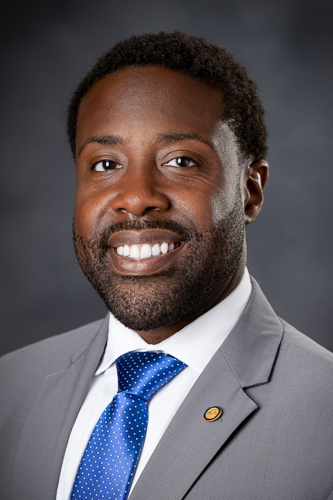
Del. Sean Hornbuckle
Sponsored bills
Maddy summaryHB 3362 increases funding for five existing West Virginia Department of Human Services (DHS) social services divisions by supplementing their current fiscal year 2025 budget allocations. It adds money to specific lines for the Office of the Commissioner, Child Protective Services Case Workers, Social Services Case Workers, Adult Protective Services Case Workers, and Youth Service Case Workers. The bill uses unappropriated surplus funds from the State Fund, General Revenue, to boost their budgets without creating new programs or changing eligibility. This is a routine budget adjustment, not a policy change, affecting DHS staff and the services they provide.
Maddy summaryHB 3355 is a procedural funding bill that increases the existing $3,500,000 appropriation for the West Virginia Division of Motor Vehicles (DMV) operations during fiscal year 2025. It allocates unspent balances from the State Road Fund - identified in the Governor’s budget document - to supplement the DMV’s current expenses line item (Fund 9007, Org 0802). The bill does not create new programs or change DMV services; it simply adds additional funding to the already-planned budget for ongoing DMV operations. This supplemental appropriation is intended for use before the fiscal year ends on June 30, 2025.
Maddy summaryHB 3340 prohibits discrimination based on hair texture or protective hairstyles (such as braids, afros, curls, and twists) in workplaces and educational institutions. It directly affects people whose hair textures or styles are historically associated with Black communities, particularly in settings with dress codes or grooming policies. The bill allows individuals to challenge discriminatory policies by showing that safety concerns are unfounded, could be mitigated with alternative tools, or are a pretext for bias. It does not ban all hair policies but requires institutions to justify restrictions that disproportionately impact textured hair. The bill is currently pending in the House Government Organization Committee after its March 13, 2025, introduction.
Maddy summaryHB 3348 adds $25,000 in funding to the West Virginia Board of Licensed Dietitians' existing budget for the 2025 fiscal year. This supplemental appropriation specifically increases the "Personal Services and Employee Benefits" line item under Fund 8680 for the Dietitians Licensure Board (Organization 0936). The bill directly affects the Board of Licensed Dietitians by providing additional resources for its operational costs during fiscal year 2025. It does not create new policy or alter licensure requirements, but simply allocates existing unappropriated funds to the Board's designated account.
Maddy summaryThis bill adds $500,000 from the state's unappropriated surplus funds to the Division of Culture and History (Department of Arts, Culture, and History) for fiscal year 2025. It directly affects state cultural programs by providing supplemental funding for operations, specifically noted as "ARCH Outdoor" in the bill title. The funding is allocated from the General Revenue fund (account 0293) to support existing cultural and historical initiatives. As a procedural budget adjustment, it does not create new policy but modifies existing appropriations.
Maddy summaryHB 3353 adds $1,000,000 in supplemental funding to the Department of Commerce's iHub program for fiscal year 2025, using unexpended funds previously allocated to the "Jobs for WV Graduates" initiative. This funding, designated as a "Directed Transfer" under appropriation 70000, will specifically support the iHub's operations within the Department of Commerce. The bill redirects these existing unappropriated funds (from a prior program's surplus) to the iHub, rather than creating new spending. This is a routine budget adjustment to reallocate unused state funds for a specific program, not a new policy change.
Maddy summaryHB 3339 requires health insurance plans in West Virginia to cover diagnostic and supplemental breast examinations without any out-of-pocket costs (such as deductibles or copays). Diagnostic exams evaluate breast abnormalities found during screening or by other means, while supplemental exams screen higher-risk individuals (e.g., due to family history) without prior abnormalities. The bill allows cost-sharing for Health Savings Account-qualified high-deductible plans only after meeting the federal minimum deductible, except for preventive care, which remains fully covered. The Insurance Commissioner may propose rules to implement these requirements using current medical guidelines from organizations like the National Comprehensive Cancer Network.
Maddy summaryHB 3364 provides a $50,000 supplemental appropriation to the Fire Commission's Fire Marshal Fees fund (Fund 6152) for fiscal year 2025. This increases the existing budget allocation specifically for personal services and employee benefits within the Fire Commission's operations. The funding uses unappropriated balances remaining in the fiscal year 2025 budget, directly supporting the Fire Commission's staffing and operational costs.
Maddy summaryHB 2934 requires West Virginia's child welfare department to prioritize housing applications (like HUD or government-assisted housing) for youth aging out of foster care who have turned 18 and do not qualify for transitional living services. The bill amends §49-2-129 to mandate that housing search policies ensure dwellings are safe, affordable, and equipped for basic needs like cooking and emergency communication. It directly affects foster youth aged 18+ transitioning to independent living, who often face housing instability. The key mechanism is the new priority system for housing applications, replacing previous eligibility criteria for this vulnerable group.