

Maddy summaryThis House Resolution honors the life and legacy of the late West Virginia legislator Larry D. Kump, who passed away on February 28, 2026. The resolution formally expresses the House of Delegates' condolences to Kump's family and acknowledges his service as a representative for Berkeley County across three different terms. It recognizes his career in criminal justice and mediation, his commitment to limited government, and his role as a devoted family member and church leader. The document is a ceremonial tribute rather than a law that changes policy or affects public programs.
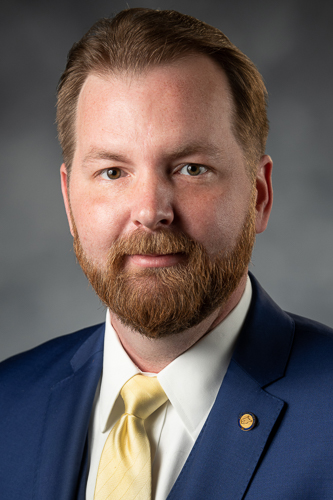
Rep. Daniel Linville
Sponsored bills
Maddy summaryHouse Resolution 13 is a West Virginia legislative resolution endorsing federal legislation (H.R. 5966), which would create the Ohio River Basin Restoration Program. If enacted, the program would fund projects to improve water quality, restore fish habitats, enhance flood resiliency, and expand recreational access across the Ohio River basin. It directly affects West Virginia residents who rely on the river for drinking water (700,000 people), economic activity, and recreation along its 277-mile border. The resolution clarifies the program would be non-regulatory, not creating new permits or legal claims, and aims to deliver clean water and economic benefits to communities in the Ohio River watershed.
Maddy summaryThis House Resolution urges the Capitol Building Commission and Department of Administration to assess and address hazardous trees along California Avenue and Kanawha Boulevard on the State Capitol Complex grounds. The resolution requests an immediate evaluation of trees that have caused property damage through falling limbs and broken trunks over the past two years. It specifically asks officials to trim trees back to the grass side of sidewalks or remove and replace hazardous trees to protect public safety and state property. This non-binding resolution directs state agencies to take preventative maintenance actions without mandating specific enforcement measures.
Maddy summaryHB 5164 transfers the Office of the State Fire Marshal from the Fire Commission to the Department of Homeland Security, changing how the position is appointed and managed. It requires the State Fire Marshal to have a bachelor's degree plus six years of fire safety experience (including two years supervisory), and clarifies that deputy fire marshals are law enforcement officers with specific training requirements. The bill also establishes new qualifications for deputy fire marshals and details their supervisory responsibilities within the Office. This directly affects the State Fire Marshal, deputies, and fire safety personnel under the Office of the State Fire Marshal.
Maddy summaryHB 5492 allows West Virginia's Department of Economic Development to pre-purchase standardized electric substation transformers from regulated utilities to accelerate industrial and commercial development projects. The bill specifies technical requirements for transformers (e.g., 150-200 MVA capacity, specific voltage levels) and authorizes the state to pay for initial ordering costs while utilities retain ownership until assigned to qualifying projects like industrial parks. If transformers aren't assigned by delivery, the state covers remaining costs and utilities hold them for future projects or system use. The state can recover funds through utility rate adjustments, project agreements, or other approved methods, without requiring Public Service Commission approval for these purchases.
Maddy summaryHCR 22 is a concurrent resolution requesting the Joint Committee on Government and Finance to study policy options that could accelerate the ordering and deployment of electric generation equipment in West Virginia. It specifically asks the committee to examine mechanisms like state-backed deposit guarantees, regulatory frameworks for cost recovery, and accelerated depreciation schedules to reduce delays in equipment procurement. The study aims to support grid reliability, economic growth, and West Virginia’s goal of reaching 50 gigawatts of generation capacity by 2050, while protecting ratepayers and taxpayers. It does not create new laws but seeks recommendations for potential legislative action based on the committee’s findings.
Maddy summaryHCR 21 is a study resolution requesting the Joint Committee on Government and Finance to examine whether West Virginia counties should direct a portion of new property tax revenue from large-scale investments (like manufacturing or energy projects) toward property tax relief for primary residence homeowners. The study would assess thresholds for "significant" revenue growth, prioritize relief for retirees, develop revenue allocation formulas, and analyze constitutional requirements for such a policy. It does not create new tax relief but evaluates feasibility and implementation details, including safeguards to maintain funding for schools and public safety. The committee must report findings by 2027, potentially leading to future legislation or constitutional amendments.
Maddy summaryHB 5176 creates a searchable online database managed by the West Virginia State Police for individuals convicted of specific animal cruelty offenses, including violations of sections like §61-8-19 (cruelty to animals). The database will include names, birth dates, offense details, and county of conviction for those convicted of listed misdemeanor or felony animal abuse crimes. Convicted individuals must pay a $125 annual fee (to be paid to their county State Police office) to maintain their listing, with fees deposited into a dedicated State Police fund. Removal from the database is possible after 5 years for misdemeanors or 15 years for felonies (with proof of rehabilitation), or immediately if the conviction is expunged or pardoned.
Maddy summaryHB 5558 creates the West Virginia Child Investment Account Matching Program, which provides a one-time state matching contribution (up to $250 per child) to existing federal "Trump Accounts" for eligible children born in West Virginia. The program prioritizes households with incomes under 300% of the federal poverty level and limits annual spending to $2.5 million. The West Virginia State Treasurer administers the program, verifying eligibility and preventing duplicate benefits, but the contributions require annual legislative appropriation and are not guaranteed. This bill directly affects families with children who already participate in the federal Trump Account program.
Maddy summaryHB 5556 creates a three-year pilot program allowing West Virginia's Medicaid program to set drug reimbursement rates based on the lowest prices paid for similar drugs in other industrialized countries (external reference pricing). It targets high-cost prescription drugs significantly impacting Medicaid spending, while excluding drugs without international price comparisons and ensuring continued access to medically necessary medications. The program requires annual reports to lawmakers on cost savings, drug availability, and manufacturer participation, and permits the state to negotiate rebates or adjust rates to prevent shortages. This pilot applies only to Medicaid drugs and does not affect private insurance or existing pharmaceutical contracts.