

Maddy summaryHB 4009, the Portable Benefit Account Act, creates a new legal framework allowing independent contractors to access portable benefits through individually managed accounts. It directly affects independent contractors and hiring parties (businesses that contract with them), enabling voluntary contributions from hiring parties to fund benefits like health insurance, retirement plans, life insurance, and income replacement. Key provisions require written, opt-in agreements for contributions, prohibit using account contributions to determine worker classification, and mandate that accounts remain tied to the contractor - not the employer - when changing jobs. The bill establishes definitions for terms like "portable benefit account" and "provider," and requires administrative oversight by the Bank Commissioner.
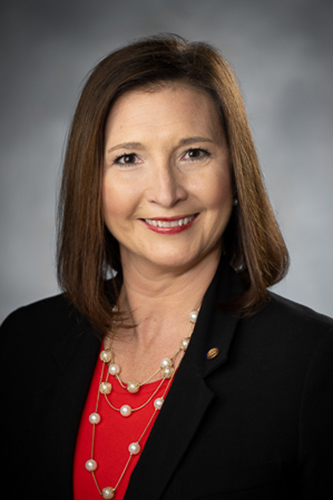
Del. Sarah Drennan
Sponsored bills
Maddy summaryThis bill requires physicians and osteopathic doctors in West Virginia to complete continuing education credits specifically in nutrition as part of their biennial license renewal process. The law mandates that medical professionals earn a minimum of fifty hours of continuing medical education every two years, with osteopathic physicians required to complete thirty-two hours including nutrition training, and these credits must be approved by relevant medical boards. The bill amends existing state code sections to make nutrition education a mandatory component of the continuing education requirement for license renewal.
Maddy summaryThis bill establishes the Recharge West Virginia Program, which provides financial reimbursement to private employers in the state for costs associated with training their employees in new skills. The program is administered by the Division of Economic Development and targets companies that wish to upskill their workforce through specialized technical training, leadership development, or registered apprenticeships. To qualify for reimbursement, employers must demonstrate that their employees complete industry-recognized credentials and achieve a wage increase of at least 25% above their previous earnings, with individual reimbursements capped at $10,000 per employee and $100,000 annually per employer. The legislation defines eligible employees as those who have lived and worked full-time in West Virginia for the past six months, while excluding public bodies and foreign nonprofit corporations from participating. Employers must submit detailed applications including training plans, job descriptions, and wage projections to the Division of Economic Development, which will establish specific procedures and standards for evaluating reimbursement requests.
Maddy summaryHB 4053 establishes the "Blue Envelope Program" to improve communication between law enforcement and drivers with autism spectrum disorder, dementia, or intellectual/developmental disabilities during traffic stops. Eligible drivers (with a valid license/permit) can request a specially designed blue envelope containing their license, registration, and emergency contact information, along with a vehicle decal and communication guidance for officers. The program, set to launch January 1, 2027, will be administered through the West Virginia Division of Motor Vehicles, sheriff's offices, and police stations.
Maddy summaryThis bill requests the Joint Committee on Government and Finance to study women's collegiate sports programs in West Virginia, focusing on financial sustainability, name image and likeness impacts, and Title IX obligations. The study will examine current funding levels, endowment feasibility, revenue-sharing models, and operational efficiency methods to support female student-athletes. The committee must submit a report by January 1, 2027, to state officials with findings, conclusions, and potential legislative recommendations. Funding for the study will come from existing legislative appropriations to the committee.
Maddy summaryHB 4573 requires West Virginia high schools to provide foster youth (current or former foster care) with information about post-secondary education, job training, housing, healthcare, and independent-living support before graduation. The bill mandates school counselors and graduation coaches receive training on these resources and directs the state Department of Education to create and maintain a Foster Youth Resource Guide. County school districts must ensure eligible students receive this pre-graduation information. The law aims to improve transition planning for foster youth entering adulthood, without requiring disclosure of a student’s foster care status.
Maddy summaryThis bill requests that the Joint Committee on Government and Finance conduct a study to estimate the actual costs of providing early childhood care and education in West Virginia. The study aims to determine whether current subsidy reimbursement rates accurately reflect the true cost of quality care across different program types, age groups, and geographic regions. If completed, the findings will be reported to government, health, and education committees by December 31, 2026, to help inform future budget decisions and subsidy policies. The bill directly affects state officials responsible for child care funding and policy, as well as early childhood care providers who receive state subsidies.
Maddy summaryThis bill asks a state committee to study whether West Virginia should create a flexible respite care program for seniors and their caregivers. The proposed program would allow families to schedule short-term, on-demand assistance for specific needs like medical appointments or personal obligations, rather than being limited to fixed weekly service blocks. The study will examine costs, potential savings from delaying nursing home placement, and how to fund and manage the program, especially in rural areas with fewer resources. If the committee finds the idea feasible, it will recommend new legislation to establish the program.
Maddy summaryHB 4986 amends West Virginia law to clarify when parental abandonment is presumed, especially for incarcerated parents. It states that abandonment is presumed when a parent is jailed for a significant portion of the child's minority (considering the child's age and need for stability) or for serious crimes like sexual assault, murder, or violent offenses. The bill also requires child welfare agencies to seek termination of parental rights when a child has been in foster care for 15 of the last 22 months, or when a court finds the child abandoned, abused, or when a parent committed specific violent or sexual crimes against the child. This directly affects parents facing incarceration for certain offenses and children in foster care or abuse cases.
Maddy summaryThis House Resolution honors the life and legacy of the late West Virginia legislator Larry D. Kump, who passed away on February 28, 2026. The resolution formally expresses the House of Delegates' condolences to Kump's family and acknowledges his service as a representative for Berkeley County across three different terms. It recognizes his career in criminal justice and mediation, his commitment to limited government, and his role as a devoted family member and church leader. The document is a ceremonial tribute rather than a law that changes policy or affects public programs.