

Maddy summaryHB 3383 creates the Great Expectations Pilot Program to support West Virginia youth aging out of foster care in transitioning to community college. The program pairs eligible foster youth (those who were in foster care when earning their high school diploma or GED) with full-time coaches at a single community college, who provide personalized guidance on college applications, financial aid, transportation, career planning, and accessing support services. It allocates $95,000 annually from state general revenue to cover the coach's salary, benefits, and program resources. The three-year pilot, starting September 2025 at one college, will be evaluated in 2029 to determine potential statewide expansion.
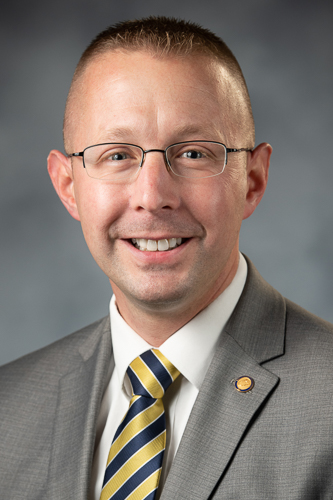
Del. Jonathan Pinson
Sponsored bills
Maddy summaryHB 2181 prohibits counties and municipalities from charging fees, requiring connection to, or imposing improvement costs on private landowners who already have privately installed sanitary sewer systems. It directly affects landowners who installed their own sewers before the county built a public system, excluding them from being classified as "users" under sewer fee rules. The bill amends West Virginia law by redefining "user" to clarify these landowners cannot be charged for county sewer systems or required to connect. This policy change prevents municipalities from imposing public sewer costs on private system owners who predated municipal infrastructure.
Maddy summaryHB 3303 would expand the authority of bail bond enforcers (often called bounty hunters) in West Virginia to apprehend defendants for specific serious offenses, including drug trafficking near schools, violent assaults, stalking, sexual assault, and human trafficking. The bill requires enforcers to give law enforcement at least four hours' notice before apprehension and to deliver defendants to court or police within 24 hours. It also mandates the Secretary of State to publish a list of registered enforcers and clarifies prohibited conduct. The bill directly affects defendants charged with the listed offenses and the bail bond industry, but does not apply to all criminal cases.
Maddy summaryHB 3312 would amend West Virginia law to increase sheriff salaries so they are 10% higher than the salaries of county clerks and circuit clerks in each county class. This bill directly affects county sheriffs across all 31 West Virginia counties, adjusting their pay relative to other elected county officials. Key mechanisms require county auditors to certify improved fiscal health before the increase takes effect, and sheriffs must submit a written request to receive the higher salary. The change applies to salaries paid on or after the effective date, with current salary structures showing sheriffs currently earn less than clerks in all county classes.
Maddy summaryHB 3127 adds a 50-cent fee to every new vehicle registration and registration renewal in West Virginia. This fee, collected by the DMV, will directly fund the Deputy Sheriff’s Retirement Fund. The bill amends existing law to redirect these registration fees - paid by all vehicle owners - to support retirement benefits for deputy sheriffs. It does not change registration requirements or create new taxes beyond the specified fee. The policy change is limited to reallocating this existing fee stream to a specific retirement fund.
Maddy summaryHB 3151, the Closed Captioning Act, requires public venues like restaurants, bars, hospitals, colleges, and government buildings to have at least half of their public-facing televisions display closed captions continuously during regular hours. It mandates that these venues prevent patrons from disabling captions and distribute captioned TVs so they are visible to all guests. Exceptions apply if no TVs are present or if available TVs cannot display captions. The bill defines "closed captioning" as on-screen text of audio content and takes effect upon passage. This law aims to improve accessibility for deaf and hard-of-hearing individuals in public spaces.
Maddy summaryHJR 30 proposes a constitutional amendment to limit service in five specific West Virginia constitutional offices to three consecutive terms, effective January 1, 2029. It directly affects the Secretary of State, State Auditor, State Treasurer, Attorney General, and Commissioner of Agriculture. The amendment prevents any individual from serving more than three consecutive terms in these roles for terms beginning after January 1, 2029, while grandfathering terms served prior to that date. The proposed change must be ratified by voters in the 2026 general election to take effect.
Maddy summaryHB 2957 changes where fees from certain agricultural-themed license plates are deposited. Specifically, it directs all fees collected for "pollinator" special license plates to be deposited into the Agriculture Fees Fund, rather than the State Road Fund. Fees for existing FFA and 4-H themed plates will continue to go to their respective funds as currently required. This bill affects organizations that apply for these special license plates, such as agricultural groups or youth organizations, by altering the destination of the fees they collect. The change is a straightforward policy adjustment to fund allocation, with no new requirements for plate applications or fees.
Maddy summaryHB 2834 requires all West Virginia public schools to observe a one-minute period of silence at the start of each school day in every classroom. This applies directly to county school boards (which must implement the policy) and classroom teachers (who must ensure students remain seated and silent without suggesting any specific activity, such as prayer or meditation). The bill prohibits teachers from making recommendations about what students should do during the silence to avoid influencing their choices. It also mandates that the Office of the Attorney General defend the law if challenged legally. The policy aims to guarantee students' individual freedom to engage in silent reflection without state pressure.
Maddy summaryHB 2751 authorizes Mason County to levy a special sales tax on tangible personal property and services sold within the Town of Henderson's Economic Opportunity Development District. This tax, which would fund local economic development efforts, applies specifically to businesses operating in Henderson and requires no additional approval from the state development office. The bill amends state law to allow Mason County Commission to establish this district and set tax rates without seeking prior state authorization. It directly affects businesses selling goods or services in Henderson and directs the tax revenue toward supporting the town's economic growth.