

Maddy summaryHCR 40 is a resolution directing West Virginia's Economic Development Authority to identify land near Flatwoods for a tourism and entertainment complex modeled after attractions like Pigeon Forge, Tennessee. It requires the Authority to locate suitable sites, secure funding, and recruit private and public developers to build facilities for tourism, entertainment, and amusement. The bill specifically targets the Flatwoods area near Interstate 79 exit 67, citing its central location and access to major regional cities. This resolution aims to replicate economic benefits seen in neighboring states through new tourism infrastructure, directly affecting Flatwoods and surrounding communities.
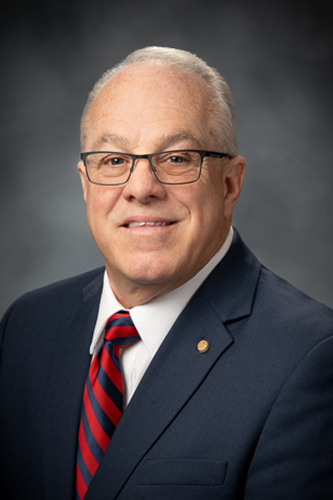
Del. Joe Parsons
Sponsored bills
Maddy summaryHCR 72 designates March 20, 2025 as "Black Lung Awareness Day" in West Virginia. It honors coal miners affected by black lung disease (coal worker's pneumoconiosis), a preventable occupational lung condition caused by coal dust exposure. The resolution does not create new laws, funding, or policy changes - it serves as a ceremonial observance recognizing the disease's impact and existing protections like the Black Lung Benefits Act. It follows the Federal Coal Mine Health and Safety Act's emphasis on miner safety without altering current regulations.
Maddy summaryThis concurrent resolution (HCR 47) requests that West Virginia's Division of Highways rename the Etam Bridge (Bridge Number 39-072/00-001.85) in Preston County as the "Clinton 'Randy' Dean 101st Airborne Vietnam Veterans Memorial Bridge." It honors Clinton "Randy" Dean, a West Virginia native and Vietnam War veteran who served with the 101st Airborne Division, received a Purple Heart, and later died from Agent Orange-related illness. The resolution specifically directs the Division of Highways to name the bridge and install prominent signage identifying it with this commemorative name. This is a ceremonial resolution, not a policy change affecting legislation or funding.
Maddy summaryHB 3116 updates West Virginia's incest statute to clarify and expand the definition of family relationships covered under the law. It specifically adds "aunt" and "uncle" to include relatives by marriage (e.g., a person's wife of an uncle or husband of an aunt) and ensures the law applies equally to same-sex marriages. The bill directly affects individuals in familial relationships involving married aunts/uncles or same-sex spouses, making the legal definitions more inclusive. It does not change penalties (5-15 years imprisonment or fines) but ensures the statute applies to all qualifying familial relationships, including those formed through marriage.
Maddy summaryHB 3169 prevents unlicensed individuals from referring customers to insurance sellers unless they charge only a small, flat fee ($100 or less) not tied to sales. It requires insurance companies and their vendors to establish safeguards against unethical telemarketing, including banning automated calls without written consent, prohibiting calls to numbers on the federal Do Not Call Registry, blocking false caller ID, and preventing misleading identification as licensed agents. The bill directly affects unlicensed referral services and insurance companies that use third parties for customer outreach. Key provisions mandate specific procedural changes to protect consumers from deceptive telemarketing practices under West Virginia's Insurance Sales Consumer Protection Act.
Maddy summaryHJR 40 proposes a constitutional amendment to change how members of the West Virginia State Board of Education are selected. It would replace the current system of nine appointed members with a hybrid model: five members elected on a partisan basis from five geographic regions (serving staggered four-year terms), and four members appointed by the Governor with Senate consent. The amendment would require the Board to submit any rules or policies they create to the Legislature for review, approval, amendment, or rejection. If approved by voters in the 2026 general election, these changes would take effect with the 2028 general election, modifying the current appointment system for the Board.
Maddy summaryHCR 92 is a non-binding legislative resolution prohibiting compensation for assisting veterans with benefits applications, except as permitted under federal law. It bans charging fees for preparing, presenting, or advising on veterans' benefits claims, guaranteeing specific benefit amounts, or charging excessive fees. The resolution requires written agreements meeting federal fee standards (38 CFR §14.636) before any assistance is provided. It aims to protect veterans from exploitative fees when seeking benefits support.
Maddy summaryHB 3337 clarifies rules for substitute teachers in West Virginia, primarily affecting school districts, principals, and substitute teachers themselves. The bill allows substitutes to remain in a classroom for the full school term if they've served continuously for over half the grading period, unless the principal certifies the regular teacher prepared them for the role. It also requires school districts to provide long-term substitutes with training on IEP and 504 plans (special education and accommodations). Additionally, the bill creates a new pathway for retired teachers to work as substitutes in areas with critical staffing shortages, subject to specific district policies and state approval.
Maddy summaryHB 3288 requires that 5% of all elk hunting permits issued in West Virginia be reserved for West Virginia residents who are honorably discharged veterans of the U.S. armed forces. This applies specifically to permits under the state's elk restoration program in designated counties, including Logan, Mingo, McDowell, and Wyoming. The bill does not change the total number of permits but sets aside a fixed percentage for veterans, with the remaining permits available through standard application processes. The Division of Natural Resources will administer this allocation as part of the elk management plan.
Maddy summaryHB 3261 clarifies the qualifications for Certified Registered Nurse Anesthetists (CRNAs) to administer anesthesia in West Virginia. It requires CRNAs to hold both a registered nursing license and an advanced practice nursing license, complete a nationally accredited anesthesia program, and maintain national certification. The bill defines "cooperation" between CRNAs and physicians/dentists as a collaborative process where each contributes based on their expertise, and specifies that physicians are not liable for CRNA actions under this framework. This directly affects CRNAs, physicians, dentists, and healthcare facilities by standardizing practice requirements and supervision protocols for anesthesia administration.