

Maddy summaryHouse Resolution 13 is a West Virginia legislative resolution endorsing federal legislation (H.R. 5966), which would create the Ohio River Basin Restoration Program. If enacted, the program would fund projects to improve water quality, restore fish habitats, enhance flood resiliency, and expand recreational access across the Ohio River basin. It directly affects West Virginia residents who rely on the river for drinking water (700,000 people), economic activity, and recreation along its 277-mile border. The resolution clarifies the program would be non-regulatory, not creating new permits or legal claims, and aims to deliver clean water and economic benefits to communities in the Ohio River watershed.
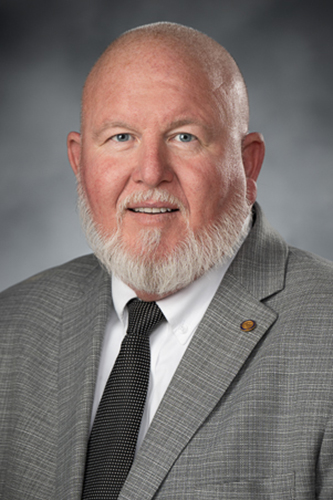
Del. Scot Heckert
Sponsored bills
Maddy summaryHB 4962 creates a legal process for residents, tenants, or community groups to address drug activity on properties. To file a lawsuit, they must prove specific neighborhood harms like increased police calls, trash accumulation, safety concerns, or diminished property values. Property owners found responsible for drug-related nuisances face civil penalties or criminal charges under this law.
Maddy summaryThis House Resolution urges the Capitol Building Commission and Department of Administration to assess and address hazardous trees along California Avenue and Kanawha Boulevard on the State Capitol Complex grounds. The resolution requests an immediate evaluation of trees that have caused property damage through falling limbs and broken trunks over the past two years. It specifically asks officials to trim trees back to the grass side of sidewalks or remove and replace hazardous trees to protect public safety and state property. This non-binding resolution directs state agencies to take preventative maintenance actions without mandating specific enforcement measures.
Maddy summaryHB 4971 requires new high-voltage electric transmission lines (400kV or greater) needing West Virginia Public Service Commission approval to include a substation near industrial parks if the line runs within five miles of one. It limits this requirement to one substation per 40-mile segment of the line within the state, with the substation needing completion within two years after the line becomes operational. The law applies to transmission developers and the Public Service Commission, aiming to boost economic development by linking grid infrastructure directly to industrial areas. Key provisions include evaluating substation locations based on expected job creation and tax benefits, and prohibiting route choices designed to avoid industrial park proximity.
Maddy summaryHB 5341 creates a public registry of domestic violence offenders in West Virginia, maintained by the State Police and accessible online. Individuals convicted of domestic violence against an intimate partner (with at least one prior conviction) or of sexual assault, abuse, or causing serious bodily injury must register and pay a $150 fee, with $50 funding family court services and $100 supporting domestic violence legal aid. The registry includes basic identifying details like name, date of birth, and conviction dates but excludes sensitive information such as addresses or Social Security numbers. Removal from the registry occurs after 5 years for one prior conviction, 10 years for two prior convictions or severe offenses, or for life with three or more prior convictions, applying to offenses occurring on or after July 1, 2026.
Maddy summaryHB 5105 creates a legal cause of action for vulnerable individuals - including those in recovery, elderly persons (65+), protected persons, and incapacitated adults - who suffer financial exploitation. The bill defines "financial exploitation" as the intentional misuse of funds or assets through undue influence (excluding good-faith financial assistance) and prohibits defenses based solely on a legal relationship (e.g., being a guardian or attorney). Courts can issue protective orders, freeze assets, award increased damages, and impose stricter criminal penalties for violations - especially for repeat offenses or losses of $1,000+ - without requiring proof of criminal intent.
Maddy summaryHB 5492 allows West Virginia's Department of Economic Development to pre-purchase standardized electric substation transformers from regulated utilities to accelerate industrial and commercial development projects. The bill specifies technical requirements for transformers (e.g., 150-200 MVA capacity, specific voltage levels) and authorizes the state to pay for initial ordering costs while utilities retain ownership until assigned to qualifying projects like industrial parks. If transformers aren't assigned by delivery, the state covers remaining costs and utilities hold them for future projects or system use. The state can recover funds through utility rate adjustments, project agreements, or other approved methods, without requiring Public Service Commission approval for these purchases.
Maddy summaryThis bill (HB 4604) amends West Virginia law to clarify payment procedures for public defender panel attorneys handling abuse and neglect cases. It requires attorneys to submit detailed time and expense records via electronic vouchers within 90 business days of case completion, with payments processed within 45 days if approved. If payments are rejected or reduced, the bill establishes a 15-day appeal process to the appointing court, prohibiting the requirement of privileged client information during disputes. The changes directly affect public defender offices and appointed attorneys, streamlining payment accountability without altering case handling standards.
Maddy summaryHB 4989 establishes a state-funded pilot program offering free cancer screenings to West Virginia's active and retired firefighters. The program provides a comprehensive screening package including a multi-cancer blood test, abdominal/thyroid/liver ultrasound, lung CT if needed, and skin cancer screening, with a $1,300 cost limit per person. Firefighters may self-fund screenings before July 1, 2026, and seek reimbursement, while the state covers costs for the 24-month pilot starting July 1, 2026. A committee will develop the program plan, track participation and results, and report findings to state leaders after 12 and 24 months.
Maddy summaryHB 5228 clarifies West Virginia's definition of "electioneering" to prohibit campaign-related activities near polling places. It bans displaying candidate logos, campaign materials, or verbally advocating for/against candidates or ballot questions within 100 feet of polling entrances on election day. The bill exempts news media conducting exit polls and vehicle bumper stickers parked within 100 feet while voters are entering. Violations carry fines of $100-$1,000 or up to one year in jail, and election officials or law enforcement may enforce these rules.