

Maddy summaryThis bill exempts honorably discharged veterans of any U.S. military branch from West Virginia vehicle registration fees, requiring only a $10 initial application fee for special "Veterans" license plates. It allows veterans to apply for these plates on any number of vehicles they own and permits surviving spouses to retain the plate after a veteran's death until remarriage or death. Documentation of military service is required to qualify for the plates. The bill does not impose renewal fees or other charges beyond the initial $10 fee.
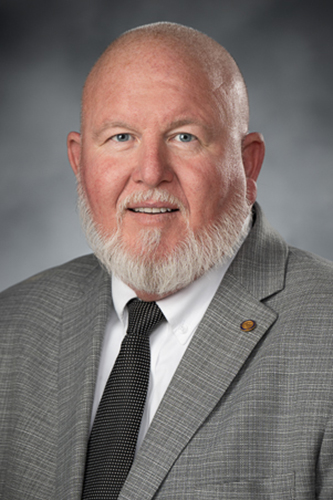
Del. Scot Heckert
Sponsored bills
Maddy summaryHB 3039 requires public service district boards serving multiple communities to include at least one member from each community they represent. This applies to boards established under West Virginia law that cover more than one city, town, or incorporated area. The bill amends existing code to mandate this membership structure, ensuring direct community representation on boards managing shared services like water, sewer, or stormwater systems. It does not alter other board appointment rules or operational requirements.
Maddy summaryHB 3040 creates a 35% tax credit against West Virginia's business and occupation tax for coal-fired electric generating units that spend money on environmental pollution control equipment (like air/water pollution systems or carbon capture technology) to meet regulatory requirements. The credit applies to expenses for installing, repairing, or maintaining such equipment, but cannot reduce a company's tax bill by more than 50% in a single year. Unused portions of the credit can be carried forward for up to five years. This bill directly affects coal power plants operating in West Virginia that comply with environmental regulations and pay the business and occupation tax.
Maddy summaryHB 3041 requires West Virginia public elementary and secondary schools to display a specific version of the Ten Commandments in every classroom starting with the 2025-2026 school year. The display must be a durable poster or framed copy at least 16 inches wide by 20 inches tall, containing the exact text of the Ten Commandments as specified in the bill, and legible from any point in the classroom. Schools without compliant displays must accept private donations of qualifying posters or replace existing displays using public funds or donations. The bill also mandates that schools offer surplus displays to other public schools.
Maddy summaryHB 2984 would create a "Law-Enforcement Officers' Bill of Rights" in West Virginia, establishing procedural protections for officers during investigations. It defines "law-enforcement officer" broadly to include state police, campus police, hospital police, and certain specialized roles (like rangers and litter control officers), but excludes chief executives and some probationary officers. Key provisions require agencies to use hearing boards for complaints, allow officers to have legal counsel during investigations, provide expungement of formal complaint records, and prohibit false reporting. The bill supersedes conflicting local laws and aims to standardize administrative procedures across all law-enforcement agencies in the state.
Maddy summaryHB 2985 would allow West Virginia water and sewer utilities to offer reduced rates (up to 20% lower) to residential customers living in communities with fewer than 1,000 residents, regardless of income. It also permits reduced rates for customers receiving Social Security SSI, TANF, TANF-UP, or SNAP benefits (if age 60+), with eligibility verified through the Department of Human Services. Utilities must apply retroactive credits to eligible customers’ bills for the previous month’s service, reflecting the rate difference on the next billing cycle. The bill requires the Public Service Commission to approve rate designs and ensures small-community residents can access these lower rates even if they don’t qualify under the income-based programs. This policy directly affects low-income households and small-town residents in West Virginia’s utility service areas.
Maddy summaryHB 2976 establishes a state subsidy program to help volunteer fire departments and emergency rescue personnel cover increases in their workers' compensation insurance premiums. The State Auditor will administer the program, requiring departments to submit documentation like premium invoices and receipts to qualify for funds that offset premium hikes. Eligible departments must register with the Auditor's Office, maintain good standing with the State Fire Marshal, and agree to have subsidies paid directly to their insurance carrier. The program standardizes how premiums are tracked and billed across different service classifications (e.g., fire fighting, emergency medical services) to create a more equitable process.
Maddy summaryHB 2979 requires sex offenders registered under West Virginia's Sex Offender Registry to provide all online identifiers - including email addresses, social media handles, mobile app usernames, phone numbers, and mobile device details - when registering. It also mandates disclosure of information about all-terrain vehicles (ATVs) and utility terrain vehicles (UTVs) operated by registrants. The bill amends registration requirements to include verification via mobile device inspection, ensuring police can confirm all digital identifiers are provided. This directly affects individuals convicted of sex offenses required to register under West Virginia law.
Maddy summaryHB 2370 clarifies and updates West Virginia's involuntary hospitalization process for individuals with mental health needs. It expands who can initiate involuntary hospitalization applications to include physicians, psychologists, licensed counselors, social workers, nurse practitioners, physician assistants, and law enforcement officers. The bill also requires the Department of Health and Human Resources to provide transportation for individuals needing involuntary hospitalization. These changes directly affect mental health professionals, law enforcement, individuals subject to hospitalization, and courts handling these cases, streamlining the process while maintaining procedural safeguards.
Maddy summaryHB 2975 updates West Virginia's optometry licensing laws to modernize practice standards. It permits licensed optometrists to perform certain eye procedures they've been trained on through accredited programs (including those taught at 50% of accredited schools), expands their ability to prescribe specific oral medications (like antibiotics and anti-inflammatories) from a board-approved formulary, and clarifies scope of practice definitions. The bill directly affects licensed optometrists in West Virginia by updating their legal authority to examine, diagnose, and treat eye conditions. Key provisions include revising drug prescribing rules, defining "appendages" (eyelids, conjunctiva, etc.), and adding new sections to align with current optometric education standards.