

Maddy summaryHB 2437 clarifies enhanced penalties for crimes involving fentanyl, specifically targeting individuals convicted of possessing, delivering, or manufacturing fentanyl as a Schedule II substance. It increases penalties for these offenses: a $50,000 fine or 3-15 years in prison (instead of the standard $25,000 fine or 1-15 years), directly affecting those convicted of fentanyl-related crimes. The bill amends West Virginia law to explicitly state these higher penalties when fentanyl - alone or mixed with other substances - is the Schedule II controlled substance involved. It does not change penalties for other drugs or create new offenses, only clarifying existing sentencing for fentanyl cases. The bill passed the House on March 5, 2025, and is now pending in the Senate.
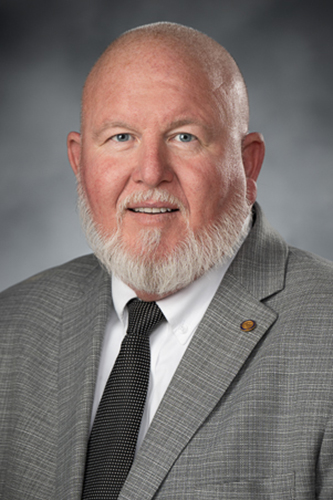
Del. Scot Heckert
Sponsored bills
Maddy summaryHB 2369 amends West Virginia law to limit parents to one improvement period per child in abuse or neglect cases where a child is in foster care. It requires the state to seek termination of parental rights if a parent fails to complete this single improvement period, which is the final opportunity to address issues before rights can be terminated. The bill clarifies that courts may not grant additional improvement periods after the first one, directly affecting parents whose children have been removed due to abuse, neglect, or other specified circumstances. This change streamlines proceedings by removing repeated extensions, ensuring cases move toward resolution more promptly.
Maddy summaryHB 3191 requires people to maintain a 25-foot distance from law enforcement officers, probation officers, firefighters, or emergency responders while they are performing their duties, particularly when someone is recording interactions. It prohibits approaching or staying within 25 feet after receiving a verbal warning, if the person intends to interfere with the officer’s work, threaten them, or intentionally distress them. Violating this rule is a misdemeanor punishable by a $50-$500 fine, up to one year in jail, or both. The bill directly affects members of the public who record police or emergency interactions near the scene.
Maddy summaryHB 3048 limits new permits for wind power facilities in West Virginia and requires that for each new wind project approved, the tax burden on existing and new coal-fired power plants must decrease proportionally. The bill directly affects wind energy developers (by restricting new projects) and coal power plant operators (by mandating tax offsets). Key provisions include capping wind power permits, defining wind turbines as pollution control facilities for tax purposes, and requiring that tax reductions for coal plants match the scale of new wind development. The bill cites coal as the only reliable power source during emergencies like storms, though this rationale does not create new emergency rules.
Maddy summaryHB 3118 permanently increases the percentage of real estate transfer tax retained by West Virginia counties from 65% (starting July 2024) to 100% beginning July 2025. This directly affects county clerks, who will use the full retained amount for specific purposes: 20% for general county funds, 5% for improving election administration, infrastructure, and security (per Secretary of State standards), and 5% for electronic recording infrastructure compliance. The bill modifies existing tax retention rules without changing the tax rate itself. It ensures counties have dedicated funding streams for election and clerk operations through a fixed allocation structure.
Maddy summaryHB 2170 allows volunteer fire departments in West Virginia to use their existing Fire Protection Fund money to cover costs associated with switching to the State Auditor's online financial tracking system (West Virginia Checkbook). This includes expenses like purchasing computers, hiring accountants, or other technology needed to meet a new state requirement. Departments must implement this system by January 1, 2026, to continue receiving funding. The bill directly affects volunteer fire departments by expanding how they can allocate their current fire protection funds for this transition.
Maddy summaryHB 3070 requires insurance providers (including Medicaid, HMOs, and pharmacy benefit managers) to cover nonopioid pain medications on equal terms as opioid drugs for treating acute nonoperative, acute perioperative, subacute, or chronic pain. It prohibits insurers from imposing stricter coverage rules (like higher copays or more prior authorizations) for nonopioid drugs compared to opioids. The bill also directs West Virginia's Bureau of Public Health to create public educational materials about nonopioid pain treatment options, aligned with CDC guidelines. Healthcare providers must consider nonopioid alternatives as a first-line treatment when clinically appropriate, per CDC guidelines.
Maddy summaryHB 2986, introduced in West Virginia's 2025 legislative session, creates a central purchasing program to reduce costs for volunteer fire departments and emergency medical services (EMS) first responders. The bill amends state code to authorize department secretaries to develop rules enabling bulk or discounted purchasing of essential supplies. This program would directly affect volunteer fire and EMS organizations by potentially lowering their operational costs through centralized procurement. The bill focuses on administrative implementation rather than new funding, requiring departments to establish the purchasing mechanism through rulemaking. It remains in committee referral as of March 2025.
Maddy summaryHB 3057 would limit how much a county tax assessor can increase the property tax value of antique or classic cars each year in West Virginia. To raise a car's assessed value, the tax assessor must provide written justification based on inflation, the cost-of-living index, or actual market activity for antique/classic cars - not simply the county's revenue needs. This justification must be given to the vehicle owner before any increase takes effect. The bill directly affects owners of antique or classic cars in West Virginia counties by requiring transparency in tax assessments.
Maddy summaryHB 3038 establishes "quick response teams" (QRTs) under West Virginia's Office of Drug Control Policy to provide immediate support for individuals experiencing drug-related medical emergencies following arrest. The teams, trained to work with people who have substance use disorders, will respond at regional jails or treatment facilities within 24 hours of arrest to connect them with recovery services. This requires coordination with law enforcement, emergency medical services, and healthcare providers, starting July 1, 2025. The bill directly affects people arrested for drug-related incidents by creating a structured pathway to treatment rather than solely processing arrests.