

Maddy summaryHB 5588, the "Therapeutic Psilocybin Act," establishes a regulated framework for using psilocybin to treat PTSD in veterans and first responders. The bill creates licensing requirements for psilocybin production facilities, mandates background checks for staff, and requires providers to register with the state department. Key provisions include requiring insurance coverage for treatment, creating safety protocols for production and testing, and establishing a verification system for medical use. This bill directly affects veterans and first responders with PTSD, medical providers, and psilocybin production facilities, pending legislative approval.
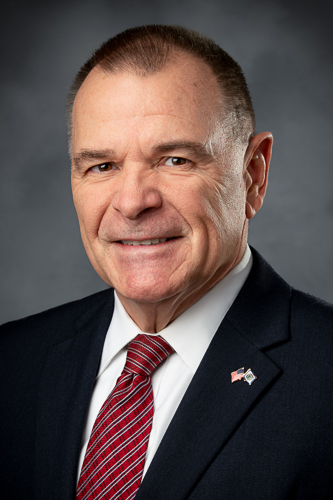
Del. Bill Ridenour
Sponsored bills
Maddy summaryHB 5535 amends West Virginia law to allow tow trucks and wreckers to use one or more flashing or revolving blue lights in addition to their existing yellow lights. This change specifically permits blue lights only on the rear of the vehicle, while the tow truck is stationary on the roadside or responding to a disabled vehicle, and prohibits their use while the vehicle is in motion. The bill does not alter lighting restrictions for other emergency vehicles like police, ambulances, or fire trucks, which retain their existing color-specific rules. It directly affects tow truck operators by expanding their permitted warning light options under strict, limited conditions.
Maddy summaryHB 5536, the West Virginia Constitutional Authority Clarification Act, clarifies that court rulings declaring a law unconstitutional apply only to the parties involved in that specific case, not automatically to the entire state. It requires the West Virginia Supreme Court to have at least four justices agree before declaring a law unconstitutional and pauses lower court rulings on such issues until the Supreme Court acts. The bill also establishes a process where the Legislature and Governor can jointly override judicial decisions on constitutional matters through a signed resolution. This directly affects how state courts interpret laws and reshapes the balance of power between West Virginia's legislative, executive, and judicial branches.
Maddy summaryHB 4098 amends West Virginia law to restore jury service eligibility for individuals with expunged felony convictions. It specifically updates the disqualification rule (§52-1-8(b)(6)) to clarify that people whose felony convictions have been legally expunged are no longer disqualified from serving on juries, provided they meet other standard requirements like citizenship and residency. This directly affects West Virginians who have completed the expungement process for felony offenses, allowing them to serve on juries without restriction. The change removes a barrier to civic participation for this group while maintaining existing disqualification criteria for unexpunged convictions.
Maddy summaryHB 5493 would require West Virginia courts to offer convicted sex offenders (specifically those found guilty of crimes against minors under §61-8-12 or related statutes) a choice between hormone treatment (medroxyprogesterone acetate or MPA) or surgical castration as an additional penalty, alongside standard sentencing. Courts must first confirm a defendant's medical suitability for MPA treatment through a court-appointed expert, and the treatment duration is specified in the sentence. Refusing MPA treatment after sentencing could result in a 1-5 year prison term. The bill also mandates a prerelease risk assessment for these offenders before their release from prison.
Maddy summaryThis House Resolution (HR 6) expresses the West Virginia House of Delegates' support for developing natural gas pipeline infrastructure, specifically an intra-Panhandle pipeline connecting western gas fields to the Eastern Panhandle. It aims to improve access to locally produced natural gas for residents, support industrial and commercial growth, and create jobs across the state. The resolution highlights West Virginia's status as a top natural gas producer and notes that existing pipelines transport most output out of state, while Maryland's opposition to pipeline extensions is cited as a barrier. It does not create new laws or funding but urges responsible infrastructure expansion to boost economic development. As a procedural resolution, it has no direct legal effect but signals legislative backing for pipeline projects.
Maddy summaryHB 5507 establishes rules for selecting and overseeing West Virginia's delegates to a potential national Article V convention, which would propose amendments to the U.S. Constitution. It requires delegates to meet specific qualifications (e.g., 5-year U.S. residency, no federal lobbying in the past 5 years) and mandates that seven delegates be named by a joint vote of the state legislature. The bill includes provisions for removing delegates who violate legislative instructions or propose "runaway amendments" (amendments outside the convention's scope), with penalties including felony charges and a $250,000 fine. It also creates an Advisory Committee to manage vacancies and oversee delegate conduct during the convention.
Maddy summaryHB 5520, the Foreign Adversary and Terrorist Agent Registration and Transnational Repression Act, requires lobbyists representing foreign adversaries (such as PRC-affiliated military companies) to disclose this relationship during West Virginia's lobbying registration process. The bill mandates that lobbyists provide specific details about their principals and include an affirmative acknowledgment if they are lobbying on behalf of a foreign adversary. It creates new registration requirements, penalties for non-compliance, and duties for the Attorney General regarding record retention and oversight. This bill directly affects lobbyists and their principals who engage in lobbying activities on behalf of foreign adversaries or terrorist agents within West Virginia.
Maddy summaryHB 5506 prohibits lobbyists from receiving payment for lobbying West Virginia state officials on behalf of "foreign adversaries" as defined by the bill. It directly affects lobbyists working for governments or entities designated as hostile to the U.S. or West Virginia, including specific countries like China (excluding Taiwan), Russia, Iran, Cuba, Venezuela, and others listed in the bill. Key provisions require lobbyists to self-identify if representing such entities, establish civil penalties for violations, and allow authorities to seek disgorgement of funds or injunctive relief. The bill defines "foreign adversaries" broadly to include governments aligned with communist or totalitarian ideologies, state sponsors of terrorism, or entities under their control, with annual updates to the list by the Secretary of Homeland Security.
Maddy summaryHB 5219 defines "residence" for voter registration and voting in West Virginia, directly affecting voters registering to cast ballots. The bill establishes clear rules: a person's residence is where they live with intent to return, using their primary sleeping area if boundaries divide their living space. It requires election officials to document residency challenges with a Secretary of State form, giving applicants 30 days to prove residency with evidence like maps. Special provisions clarify that temporary moves (e.g., teachers returning to parents' home, government workers in D.C.) don't change residence status, while voting in another jurisdiction automatically changes it.