

Maddy summaryHB 3079 exempts child care programs serving only military dependents and located on military bases or certified by the U.S. military from West Virginia's state licensing requirements. These programs will no longer need state licensure, as military installation commanders will determine eligibility and which children are served. The bill amends existing law to explicitly include these military-connected programs under an exemption, removing redundant state oversight. This change directly affects military family child care providers operating on bases or under military certification.
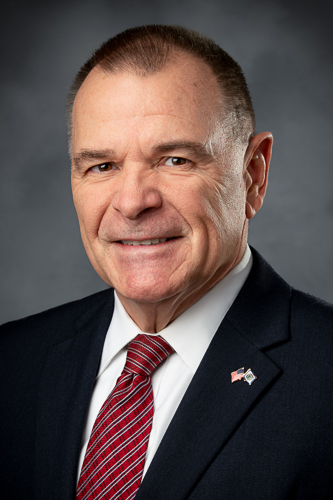
Del. Bill Ridenour
Sponsored bills
Maddy summaryThis bill repeals West Virginia's outdated dog tax by removing sections of the state code (§19-20-1, §19-20-2, and §19-20-11) that previously required dog owners to pay a tax. It directly affects dog owners in West Virginia who were subject to this tax under the existing law. The bill eliminates the requirement for dog owners to pay this tax and removes the administrative processes for collecting it. No new provisions or mechanisms are added - only the repeal of the existing tax.
Maddy summaryHB 2400 prohibits election officials from mailing or delivering absentee ballot applications to voters without a specific request. The bill requires that applications only be provided when a voter personally requests them from the county clerk, either in person, by mail, or electronically. Applications must remain available at county clerk offices and online via the Secretary of State’s website. This change directly affects all registered voters in West Virginia by eliminating unsolicited mailings of ballot applications, ensuring they are only sent to those who actively seek them. The bill amends West Virginia Code §3-3-5 to clarify that unsolicited delivery is unlawful.
Maddy summaryHB 3031 replaces West Virginia's current Fusion Center Joint Oversight Committee with a new committee effective July 1, 2025, terminating the existing committee as of June 30, 2025. The new committee, appointed by the House Speaker and Senate President (with party balance rules), will oversee the Fusion Center's handling of intelligence data, including collection, storage, and destruction. Key provisions require an annual audit by the Inspector General, grant the committee confidential access to the Fusion Center, and mandate security clearances for committee members handling classified information. Violations identified in audits may lead to disciplinary action against Fusion Center staff.
Maddy summaryHB 3045, the Farmer Protection Act, prohibits financial institutions in West Virginia from denying or restricting financial services to agriculture producers based on environmental or sustainability criteria. The bill defines "agriculture producer" and establishes clear standards to prevent unfair discrimination in financial service provision. It directly affects farmers and financial institutions by requiring state oversight to ensure compliance with these standards. The legislation was introduced to address concerns that ESG-related demands could harm small farms and increase food prices.
Maddy summaryHB 3025 requires West Virginia's Secretary of Environmental Protection to develop a comprehensive State Water Resources Management Plan by November 30, 2013 (per the referenced code section). The bill mandates the collection of detailed data on surface and groundwater resources, including inventory of watersheds, assessments of current and future water use by large users (like industries and utilities), and identification of areas where demand may exceed supply in "growth counties." Key provisions include tracking water withdrawals, evaluating conflicts between uses, and reviewing existing water management policies. This plan aims to guide future infrastructure planning and resource allocation for state agencies and water users.
Maddy summaryHB 3026 redefines "use" in West Virginia zoning law to include only domestic, farming, or activities on land where water was drawn (e.g., on-site water use), excluding commercial extraction or transport of water outside the state. It protects existing farms, manufacturers, and agricultural operations from new zoning restrictions on their current land uses, and prevents vacant land from being deemed abandoned after one year if not used for commercial water extraction. The bill ensures zoning ordinances cannot prohibit local land/water use for farming, domestic purposes, or non-commercial water activities, while explicitly excluding commercial bottling, storage, or pipeline transport.
Maddy summaryHB 3004 creates two new state-level offenses: "illegal entry" (entering West Virginia without legal authorization) and "illegal reentry" (re-entering after removal). The bill requires the state Criminal Identification Bureau to maintain records of such incidents and prohibits community supervision or parole for individuals convicted of these offenses. It also provides immunity to law enforcement officials enforcing these provisions and establishes court procedures for ordering deportation. The bill applies directly to individuals entering or re-entering the state without legal status, ensuring prosecutions proceed regardless of federal immigration status determinations.
Maddy summaryHB 3011 modifies West Virginia's tax code to limit pollution control facility tax benefits exclusively to wind power projects that were fully operational and generating electricity by January 1, 2025. This means new wind projects proposed after that date will not qualify for the special tax treatment that pre-2025 projects receive. The bill does not prohibit new wind projects but removes a key financial incentive for future developments. It specifically applies to wind turbines and towers (as defined in the bill), excluding other project components from the tax benefit. This policy change directly affects developers seeking tax advantages for wind energy infrastructure.
Maddy summaryHB 2478 clarifies eligibility rules for West Virginia's HOPE Scholarship Program, directly affecting students seeking to use the scholarship. It updates the definition of an "eligible recipient" to specify that students must be enrolled full-time in a West Virginia public school for at least 45 days during an instructional term (or meet specific kindergarten enrollment criteria), with an exception for kindergarten students if the program's participation rate remains below 5% of public school enrollment. The change would take effect July 1, 2026, allowing kindergarten-eligible students to qualify without full-term enrollment if participation is low. The bill does not alter scholarship amounts or funding but streamlines eligibility criteria. This is a substantive policy clarification, not a procedural change.