

Maddy summaryHB 4865 creates a program allowing high school juniors and seniors (with a 3.0 GPA or higher) to serve as election officials in West Virginia. To qualify, students must meet standard election official requirements (like being a registered voter and completing training), get written approval from their school principal and parent, and agree to one political party affiliation per precinct. The bill ensures these student officials are not marked absent from school on election days and limits appointments to one per political party per precinct. This change directly affects eligible high school students and county election officials who would appoint them.
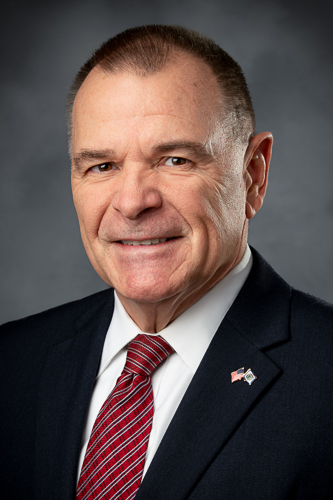
Del. Bill Ridenour
Sponsored bills
Maddy summaryThis bill updates West Virginia laws to recognize military protective orders as valid evidence of domestic violence when seeking emergency protective orders from family courts. It defines a military protective order as one issued by a commanding officer in the U.S. Armed Forces, West Virginia National Guard, or another state's National Guard against someone under their command. The legislation requires law enforcement to notify relevant agencies of potential violations of these military orders and allows them to be used in petitions for temporary personal safety orders. These changes aim to improve how courts handle cases involving service members and their families by streamlining the process for obtaining protection orders.
Maddy summaryHB 4364 establishes a formal process for West Virginia to share juvenile jurisdiction with federal courts over military installations in the state. It allows military installations to request concurrent jurisdiction for juveniles (under 18) who commit state law offenses like delinquency or status offenses (e.g., truancy or underage drinking) on federal military land. The bill requires military officials to submit a written request with specific boundaries to the Governor, who must accept it in writing and record the agreement with the Secretary of State. Once recorded, West Virginia courts gain shared authority with federal courts to handle these cases when federal courts waive exclusive jurisdiction. This applies to all military land in West Virginia, including National Guard facilities.
Maddy summaryHB 4996 requires courts to impose mandatory bail conditions for defendants charged with terroristic threats against schools or child-focused facilities (like preschools or daycares). It prohibits defendants from residing within 1,000 feet of the threatened facility or any similar educational location where children are regularly present. Additional conditions may include GPS monitoring to enforce exclusion zones, no contact with students/staff, or home incarceration outside the restricted area. Violations trigger immediate arrest, bail forfeiture, or custody remand, with courts using GIS or property records to measure proximity. The bill directly affects individuals facing charges under §61-6-24(b) related to school threats.
Maddy summaryThis bill expands the authority of county commissions in West Virginia to sell or lease county-owned property by introducing competitive bidding as an alternative to traditional public auctions. It allows counties to sell real property directly to private parties if the price is at least 75 percent of the appraised value, while sales to government entities and nonprofits may be made without considering market value. The legislation also requires public notice through legal advertisements, establishes minimum pricing standards based on assessed values or third-party appraisals, and mandates transparency by posting all formal offers on county websites for at least 30 days. Additionally, the bill clarifies that property sold to volunteer fire departments, ambulance services, and community centers must revert to the county if those organizations later propose to dispose of it, unless the county explicitly waives this right in the deed.
Maddy summaryHB 4198, the E-Verify Requirement Act, requires all employers in West Virginia - including businesses, government entities, and public agencies - to use the federal E-Verify system to confirm employees' work authorization. It replaces criminal penalties with fines for knowingly employing unauthorized workers ($100-$10,000 per violation depending on offense count) and allows license suspension or revocation for repeat violations. The bill also creates a "safe harbor" for employers who use E-Verify, shielding them from penalties for failure to verify status. It repeals a provision denying business expense deductions for non-compliance but maintains financial penalties and licensing consequences for violations.
Maddy summaryThis bill asks the U.S. Congress to authorize the Armed Forces Expeditionary Medal for U.S. military personnel who served in Honduras between 1981 and 1992. It is based on the claim that American troops faced hostile conditions during this period, including combat training and exposure to gunfire, resulting in at least 46 deaths. The resolution urges federal lawmakers to recognize these veterans with a medal similar to those awarded for service in other hostile environments. If adopted, the bill would require action by the U.S. Congress to change existing military award policies.
Maddy summaryThis is a ceremonial resolution (HCR 13) honoring the late Senator Tony Eugene Whitlow, a longtime West Virginia legislator who served in the House (1970-1982) and Senate (1984-1992), including as Senate President pro Tempore. The resolution commemorates his life, military service, public career, family, and community contributions, directing the Clerk to send a copy to his surviving family members. It has no policy provisions or direct impact on constituents.
Maddy summaryHB 5464 modifies West Virginia's horse racing regulations to support thoroughbred racing operations. It establishes definitions for "West Virginia Certified Thoroughbred horses," sets purse requirements for restricted races, and increases the $1 million annual funding cap for racetracks that did not participate in the West Virginia Development Fund before 1992. The bill also adds an inflation adjustment for net terminal income deposited into the state Excess Lottery Revenue Fund and changes how that income is distributed. These changes directly affect licensed thoroughbred racetracks in West Virginia, particularly those with historical non-participation in the Development Fund. The policy focuses on adjusting financial mechanisms for existing racetracks rather than creating new facilities or jobs.
Maddy summaryThis resolution urges the U.S. Congress to pass the Major Richard Star Act, which would allow disabled veterans to receive both their full military retirement pay and full VA disability compensation without any dollar-for-dollar offset. The bill directly affects approximately 50,000 medically retired combat-wounded veterans who currently lose over $1,000 per month in benefits due to existing federal offset rules. It seeks to amend federal law to recognize that military retirement and disability benefits compensate for two distinct forms of service and sacrifice. The resolution is a formal request from the West Virginia Legislature to federal lawmakers to address this policy change.