

Maddy summaryHB 4337 prohibits public schools from using school resources - including facilities, staff time, or equipment - for election advocacy, such as promoting or opposing candidates. It also bans school employees from engaging in political activities during work hours or while representing the school administration. The bill applies directly to all West Virginia public school employees and school entities, preventing the use of official capacity for political purposes. It does not restrict political activity outside school hours or personal political expression unrelated to school duties. The law aims to maintain nonpartisan environments in educational settings by limiting political involvement during work-related activities.
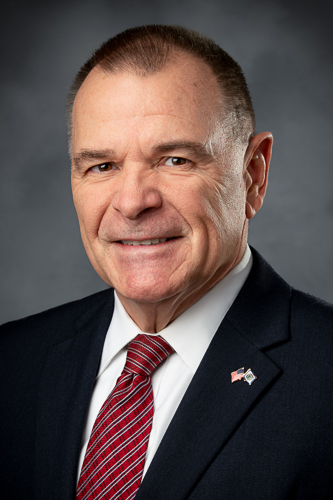
Del. Bill Ridenour
Sponsored bills
Maddy summaryHB 4339 moves West Virginia county school board elections from primary elections to general election dates, affecting all county school board members. The bill requires these elections to be nonpartisan, with candidates running on a nonpartisan ballot, and limits representation to no more than two members per magisterial district. It also establishes procedures for certifying winners for full terms and unexpired terms based on vote totals, with tiebreakers handled per existing election laws. This change directly impacts how school boards are elected and who can serve from specific geographic areas.
Maddy summaryHB 4380 clarifies West Virginia's business and occupation (B&O) tax rules by requiring businesses to pay taxes to each municipality where they maintain a permanent physical presence, based on revenue generated at each location. Businesses without a permanent address in a municipality or performing temporary work (e.g., one-time jobs) are exempt from paying taxes there. For revenue earned outside municipal boundaries (like in unincorporated areas), taxes are paid to the business’s primary municipality, and businesses with multiple locations must prorate revenue earned outside municipal boundaries using a consistent, auditable method. The bill also eliminates county-level B&O taxes for businesses operating solely in unincorporated areas.
Maddy summaryHB 4368 defines "military-connected students" as children of active-duty, reserve, or deceased military members and establishes new enrollment and support rules for them in West Virginia schools. The bill allows remote school enrollment without physical registration using military orders (with options for temporary or permanent addresses), ensures equitable access to academic courses and extracurricular activities, and requires schools to provide counseling and support services when a parent is activated for duty. It also mandates prompt coordination for students with disabilities during transfers and permits military-connected students to remain at their school until completing the highest grade level offered there. These provisions directly affect military-connected students, their families, and local education agencies across West Virginia.
Maddy summaryHB 4376, titled "Say No to Good Old Boy Governance," prohibits elected state officials from appointing family members to state or local government positions. The bill defines "family member" broadly to include spouses, parents, children, grandparents, grandchildren, siblings, and extended relatives like aunts, uncles, nieces, and nephews. This law applies specifically to elected officials holding state office (such as state legislators or governors) who have appointment authority for public roles. It aims to prevent nepotism by banning the practice of favoring relatives in government appointments.
Maddy summaryHJR 11 proposes amending West Virginia's state constitution to increase the homestead exemption from $10,000 to $20,000. This change would directly affect homeowners aged 65 or older, or those permanently and totally disabled, who own their primary residence as their principal place of abode. The bill would exempt the first $20,000 of assessed value for qualifying residential property from ad valorem property taxes. This constitutional amendment requires voter approval at the 2026 general election to take effect. The current exemption amount is $10,000 under the existing constitutional provision.
Maddy summaryHB 4083 prohibits physicians in West Virginia from providing gender reassignment surgery or gender-altering medication to individuals under 18 years old. It allows exceptions only for medically verified disorders of sex development (DSD), treatment of complications from prior gender transition procedures, or immediate life-threatening conditions. Violating this prohibition would result in license revocation for physicians and allow affected individuals to sue for damages, including costs of subsequent care. The bill defines "gender transition" as changing from identifying with one's sex assigned at birth and specifies that "sex" means male or female as observed at birth, with exceptions for DSD conditions under medical verification. The bill is currently pending in the House Judiciary Committee and would take effect in 2024.
Maddy summaryHB 4149 amends West Virginia law to clarify and limit when conservation officials (like the Division of Natural Resources) may enter private land without a warrant. It directly affects private landowners and conservation officers by adding specific restrictions on entry for surveys, inspections, or enforcement related to wildlife and natural resources. Key provisions include establishing clear limits on entry, defining the process for entering posted private lands, and clarifying rules about using surveillance cameras near such properties. The bill does not change existing conservation authorities but adds procedural safeguards for landowners. It focuses on concrete changes to entry procedures, not broader policy shifts.
Maddy summaryHB 4190 would automatically restore the right to possess firearms and serve on a jury for eligible nonviolent felons in West Virginia upon completion of their sentences, without requiring a court petition. The bill clarifies that petitions for firearm rights may include restoration of jury service rights and specifies who can file such petitions (e.g., individuals with certain nonviolent felony convictions). It also requires the Attorney General to publish public guidance on the process. This change directly affects individuals with prior nonviolent felony convictions who have met the eligibility criteria for automatic restoration.
Maddy summaryHB 4049 replaces West Virginia's existing Contraband Forfeiture Act with a new Criminal Forfeiture Process Act specifically for property used in or derived from felony drug crimes (violations of the Controlled Substance Act). It establishes a criminal court process for forfeiture (replacing civil forfeiture), defines key terms like "contraband" (unlawful items such as drugs without prescription) and "innocent owner" (a person unaware of property use in crime), and prohibits offering seized property to federal agencies for federal forfeiture. The bill clarifies that courts handling the underlying criminal case have jurisdiction over forfeiture proceedings, and it explicitly states no property rights exist in contraband. This procedural bill directly affects law enforcement agencies, criminal defendants, and property owners involved in drug-related felony cases.