

Maddy summaryHCR 6 is a symbolic resolution passed by the West Virginia House of Delegates declaring the state's position that it has the right to reject federal laws it deems unconstitutional. It cites provisions from West Virginia's constitution (Articles I, II, III) and historical arguments from figures like James Madison to assert that states, not federal courts, hold authority over constitutional interpretation. The resolution does not create new laws or affect any policies - it is purely a declarative statement of the state's stance. As a concurrent resolution, it has no legal force and does not change how federal laws are applied.
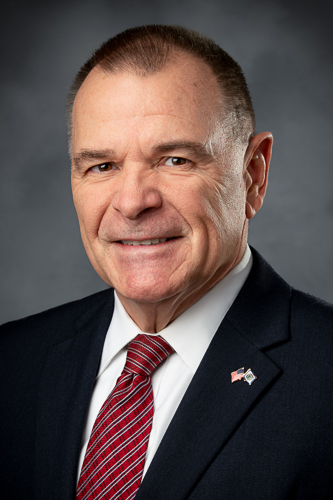
Del. Bill Ridenour
Sponsored bills
Maddy summaryHouse Resolution 3 (HR 3), introduced by West Virginia delegates on January 20, 2026, requests Congress create a combined investigative task force to examine the origins and response to the COVID-19 pandemic. The resolution asks the task force to coordinate with existing investigations, investigate alleged issues like vaccine-related health impacts and business closures due to mandates, and recommend corrective actions. It specifically urges the task force to consider referring criminal charges where warranted and to address accountability for pandemic-related decisions. This procedural resolution does not create new laws but seeks a federal investigation into pandemic policies and their effects.
Maddy summaryHB 4584 establishes a market-based pay enhancement for West Virginia teachers in counties where the regional median home price exceeds the state average. It calculates an annual lump-sum payment for teachers in those counties by comparing regional home prices (including contiguous border counties/states) to West Virginia's statewide median home price, then applying a multiplier to the county's average teacher salary. The State Board of Education determines this adjustment every five years starting in 2027, certifies the amount to the State Auditor, and payments are distributed annually as taxable income. This directly affects certified teachers in specific counties with higher regional cost-of-living compared to West Virginia's average, aiming to make salaries competitive with neighboring areas.
Maddy summaryHCR 12 is a West Virginia House Concurrent Resolution requesting Congress to call a constitutional convention to propose an amendment. It specifically seeks to amend the U.S. Constitution to establish a fixed number of nine justices on the Supreme Court, as Article III currently does not specify the number. The resolution cites Article V of the Constitution, which allows states to request such a convention, and urges Congress to fulfill this duty. This resolution does not change the Court's size itself but formally requests action from Congress and other states to pursue the proposed amendment.
Maddy summaryHCR 5 is a non-binding resolution introduced by West Virginia's House of Delegates. It calls on Congress to disband the FBI and Bureau of Alcohol, Tobacco, Firearms, and Explosives (ATF), citing claims that these agencies have become politicized. The resolution proposes transferring non-politicized law enforcement functions (like the FBI's Laboratory Division) to an interstate compact. This is a symbolic state-level action with no legal authority to alter federal agencies.
Maddy summaryHouse Concurrent Resolution 8 is a non-binding legislative statement by the West Virginia Legislature affirming that the state has standing in legal matters affecting its residents, based on the Tenth Amendment and the West Virginia Constitution. It declares that any judicial ruling denying this standing is invalid and a violation of state sovereignty. The resolution does not create new laws or policies but formally rejects federal or judicial actions that restrict West Virginia's authority to govern matters impacting its people. It is a procedural expression of legislative principle, not a policy change.
Maddy summaryWest Virginia House Bill 4583 establishes November 7 annually as "Victims of Communism Day" for public schools. It requires high school students in U.S. Government classes (mandated under §18-2-9(a)(1)) to receive at least 45 minutes of instruction about communist regimes' impacts, including specific examples like Mao Zedong's Cultural Revolution, Stalin's Soviet system, and Pol Pot's Khmer Rouge. The bill mandates that curriculum content cover how victims suffered through poverty, starvation, migration, violence, and speech suppression under these regimes. The State Board of Education must adopt revised social studies standards incorporating these requirements by April 1, 2026, with implementation beginning in the 2026-2027 school year.
Maddy summaryHB 4586, introduced in West Virginia's 2026 legislative session, would prohibit state agencies and local governments from purchasing electric vehicles that may contain components made through forced labor or oppressive child labor. The bill defines "forced labor" as work obtained by coercion or fraud, including labor involving protected characteristics, and "oppressive child labor" as employment of children under 14 in hazardous work like mining. It requires all government contracts for electric vehicles to include a provision ensuring no components were produced using such labor, aligning with federal actions like the Uyghur Forced Labor Prevention Act. If enacted, the law would directly affect all state departments, counties, municipalities, schools, and universities purchasing electric vehicles, preventing taxpayer funds from supporting vehicles linked to unethical labor practices. The bill is currently pending in the House Government Organization Committee.
Maddy summaryHB 4494 would exempt non-resident landowners (people who live outside West Virginia but own land here), their spouse, and their children living with them from needing a non-resident hunting license when hunting on their own West Virginia property. The exemption requires that the landowner's home state also allows West Virginia residents to hunt on their land without a license. It specifically excludes grandchildren from this exemption. The bill proposes a direct change to hunting license requirements for this specific group of landowners.
Maddy summaryHB 4582 increases the annual commission paid to West Virginia county sheriffs for collecting property taxes. Starting July 1, 2026, sheriffs will earn a $30,000 commission after collecting 85% of all real and personal property taxes in their county, replacing the previous $15,000 amount. The commission is paid directly from the tax funds collected, becoming part of the sheriff's regular budgeted compensation. This bill directly affects county sheriffs who serve as treasurers in their jurisdictions. It modifies existing law to adjust compensation for their ongoing tax collection duties without creating new tax obligations.