

This concurrent resolution declares that Congress should not impose any new performance fee, tax, royalty, or other charge relating to the public performance of sound recordings on a local radio station for broadcasting sound recordings over the air, or on any business for such public performance of sound recordings.
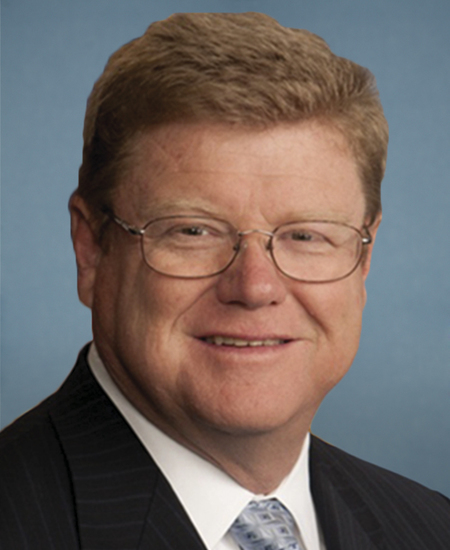
Rep. Mark E. Amodei
Sponsored bills
Maddy summaryHR 1301, the Death Tax Repeal Act, would eliminate the federal estate tax and generation-skipping transfer tax for estates of individuals dying on or after its enactment date. It directly affects individuals inheriting significant assets, as it removes taxes on estates exceeding $10 million (adjusted for inflation) and repeals taxes on large transfers between generations. The bill modifies the gift tax by establishing a $10 million lifetime exemption with annual inflation adjustments, replacing previous tax brackets. It applies to estates, gifts, and transfers occurring on or after the bill's effective date.
Maddy summaryHR 1330 establishes the Smithsonian National Museum of the American Latino, authorizing its location within the National Mall's "Reserve" area. The bill requires the Smithsonian Board to coordinate with federal agencies managing potential museum sites, including notifying relevant congressional committees before land transfers. It mandates that the museum's exhibits and programs accurately represent the diverse cultures, histories, and viewpoints of Hispanic and Latino communities in the U.S., seeking input from a broad range of community experts. The Smithsonian must also submit regular reports to Congress detailing compliance with these representation requirements.
Maddy summaryThis bill authorizes the U.S. Mint to change the metal composition of circulating coins if a study demonstrates it reduces taxpayer costs while maintaining the same size, weight, and compatibility with existing coin-operated machines. The Mint must submit a 90-day notice to Congress detailing cost savings and technical compliance before implementation, allowing Congress to block the change via a disapproval resolution during that period. It directly affects the U.S. Mint’s operations and businesses using coin acceptors (e.g., vending machines), but does not mandate immediate changes. The bill establishes a procedural framework for potential future cost-saving adjustments to coin composition.
Maddy summaryHR 1260, the U.S. Park Police Modernization Act, updates salary schedules for U.S. Park Police officers. It adjusts pay rates to align with federal executive pay scales (specifically, 95% of Level V for most ranks, matching Level V for the Chief position), modifies step progression timelines (e.g., 52 weeks between steps for lower ranks), and sets a cutoff date (January 12, 2025) for disregarding prior pay adjustments. The bill directly affects all U.S. Park Police officers by changing their compensation structure and step advancement rules. It does not alter police duties, operations, or public policies.
This bill repeals the Impoundment Control Act of 1974 (ICA). The ICA generally limits the authority of the President to impound (i.e., withhold from obligation or expenditure) funds that have been appropriated by Congress and establishes related procedures. It also establishes expedited legislative procedures that Congress may use to consider legislation to enact rescissions proposed by the President.
Maddy summaryThis bill expands 529 college savings account flexibility by allowing funds to cover costs for industry-recognized postsecondary credentials, not just traditional degrees. It defines "qualified expenses" to include tuition/fees for recognized credential programs (like certifications or apprenticeships), required testing fees, and continuing education needed to maintain credentials. To qualify, programs must meet specific criteria, such as appearing on state lists under the Workforce Innovation and Opportunity Act or being listed in VA or Defense directories. The change applies to 529 distributions made after the law's enactment, giving families more options to use these accounts for job-focused training.
Maddy summaryHR 1102 establishes a commission to study the feasibility of creating a National Museum of Italian American History and Culture in Washington, D.C. The commission, composed of 8 members appointed by congressional leaders, will examine factors like location options, costs, fundraising potential, and impacts on existing museums, and must report back within 18 months. It will not create the museum itself but will develop recommendations for Congress on whether to proceed, with all funding coming from private sources - no federal funds may be used for the commission’s work. The bill focuses solely on the study process, not on building or operating the museum.
Maddy summaryHR 836, the Emergency Wildfire Fighting Technology Act of 2025, requires the Secretaries of Agriculture and the Interior to evaluate the container aerial firefighting system (CAFFS) for wildfire suppression. Within 90 days of enactment, they must assess CAFFS's potential to mitigate and suppress wildfires, and submit a report to relevant congressional committees within 120 days. This procedural bill directly affects federal wildfire response agencies and focuses solely on mandating an evaluation of this specific technology, with no new funding or policy changes proposed.
Fair Access to Banking Act This bill places restrictions on certain banks, credit unions, and payment card networks if they refuse to do business with a person who complies with the law. Restrictions include prohibiting the use of electronic funds transfer systems and lending programs, termination of an institution's depository insurance, and specified civil penalties. Banks and other specified financial institutions are allowed to deny financial services to a person only if the denial is justified by a documented failure of that person to meet quantitative, impartial, risk-based standards established in advance by the institution. This justification may not be based upon reputational risks to the institution. The bill establishes the right for a person to bring a civil action for a violation of this bill.