Issue · Healthcare

Healthcare

Every healthcare bill, vote, and legislator stance in West Virginia, automatically classified by Maddy, our AI policy reader.

Total bills
409
2026 Regular Session
Top supporter
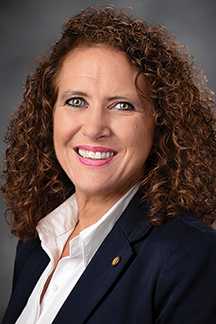
Kathie Hess Crouse
92% support rate
Top opponent
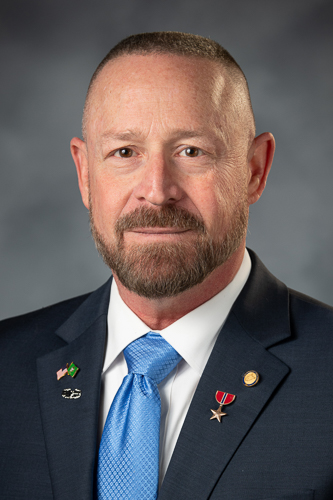
Corby Dillon
25% support rate
Ranked legislators
10
5 support · 5 oppose
Key legislators

Who's moving healthcare in West Virginia

Legislators moving healthcare in West Virginia
Legislator Party Stance Support rate Votes
Kathie Hess Crouse
Kathie Hess Crouse House · District 19
R
Strong +
92% 34
Elliott Pritt
Elliott Pritt House · District 50
R
Strong +
92% 31
Jordan Maynor
Jordan Maynor House · District 41
R
Strong +
92% 33
Doug Smith
Doug Smith House · District 39
R
Strong +
92% 27
Geno Chiarelli
Geno Chiarelli House · District 78
R
Strong +
92% 34
Corby Dillon
Corby Dillon House · District 29
R
Oppose
25% 33
Marty Gearheart
Marty Gearheart House · District 37
R
Oppose
33% 24
Shawn Fluharty
Shawn Fluharty House · District 5
D
Oppose
40% 31
Buck Jennings
Buck Jennings House · District 84
R
Mixed −
42% 33
George Street
George Street House · District 83
R
Mixed −
42% 30
Showing 351–360 of 409 bills

All healthcare bills

in committee · West Virginia · House of Delegates Jan 21, 2026

HB 4703: Improving Medicaid access to durable medical equipment

HB 4703 requires West Virginia Medicaid to cover lymphedema compression treatment items (like custom garments and pumps) for enrollees diagnosed with lymphedema, and both custom-fitted and off-the-shelf orthopedic braces for those with diagnosed orthopedic conditions. This directly affects Medicaid beneficiaries with these specific medical needs by expanding their covered durable medical equipment. The bill mandates coverage for these items without additional cost-sharing for eligible enrollees. Implementation would require the Bureau for Medical Services to seek federal approval via a state plan amendment or waiver.
Sub-Topics Medicaid
in committee · West Virginia · Senate Jan 14, 2026

SB 56: Allowing reimbursement for remote ultrasound procedures and fetal nonstress tests

SB 56 requires West Virginia's Medicaid program (administered by the Department of Human Services) to reimburse providers for remote ultrasound procedures and remote fetal nonstress tests when patients receive care from home or another off-site location. The bill mandates reimbursement using established CPT codes, provided the same standard of care is met, and requires providers to use FDA-approved digital technology compliant with HIPAA for secure data transmission. It specifically allows reimbursement for CPT Code 59025 (fetal nonstress tests) when using FDA-cleared at-home monitoring devices for fetal heart rate, maternal heart rate, and uterine activity. The bill also eliminates a 30-day waiting period between patient consent and the procedure, directing the Department to issue implementation guidance.
Sub-Topics Medicaid Telehealth
in committee · West Virginia · Senate Jan 27, 2026

SB 629: Prohibiting gender transition surgeries, treatments, and therapies to minors

SB 629 prohibits medical professionals in West Virginia from providing gender transition-related surgeries, hormone treatments, or therapies to minors under 21 years old. The bill bans specific procedures (like hysterectomies, phalloplasty, and puberty blockers) and hormone therapies exceeding normal physiological levels, with penalties including license revocation and up to $10,000 in civil fines per violation. It includes narrow exceptions only for minors with genetic disorders of sexual development (e.g., ambiguous genitalia at birth or specific chromosomal conditions). The law directly affects minors seeking gender-affirming care, healthcare providers, and local governments, while prohibiting taxpayer funding for such treatments.
in committee · West Virginia · House of Delegates Jan 21, 2026

HB 4344: Unconscious patients in the ICU

HB 4344, the "Michael Brandon Cochran Act," requires West Virginia hospitals with intensive care units (ICUs) to administer C-peptide blood tests for unconscious patients or those with blood glucose levels at or below 49 mg/dl (regardless of diabetes diagnosis). It also mandates post-mortem C-peptide testing if a patient dies after showing symptoms like brain damage, seizures, or disorientation during ICU care. Hospitals failing to comply face $10,000 fines per violation, while a new grant program helps cover testing costs and staff training for participating hospitals. The bill establishes a dedicated fund to support these requirements, using state funds and private donations.
in committee · West Virginia · House of Delegates Feb 17, 2026

HB 4760: Requiring insurance to cover certain nutrition and dietary needs

HB 4760 requires West Virginia health insurance plans to cover dietary supplements and nutrition prescriptions recommended by a patient's physician. This applies to all health insurance policies sold in the state and covers items defined as "nutritional wellness and prevention" (like vitamins, minerals, and dietary counseling) that improve health, strengthen immunity, or prevent disease. Insurance companies must cover these items only if they appear on an annual list maintained by the West Virginia Insurance Commission. The bill directly affects insurers, policyholders seeking these services, and the Insurance Commission responsible for updating the coverage list.
Sub-Topics Insurance
signed · West Virginia · Senate Jun 25, 2026

SB 650: Designating psychiatric hospital that treats exclusively civil and forensic patients

SB 650 amends West Virginia law to define a psychiatric hospital treating exclusively civil and forensic patients (with over 95% of its inpatient census being court-ordered forensic or civil involuntary commitments from state custody) as a "state-designated facility" for tax purposes. This change excludes such hospitals from the category of "eligible acute care hospitals" subject to a 0.75% tax on gross receipts, exempting them from this tax. The bill directly affects psychiatric hospitals in West Virginia meeting this specific patient mix requirement by altering their tax classification under the Medicaid funding structure.
in committee · West Virginia · House of Delegates Jan 14, 2026

HB 4068: Requiring Department of Health to report positive Alpha Gal tests to CDC

HB 4068 requires West Virginia's Department of Health to propose rules adding alpha-gal syndrome (a meat allergy triggered by tick bites) to the list of diseases that must be reported to the CDC. This bill amends existing public health reporting requirements under West Virginia Code §16-1-4, directing the Department to include alpha-gal syndrome as a reportable condition. It affects the Department of Health's reporting procedures but does not change testing or treatment for patients. The law focuses on standardizing data collection for public health monitoring, not on patient care or new medical requirements.
Sub-Topics Public Health
in committee · West Virginia · Senate Jan 14, 2026

SB 36: Making syringe exchange services programs unlawful

Senate Bill 36 makes syringe exchange programs illegal in West Virginia, prohibiting any program where individuals can access sterile needles without a prescription. It requires all existing syringe exchange programs to cease operations by the bill's effective date, with a 120-day transition period allowed only for referrals to treatment - no syringes may be exchanged during this time. Harm reduction services like overdose prevention education, wound care, and opioid antagonist distribution remain permitted, provided they do not include syringe exchanges. Violators face civil penalties of up to $2,500 per day, and the state health office can seek court orders to enforce the law.
in committee · West Virginia · Senate Jan 15, 2026

SB 274: Department of Health rule relating to exemption of certificate of need

SB 274 authorizes the West Virginia Department of Health to implement a specific regulatory rule (65 CSR 29) regarding exemptions from Certificate of Need requirements. This bill directly affects healthcare facilities seeking to expand services without undergoing the standard Certificate of Need review process. The legislation formally approves a rule already filed in the State Register on July 21, 2025, allowing the Department to administer these exemptions. It is a procedural bill that does not alter the exemption criteria but enables the Department to enforce the existing rule.
in committee · West Virginia · Senate Jan 20, 2026

SB 512: Relating to cost-sharing calculations on behalf of insured persons

SB 512 requires insurers in West Virginia to count cash payments made by insured individuals at discounted rates (below the average in-network rate) toward their in-network cost-sharing requirements. It also prohibits insurers from penalizing patients who receive referrals from out-of-network providers for in-network services. The bill defines key terms like "average allowed amount" (the average payment to in-network providers) and "discounted cash price" to standardize cost-sharing calculations. These changes apply to all health insurance plans delivered in West Virginia starting January 1, 2027, and aim to reduce out-of-pocket costs for consumers using cash-based pricing.
Sub-Topics Insurance
Showing 351 to 360 of 409 bills
Previous 1 35 36 37 41 Next