Issue · Healthcare

Healthcare

Every healthcare bill, vote, and legislator stance in West Virginia, automatically classified by Maddy, our AI policy reader.

Total bills
409
2026 Regular Session
Top supporter
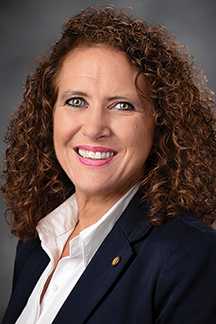
Kathie Hess Crouse
92% support rate
Top opponent
Corby Dillon
25% support rate
Ranked legislators
10
5 support · 5 oppose
Key legislators

Who's moving healthcare in West Virginia

Legislators moving healthcare in West Virginia
Legislator Party Stance Support rate Votes
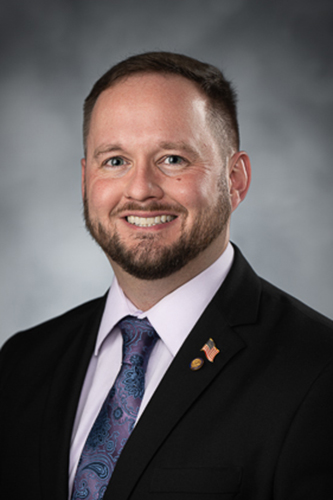
Kathie Hess Crouse
Kathie Hess Crouse House · District 19
R
Strong +
92% 34
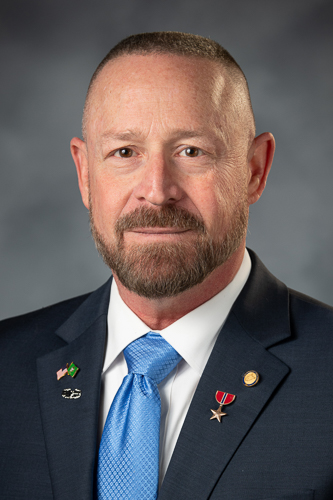
Elliott Pritt
Elliott Pritt House · District 50
R
Strong +
92% 31
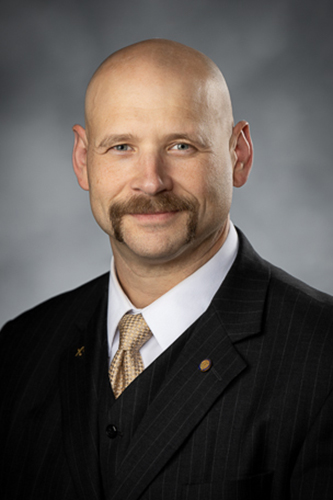
Jordan Maynor
Jordan Maynor House · District 41
R
Strong +
92% 33
Doug Smith
Doug Smith House · District 39
R
Strong +
92% 27
Geno Chiarelli
Geno Chiarelli House · District 78
R
Strong +
92% 34
Corby Dillon
Corby Dillon House · District 29
R
Oppose
25% 33
Marty Gearheart
Marty Gearheart House · District 37
R
Oppose
33% 24
Shawn Fluharty
Shawn Fluharty House · District 5
D
Oppose
40% 31
Buck Jennings
Buck Jennings House · District 84
R
Mixed −
42% 33
George Street
George Street House · District 83
R
Mixed −
42% 30
Showing 11–20 of 409 bills

All healthcare bills

in committee · West Virginia · House of Delegates Feb 3, 2026

HB 5068: Professional firefighter cancer screening

HB 5068 establishes a state-funded pilot program offering free, comprehensive cancer screenings to all active and retired permanent firefighters in West Virginia. The program provides blood tests, organ ultrasounds, lung CTs (if needed), and skin cancer screenings, with a $1,300 cost limit per firefighter. Administered jointly by the State Fire Marshal and Department of Health, the 24-month pilot requires a committee to develop implementation plans and report annually on participation and results. Firefighters may self-fund screenings after January 1, 2026, and seek reimbursement up to $1,300 if funds remain available.
in committee · West Virginia · Senate Feb 24, 2026

SB 1055: Conducting rate study for substance use disorder

SB 1055 requires the West Virginia Bureau for Medical Services to conduct regular, data-driven reviews of Medicaid reimbursement rates for substance use disorder services. The bill mandates that these reviews consider factors like provider costs, workforce wages, service utilization trends, geographic access, and inflation, while engaging stakeholders including treatment providers and consumer representatives. It establishes annual reporting requirements for the Bureau to share findings and methodology with the legislature, ensuring transparency in rate adjustments. This process directly affects Medicaid-funded treatment centers and aims to balance access to care with responsible fiscal management.
in committee · West Virginia · Senate Feb 9, 2026

SB 892: Modifying allowable forms of medical cannabis to include edible form

SB 892 would allow medical cannabis to be dispensed in edible forms (like gummies or lozenges) in West Virginia, expanding current options for patients. It directly affects patients, caregivers, and dispensaries by adding edibles to permitted forms, while requiring strict safety rules: edibles must be specific shapes (e.g., square, circle), limited to 10mg THC per serving with a 15% variance, and produced only as lozenges or gelatins. Processors must get bureau approval for each edible product, including submitting packaging images with a universal symbol. The bill also bans color additives in edibles and mandates new reporting to the state’s cannabis monitoring database. This would be the first time edibles are permitted under West Virginia’s medical cannabis program.
in committee · West Virginia · House of Delegates Mar 11, 2026

HB 5305: Supplemental Appropriation to the Department of Human Services from Federal Funds.

HB 5305 is a routine funding measure that adds $1,373,097 to existing medical services funding and $37,000,000 to medical services administrative costs for West Virginia's Department of Human Services. It uses unspent federal funds from the 2026 fiscal year (ending June 30, 2026) to supplement current appropriations, specifically for programs under Fund 8722. This bill does not create new services or change eligibility; it simply allocates additional existing federal funds to ongoing medical services operations. The bill was introduced on February 6, 2026, and referred to the House Finance Committee.
Sub-Topics Appropriations
in committee · West Virginia · House of Delegates Feb 3, 2026

HB 5144: Relating to wholesale importation of prescription drugs

HB 5144 establishes a state program to import prescription drugs from Canada, requiring the West Virginia Department of Health and Human Resources to design and implement it under federal approval (21 U.S.C. § 384). The program mandates that imported drugs meet FDA safety standards, generate significant consumer cost savings, and comply with federal tracking rules, while prohibiting distribution outside West Virginia. It requires the department to partner with licensed U.S. wholesalers, Canadian suppliers, and state health providers, create a public price website, and report annually on participation, drugs imported, and cost savings starting in 2027. This directly affects West Virginia consumers, pharmacies, health insurers, and healthcare providers participating in the importation program.
Sub-Topics Prescription Drugs
in committee · West Virginia · House of Delegates Feb 3, 2026

HB 5118: Provide for statewide participation in the federal Community Eligibility Provision for its duration

HB 5118 requires all West Virginia public schools that qualify for the federal Community Eligibility Provision (CEP) to apply for this program, ensuring they maximize available federal funding for free school meals. It directly affects qualifying schools - typically those with high poverty rates - by mandating participation in CEP, which allows all students to receive free breakfast and lunch without individual applications. The bill's key mechanism is a requirement for school districts to utilize CEP or other universal meal options to provide free meals at no cost to students, leveraging existing federal resources. This policy change streamlines access to meal programs for eligible students without creating new state funding.
Sub-Topics Student Health
in committee · West Virginia · House of Delegates Feb 3, 2026

HB 5077: Related to Mental Health Protection Act

HB 5077 requires all health insurance policies in West Virginia (including group plans, public employee coverage, and hospital plans) issued or renewed on or after January 1, 2027, to cover medically necessary mental health and substance use disorder treatment. It defines "medically necessary" as care meeting established clinical standards, being appropriate in type/duration, and not primarily benefiting insurers. The law prohibits insurers from using arbitrary "discretionary clauses" to deny such coverage. This directly affects all West Virginians with health insurance by mandating comprehensive coverage for these conditions.
in committee · West Virginia · House of Delegates Feb 13, 2026

HB 5021: Relating to the limited circumstances in which a registered nurse may administer anesthetics.

This bill clarifies that registered nurses in West Virginia may administer anesthetics only when ordered by a physician in an acute care setting, such as a hospital. It does not expand nurses' scope of practice but specifies the limited context where this current authority applies. The change affects registered nurses working in acute care facilities, ensuring they operate within defined parameters. The amendment updates existing law to explicitly restrict this practice to acute care environments.
passed · West Virginia · Senate Mar 2, 2026

SB 954: Relating to health insurance for living organ donors

SB 954 prohibits health insurers in West Virginia from denying coverage, increasing premiums, or canceling sickness, disability, or long-term care insurance policies solely because someone is a living organ donor. The bill applies to policies issued or renewed after July 1, 2026, and specifically bans insurers from: (1) refusing coverage based on donor status, (2) requiring donors to stop donating to maintain coverage, or (3) otherwise discriminating against donors in policy terms. It directly affects living organ donors and insurers regulated under West Virginia's health insurance laws. The legislation ensures donors cannot face financial penalties for their altruistic act through their health insurance.
in committee · West Virginia · House of Delegates Feb 5, 2026

HB 5254: Establishing the Minority Health Advisory Team

HB 5254 establishes the Minority Health Advisory Team (MYHAT) to advise West Virginia’s public health commissioner on improving services for minority populations. The 20-member team - comprised of health experts, educators, community representatives, and state agency leaders - will identify communities for a Community Health Equity Initiative Demonstration Project targeting documented health disparities, such as higher infant mortality rates and poverty among African American families. Key mechanisms include reviewing community plans, recommending grant applications, and ensuring state programs address minority health needs. The project, authorized under the bill, requires participating communities to submit data and aligns with the Legislature’s findings on racial health inequities. The advisory team must be appointed by August 1, 2026, and meets at least twice yearly.
Sub-Topics Public Health
Showing 11 to 20 of 409 bills