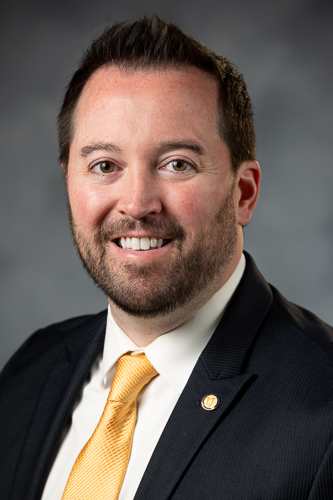
HB 5126 clarifies that West Virginia's Lottery Education Fund and Excess Lottery Fund can be directly used to support early childhood education programs for 4-year-olds across the state. The bill requires county school boards to provide these programs, mandating at least 48,000 minutes of instruction annually (or 1,500 minutes weekly) for eligible children. It explicitly authorizes the use of lottery funds for this purpose, removing ambiguity in current funding rules. This policy change directly affects county education programs and ensures dedicated state funding for early childhood education initiatives.
SB 1027 modifies eligibility requirements for West Virginia's Invests Grant Program to expand access for high school students. It removes the requirement for a high school diploma or equivalent for students enrolled in 11th or 12th grade who are participating in dual-enrollment programs at approved institutions. To qualify, these students must meet residency and citizenship requirements, be admitted to an approved institution, demonstrate financial need and academic promise (without needing a diploma), and be on track to graduate high school. The bill specifically amends sections of the West Virginia Code related to higher education grant eligibility and dual-enrollment access.
HB 5110 lowers the age requirement for tuition waivers at West Virginia colleges from 65 to 60 years old for residents or metro area students. It creates two program options: auditors (no credit) pay up to $50 per course (excluding labs/parking), while credit-seeking students pay 50% of resident tuition. The bill requires colleges to prioritize applicants, confirm classroom space availability, and apply the same fee rules to all students. It directly affects West Virginia seniors aged 60+ seeking non-credit or credit courses at public institutions. The amendment updates existing law to expand access to affordable education for older adults.
HB 5054 requires counties participating in West Virginia's QMHP Pilot Program to ensure every public school in the county has at least one qualified mental health professional (QMHP). A QMHP is defined as a registered mental health professional (including school counselors, who are automatically classified as QMHPs under the bill) who collaborates with schools but does not practice independently. This mandate applies only to schools in counties that join the pilot program, aiming to guarantee student access to mental health support. The bill does not alter existing school counselor duties but formalizes their role in meeting the QMHP requirement.
HB 5356 modifies how students in the Mountaineer Challenge Academy are counted toward high school graduation rates for school accreditation purposes. The bill specifies that students who complete the academy program within five years of starting ninth grade will be counted as graduates for accountability metrics, provided this does not conflict with federal law. This change directly affects students enrolled in the Mountaineer Challenge Academy (a designated alternative education program) and the schools that report graduation rates. The key mechanism adjusts the state's calculation method for graduation rates, ensuring these students are included in accountability measures under specific completion timelines. The bill does not alter the academy's funding structure or operations, only the reporting criteria for school accreditation.
HB 5420 requires West Virginia public schools to implement a "Logic for Living" curriculum for students in grades 7-10, focusing on practical reasoning skills like identifying logical fallacies, constructing sound arguments, and evaluating evidence. It directly affects public schools, teachers, and students by mandating a dedicated semester-long logic course starting in the 2028-2029 school year, with phased county implementation. Key mechanisms include developing interdisciplinary materials (integrating logic into subjects like science and social studies), involving the West Virginia University Washington Center for curriculum design and teacher training, and requiring new teacher endorsements for logic instruction. The bill emphasizes informal logic - such as recognizing flawed arguments (e.g., ad hominem or false dilemmas) - rather than formal logic, aiming to strengthen critical thinking for college, careers, and civic engagement.
HB 5607 would amend West Virginia's PROMISE Scholarship Program to cover full tuition, room, and board for students majoring in science, technology, engineering, and mathematics (STEM) at state institutions of higher education, replacing the current $4,750 annual cap for these students. This change applies to new recipients and continues existing awards for STEM students who received the scholarship before January 1, 2010. The bill does not alter other eligibility requirements, such as maintaining a 3.0 grade point average or applying for federal student aid. The policy directly increases financial support for eligible STEM students at West Virginia's public colleges and universities.
HB 5369, the West Virginia Rural School Protection Act, aims to prevent the closure or consolidation of qualifying rural schools by establishing strict requirements. It defines "protected rural schools" as those in low-population counties, where students would exceed one-way transportation limits (under §18-5H-7), or are the sole school in their area. The bill mandates detailed public impact statements (including transportation times, enrollment trends, and rejected alternatives), a two-thirds vote by county school boards, and voter approval via referendum before any closure or consolidation can proceed. These measures ensure decisions consider student transportation burdens, community impact, and reasonable alternatives before closing a rural school.
HB 5637 adds 50% weighted funding to West Virginia's school aid formula for students with unique learning needs, including students with disabilities and English language learners. This means schools serving these students will receive additional state funding based on counting each such student as 1.5 full-time students in enrollment calculations. The bill requires county school boards to apply to the state superintendent for this supplemental funding, which is distributed based on student proficiency levels and county capacity. It directly affects public schools and students with disabilities or limited English proficiency by increasing their funding allocation.
SB 1080 requires West Virginia to redirect any reduction in state education funding from the previous fiscal year to support specific school districts. It targets the 10 lowest-enrollment county school districts with maximum local tax levies (excess levies), plus extremely remote schools within those districts. Funding is distributed proportionally based on kindergarten through fifth-grade student enrollment, with students counted twice in certain cases to ensure adequate support. This policy change ensures that state aid cuts directly benefit the most vulnerable school districts rather than reducing overall funding.