Issue · Education

Education

Every education bill, vote, and legislator stance in West Virginia, automatically classified by Maddy, our AI policy reader.

Total bills
289
2026 Regular Session
Top supporter
Mickey Petitto
100% support rate
Top opponent
Corby Dillon
17% support rate
Ranked legislators
10
5 support · 5 oppose
Key legislators

Who's moving education in West Virginia

Legislators moving education in West Virginia
Legislator Party Stance Support rate Votes
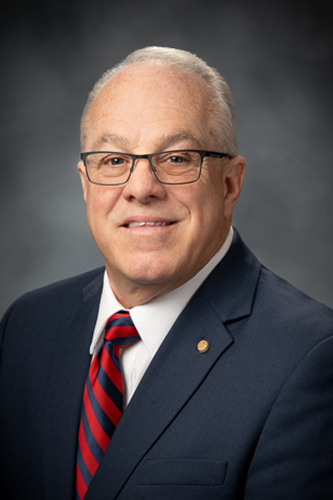
Mickey Petitto
Mickey Petitto House · District 70
R
Strong +
100% 29
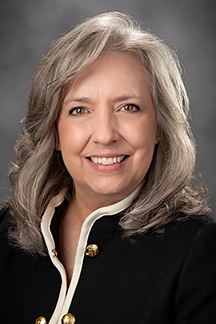
Erica Moore
Erica Moore House · District 15
R
Strong +
94% 46
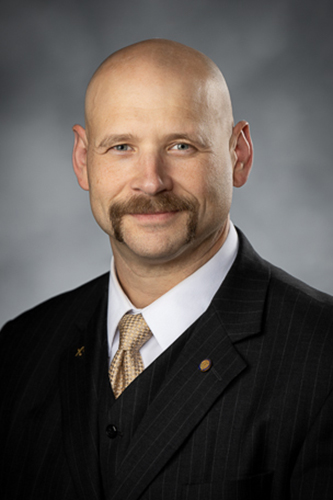
Jimmy Willis
Jimmy Willis House · District 3
R
Strong +
94% 44
John Jordan
John Jordan House · District 42
R
Strong +
94% 43
Joe Parsons
Joe Parsons House · District 16
R
Strong +
93% 37
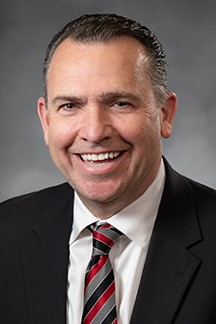
Corby Dillon
Corby Dillon House · District 29
R
Strong −
17% 47
Sean Hornbuckle
Sean Hornbuckle House · District 25
D
Oppose
33% 40
Evan Hansen
Evan Hansen House · District 79
D
Oppose
33% 47
Joey Garcia
Joey Garcia Senate · District 13
D
Oppose
33% 12
Shawn Fluharty
Shawn Fluharty House · District 5
D
Oppose
33% 44
Showing 201–210 of 289 bills

All education bills

in committee · West Virginia · Senate Jan 19, 2026

SB 504: West Virginia Rural School Protection Act

SB 504, the West Virginia Rural School Protection Act, prevents the closure or consolidation of qualifying rural schools by requiring county boards to follow strict new procedures. It applies to schools in counties with under 100 people per square mile, those causing students to exceed 15 road miles or 30 minutes one-way transportation, or the sole school in an area. Key requirements include a detailed impact statement (showing transportation times, enrollment trends, and cost comparisons), a two-thirds board vote, and voter approval via statewide election or petition-triggered referendum. The bill also mandates mitigation plans for affected students and creates a state funding weight to support rural schools. These changes aim to preserve rural school access while ensuring thorough community review before closures.
Sub-Topics School Funding School Safety School Transportation Tags Rural Communities
in committee · West Virginia · House of Delegates Jan 27, 2026

HB 4849: Authorize the Superintendent of the county schools district to apply directly to the School Building Authority for emergency funding to facilitate remediation of hazards.

HB 4849 allows county school superintendents or school improvement committees to directly request emergency funding from the School Building Authority to repair safety hazards in school buildings caused by natural events, such as floods or landslides. The School Building Authority must quickly assess the hazard and begin a process to hire contractors for the repairs. If the repair cost is less than 50% of the school's value as determined by the Comprehensive Education Facilities Plan, the Authority must prioritize funding to preserve the existing building. This bill directly affects West Virginia county school districts and the School Building Authority in addressing urgent infrastructure risks.
Sub-Topics School Safety
introduced · West Virginia · Senate Jan 27, 2026

SB 605: Providing tax credit for homeschool students

SB 605 would provide a tax credit to West Virginia resident parents or legal guardians who homeschool or enroll their children in private schools meeting state education standards. The credit equals the amount a student eligible for the HOPE Scholarship would receive, covering kindergarten through 12th grade. Families already receiving the HOPE Scholarship are excluded from this credit. The State Tax Commissioner will establish rules for claiming the credit, but the State Board of Education cannot impose additional regulations on homeschooled children.
in committee · West Virginia · Senate Jan 14, 2026

SB 177: Providing certified law-enforcement officers tuition-free education up to highest tuition rate for public higher education in WV

SB 177 provides tuition-free education for West Virginia certified law enforcement officers (LEOs) at public and private colleges, up to the highest public tuition rate in the state. It covers certificates, undergraduate degrees, master's degrees, and medical degrees (MD/DO), with officers limited to one degree per level (except for two MD/DO slots annually). Officers must serve one year for every year of tuition covered, and payments coordinate with existing benefits like the GI Bill or PROMISE Scholarship. The program is administered by the Secretary of Homeland Security, requiring legislative funding for implementation.
in committee · West Virginia · House of Delegates Jan 21, 2026

HB 4659: Transfer oversight of childcare from the Department of Human Services to the Department of Education

HB 4659 transfers oversight of most childcare services in West Virginia from the Department of Human Services to the West Virginia Department of Education. It requires residential child-care centers, day-care centers, and family day-care facilities to obtain licenses, certifications, or registrations from the Department of Education instead of the previous agency. The bill also updates requirements for evacuation plans, facility registrations, and exemptions (like public schools or summer camps) while maintaining existing standards for care. This change directly affects childcare providers operating under state oversight, shifting their regulatory authority to the education department.
Sub-Topics Early Childhood
in committee · West Virginia · House of Delegates Feb 3, 2026

HB 4116: Relating to eligiblity for WV Invests Grant Program

HB 4116 extends West Virginia's Invests Grant Program to cover associate degrees and certificates in emergency medical services (EMS) programs. This change allows students enrolled in qualifying EMS training at eligible West Virginia institutions to apply for the grant, which previously did not include these credentials. The bill maintains existing eligibility requirements, such as West Virginia residency, academic standing (minimum 2.0 GPA), and enrollment in at least six credit hours per semester. Recipients must also agree to repay the grant if they leave West Virginia within two years of completing their EMS program.
in committee · West Virginia · House of Delegates Jan 19, 2026

HB 4450: Removing restrictions of taxpayers to access online curriculum, and allow for taxpayers to inspect additional instructional material adopted by the county board pursuant to including books in the classroom

HB 4450 requires West Virginia public schools to post adopted curriculum online (with login access for students and parents) by the start of each school year. It allows parents, custodians, or guardians of enrolled students to request inspections of classroom materials (including books and supplementary resources), with teachers required to schedule appointments within 10 business days and demonstrate how materials align with state standards. The bill also mandates that teachers list required books on class syllabi and makes them available to parents upon request. It establishes a formal complaint process for non-compliance, with county superintendents resolving issues within seven business days before escalating to the State Superintendent. This bill affects parents/custodians/guardians of students, not general taxpayers, as clarified by the bill's actual provisions.
Sub-Topics Curriculum
in committee · West Virginia · Senate Jan 30, 2026

SB 675: Relating to composition of boards of governors in higher education

SB 675 requires each of West Virginia's 19 public colleges and universities to elect a student representative who serves with voting power on their governing board. It specifies board sizes (12-19 members), mandates that appointed members reflect political party balance (e.g., no more than 5 of 9 from one party), and requires at least 5 of 9 appointed members to be state residents. For West Virginia University specifically, the bill adds requirements for an agriculture representative and a graduate of WVU Institute of Technology. The bill maintains non-voting advisory roles for elected faculty and employee representatives at all institutions.
Sub-Topics Higher Education
in committee · West Virginia · House of Delegates Jan 21, 2026

HB 4655: Expand the grade level for Laken’s Law

HB 4655 expands West Virginia's Laken's Law to require annual substance abuse education about fentanyl, heroin, and opioids for students in grades 3-12, instead of the current 6-12 range. The bill mandates that all public schools teach five specific topics annually, including awareness of opioids, use of opioid reversal agents, prevention of addiction, community resources, and health education on youth substance use. This expansion would take effect for grades 3-5 starting in the 2026-2027 school year, while the existing grades 6-12 requirement continues. The law directly affects all public school students in these grade levels through mandated classroom instruction.
in committee · West Virginia · House of Delegates Jan 29, 2026

HB 4973: Relating to raising the state minimum salary for teachers to $50,000 beginning in school year 2026-2027

HB 4973 raises West Virginia's state minimum teacher salary to $50,000 beginning with the 2026-2027 school year, affecting all public school teachers across the state. The bill updates the salary schedule to guarantee a minimum base salary of $50,000 for every teacher regardless of experience or degree level, while also adding a $2,000 annual increase for all teachers. Additionally, teachers providing math instruction or special education services receive an extra $1,200 minimum salary increase. This amendment to West Virginia Code §18A-4-2 directly changes the state's minimum pay structure for educators starting in 2026-2027.
Showing 201 to 210 of 289 bills
Previous 1 20 21 22 29 Next