Issue · Criminal Justice

Criminal Justice

Every criminal justice bill, vote, and legislator stance in West Virginia, automatically classified by Maddy, our AI policy reader.

Total bills
173
2026 Regular Session
Top supporter
Elliott Pritt
80% support rate
Top opponent
Guy Ward
12% support rate
Ranked legislators
10
5 support · 5 oppose
Key legislators

Who's moving criminal justice in West Virginia

Legislators moving criminal justice in West Virginia
Legislator Party Stance Support rate Votes
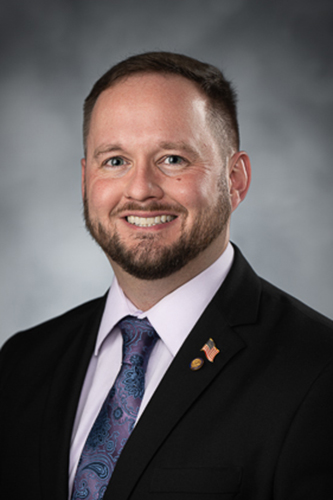
Elliott Pritt
Elliott Pritt House · District 50
R
Strong +
80% 24
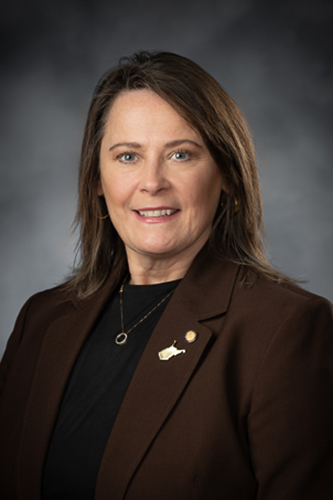
Margitta Mazzocchi
Margitta Mazzocchi House · District 31
R
Support
71% 27
Tresa Howell
Tresa Howell House · District 52
R
Support
67% 29
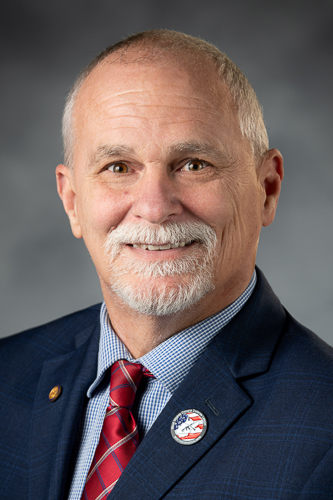
Chuck Horst
Chuck Horst House · District 95
R
Support
67% 29
Corby Dillon
Corby Dillon House · District 29
R
Support
67% 29
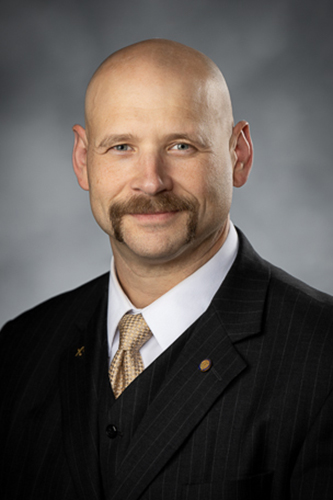
Guy Ward
Guy Ward House · District 74
R
Strong −
12% 28
Jarred Cannon
Jarred Cannon House · District 21
R
Strong −
14% 24
Betsy Kelly
Betsy Kelly House · District 9
R
Strong −
14% 21
Mickey Petitto
Mickey Petitto House · District 70
R
Strong −
17% 20
Phil Mallow
Phil Mallow House · District 75
R
Oppose
22% 29
Showing 51–60 of 173 bills

All criminal justice bills

in committee · West Virginia · House of Delegates Feb 5, 2026

HB 5246: Safe Play Act

HB 5246, the Safe Play Act, increases penalties for assaulting or battering athletic officials during sports events. The bill raises fines for assault to $500-$1,000 and for battery to $1,000-$3,000, replacing lower current penalties. It defines "athletic official" broadly to include umpires, referees, and coaches who enforce rules or supervise participants. This law directly affects offenders convicted of such acts, aiming to protect officials at sporting events.
Sub-Topics Violent Crime
in committee · West Virginia · House of Delegates Feb 16, 2026

HB 5540: Relating to due process and rights

HB 5540 would require law enforcement in West Virginia to inform individuals upon arrest of three specific rights: the right to remain silent, the right to have an attorney present during questioning, and the warning that statements may be used against them in court. This bill directly affects anyone arrested for civil or criminal violations in the state by codifying standard due process warnings into state law. The key provision mandates these specific advisements be provided at the time of arrest, aligning with established legal protections. The bill does not create new rights but formally incorporates existing due process requirements into West Virginia's Code. It is currently pending in the House Judiciary Committee after introduction on February 16, 2026.
Sub-Topics Courts Law Enforcement Tags Civil Liberties
in committee · West Virginia · Senate Feb 11, 2026

SB 922: Requiring public lodging establishments to provide human trafficking awareness training for employees

SB 922 requires hotels and public lodging establishments in West Virginia to provide annual human trafficking awareness training to employees who perform housekeeping or work at front desks. The bill mandates posting multilingual signs (in English, Spanish, and other prevalent local languages) by January 1, 2027, and establishing procedures for reporting suspected trafficking to the National Human Trafficking Hotline or local law enforcement. Training must cover definitions of sex and labor trafficking, how to identify victims in hotel settings, and employee reporting responsibilities. The bill explicitly states it does not create new legal claims for victims and allows the Bureau for Public Health to develop implementing rules.
signed · West Virginia · Senate Jun 25, 2026

SB 825: Supplementary appropriation to Department of Administration, fund 0226

This bill adds $17.6 million in funding to West Virginia's Public Defender Services (fund 0226) for fiscal year 2026. It allocates $2.6 million for "Public Defender Corporations" and $15 million for "Appointed Counsel Fees" using existing unappropriated surplus funds from the State Fund. The funding directly supports public defenders who represent indigent defendants in criminal cases, ensuring legal services for individuals who cannot afford private attorneys. The bill makes no new policy changes but redirects existing surplus state funds to this specific program.
in committee · West Virginia · House of Delegates Mar 11, 2026

HB 5299: Supplemental Appropriation to the Department of Homeland Security - Correctional Units from the Unappropriated Surplus Balance.

HB 5299 adds $84,600 to the medical expenses fund for correctional facilities under West Virginia's Department of Homeland Security (specifically the Division of Corrections and Rehabilitation). This supplemental appropriation uses unspent money from the state's General Revenue fund surplus, as identified in the Governor's 2026 budget. The funds are designated solely for inmate medical care during fiscal year 2026 (ending June 30, 2026) and do not create new programs or alter existing laws. This is a routine budget adjustment reallocating existing unappropriated funds.
in committee · West Virginia · House of Delegates Feb 9, 2026

HB 5334: Relating to lease termination and tenant privacy

HB 5334 protects residential tenants in West Virginia who face safety threats. It allows tenants to end leases without penalty if they fear imminent violence from domestic abuse, sexual conduct, stalking, or sexual extortion - without requiring a conviction. Landlords cannot block tenants from calling police or penalize them for doing so, and must keep all related details (like the perpetrator's name or relocation address) confidential. The bill also prohibits landlords from using such information in databases or against tenants in eviction cases, while requiring written notice with proof of the threat before lease termination.
in committee · West Virginia · House of Delegates Feb 3, 2026

HB 5093: Permitting certain felons to work in licensed behavioral health facilities

HB 5093 allows individuals convicted of nonviolent felonies to work in licensed behavioral health facilities after completing their criminal sentences, provided they meet conditions set by new rules. The West Virginia Department of Health must create these rules for legislative approval, focusing on patient and staff safety while not overriding existing professional licensing requirements under Chapter 30. The bill directly affects formerly incarcerated individuals seeking employment in this sector and facilities that hire them. It requires specific safety-focused regulations but does not change current licensing standards for regulated professions.
Sub-Topics Mental Health
in committee · West Virginia · House of Delegates Feb 17, 2026

HB 5674: Prohibiting civil rights violations based on disability, gender identity or sexual orientation

HB 5674, titled "Prohibiting civil rights violations based on disability, gender identity or sexual orientation," makes it a felony to commit violence or intimidation against someone because of their disability, gender identity, or sexual orientation. It establishes criminal penalties of up to $5,000 fines or 10 years in prison for such bias-motivated acts, while requiring judges to consider alternative sentencing like community corrections. The bill explicitly excludes protected speech or labor union activities from being used as evidence in prosecutions, and prohibits using constitutionally protected associations as grounds for conviction unless directly tied to the crime. This law directly affects individuals targeted by bias-based violence, those committing such acts, and the criminal justice system through revised sentencing guidelines.
passed · West Virginia · House of Delegates Mar 4, 2026

HB 5413: Relating to the Central Abuse Registry

HB 5413 creates a Central Abuse Registry managed by the West Virginia State Police to track individuals convicted of abuse, neglect, or misappropriation of property involving children, incapacitated adults, or adults receiving behavioral health services in specific settings like residential care facilities, day care centers, or home care. It requires registrants to provide personal details (name, DOB, SSN) and pay an annual $125 fee to the circuit clerk, with fees funding mental health services for State Police employees. The registry combines existing requirements, so those already registering as sex offenders only pay one $125 fee instead of separate fees. Failure to pay the fee does not violate supervised release, but unpaid fees may result in a recorded judgment lien.
in committee · West Virginia · House of Delegates Feb 16, 2026

HB 5530: Relating to the composition of the Critical Incident Review Team

HB 5530 moves the Critical Incident Review Team from the Department of Human Services (DHS) to the Office of Inspector General and updates its membership. The team reviews child fatalities or near-fatalities involving DHS cases, including children in foster care or connected to families with DHS involvement, to identify prevention strategies. Key changes include adding a Senate member (appointed by the Senate President) and a House member (appointed by the House Speaker) as non-voting ex-officio members, while retaining key DHS and child welfare stakeholders. The bill aims to improve oversight of child welfare system safety by centralizing the review process under the Inspector General's office.
Showing 51 to 60 of 173 bills
Previous 1 5 6 7 18 Next