Issue · Criminal Justice

Criminal Justice (Corrections)

Every criminal justice bill, vote, and legislator stance in West Virginia, automatically classified by Maddy, our AI policy reader.

Total bills
93
2026 Regular Session
Top supporter
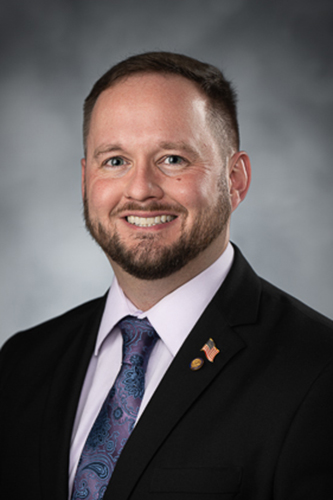
Elliott Pritt
100% support rate
Top opponent
Mickey Petitto
0% support rate
Ranked legislators
10
5 support · 5 oppose
Key legislators

Who's moving corrections in West Virginia

Legislators moving corrections in West Virginia
Legislator Party Stance Support rate Votes
Elliott Pritt
Elliott Pritt House · District 50
R
Strong +
100% 3
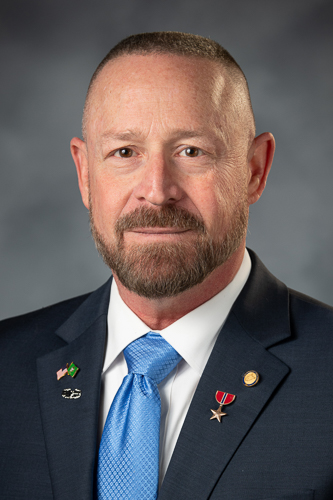
Doug Smith
Doug Smith House · District 39
R
Support
75% 4
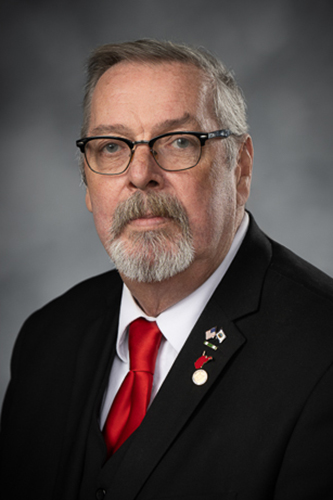
Jonathan Pinson
Jonathan Pinson House · District 17
R
Support
75% 4
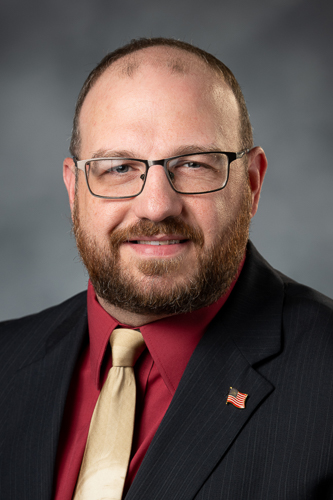
Margitta Mazzocchi
Margitta Mazzocchi House · District 31
R
Support
75% 4
Marshall Clay
Marshall Clay House · District 51
R
Support
75% 4
Mickey Petitto
Mickey Petitto House · District 70
R
Strong −
0% 3
Adam Vance
Adam Vance House · District 35
R
Oppose
25% 4
Bill Anderson
Bill Anderson House · District 10
R
Oppose
25% 4
Bill Flanigan
Bill Flanigan House · District 4
R
Oppose
25% 4
Bob Fehrenbacher
Bob Fehrenbacher House · District 11
R
Oppose
25% 4
Showing 31–40 of 93 bills

All criminal justice bills

in committee · West Virginia · House of Delegates Feb 3, 2026

HB 5094: Prohibiting the private ownership or operation of a prison

HB 5094 bans private ownership and operation of prisons in West Virginia, effective July 1, 2026. The bill prohibits private companies from running correctional facilities, removing existing approval requirements for private prison operations that would otherwise apply. It explicitly allows state-run facilities and specifies that foreign court inmates sentenced abroad cannot be held in private prisons. This directly affects private prison companies operating in West Virginia and changes the state's correctional system by eliminating private contracting for prison management.
Sub-Topics Corrections Courts
in committee · West Virginia · Senate Feb 20, 2026

SB 1016: Creating Second Look Sentencing Act

SB 1016, the "Second Look Sentencing Act," allows West Virginia judges to reconsider prison sentences of 10+ years for individuals who committed offenses before age 25 and have served at least 10 years. The bill requires courts to evaluate factors like rehabilitation efforts, maturity, victim input, and the defendant's age at the time of the crime before reducing a sentence. If approved, sentences may be reduced to time served or modified with up to five years of supervised release, while ensuring defendants have a right to a hearing with appointed counsel. The law specifically targets young offenders whose circumstances may have changed significantly after a decade in prison, aiming to balance public safety with opportunities for reintegration.
in committee · West Virginia · House of Delegates Feb 3, 2026

HB 5156: Second Look Sentencing Act

HB 5156, the Second Look Sentencing Act, allows West Virginia judges to reconsider prison sentences exceeding 10 years for individuals who have served at least a decade. To qualify, a person must demonstrate they are not a danger, pose no credible risk of reoffending, show readiness for reentry, and meet the interests of justice. The court must consider factors like rehabilitation progress, age at offense and petition, victim input, and completion of correctional programs before modifying the sentence, with a presumption of release for applicants aged 50 or older. Any sentence modification requires up to five years of supervised release post-release, and denied applicants may reapply under specific time limits.
in committee · West Virginia · House of Delegates Jan 29, 2026

HB 4974: Relating generally to persons porhibited from possessing firearms.

HB 4974 amends West Virginia law to clarify and expand the categories of people prohibited from legally owning or carrying firearms. It directly affects individuals with certain felony convictions (especially violent or drug-related offenses), those found mentally incompetent or involuntarily committed, unlawful drug users, people subject to specific domestic violence protective orders (requiring findings of credible threat or explicit force prohibitions), and others with disqualifying legal histories. The bill specifies penalties: misdemeanor fines/jail time for first-time violations of prohibitions, and felony charges with longer prison terms for repeat offenses or violations by those prohibited under stricter categories. It also maintains the process for eligible individuals to petition courts to restore firearm rights after meeting strict criteria.
vetoed · West Virginia · House of Delegates Apr 2, 2026

HB 4893: Increase the penalties for contempt of court in a magistrate court

HB 4893 increases penalties for contempt of court in West Virginia magistrate courts. It raises maximum fines for contempt: from $50 to $200 for a first offense, $100 to $500 for a second offense, and $100 to $1,000 (or up to 10 days in jail) for a third or subsequent offense related to the same matter. The bill applies directly to individuals disrupting court proceedings, including witnesses, jurors, parties, or officers who commit contempt. These changes take effect for offenses occurring after the bill's passage, with appeals still allowed to circuit court as in criminal cases.
in committee · West Virginia · House of Delegates Jan 16, 2026

HB 4429: Create a prison work pilot program

HB 4429 creates a pilot program for a "work/incarceration prison" in West Virginia, targeting non-violent offenders sentenced to two years or less who have not been convicted of sex-related offenses. Eligible offenders can work at the facility and earn a 20% reduction in their sentence for good conduct, but serious rule violations result in transfer to a standard facility with an additional year added to their sentence. The bill allows only one county to establish the pilot (with a $500,000 suggested initial appropriation), requires the program to be self-sustaining through offender work, and mandates an annual evaluation by the Division of Corrections to assess effectiveness and potential expansion. The program does not apply to violent offenders or those with longer sentences.
Sub-Topics Corrections
signed · West Virginia · House of Delegates Jun 29, 2026

HB 4712: Increasing the criminal penalties for DUI causing death to be known as “Baylea’s Law.”

HB 4712, known as "Baylea's Law," increases criminal penalties for drivers convicted of DUI that causes death or injury in West Virginia. It raises prison sentences to 3-30 years for DUI causing death (up from prior limits), 2-10 years for serious bodily injury, and up to 1 year for lesser bodily injury. The bill also mandates license revocation for 10 years (or permanently) for DUI causing death, 5 years for serious injury, and 2 years for minor injuries, with options to reinstate through a "test and lock program." This law directly affects drivers convicted of DUI-related offenses resulting in harm to others, including minors or fetuses as defined by the law.
Sub-Topics Corrections
in committee · West Virginia · House of Delegates Jan 20, 2026

HB 4085: To increase penalties for selling or facilitating the sale of alcohol to a minor.

HB 4085 increases criminal penalties for selling or facilitating alcohol sales to minors under 21 in West Virginia. It amends sections of the state code (§11-16-18, §11-16-19, and §60-3A-24) to raise fines and potential jail time for licensees, employees, or others who sell or provide alcohol to underage individuals. The bill directly affects bars, restaurants, and retailers that serve alcohol, as well as staff who violate these rules. Key provisions include stricter enforcement of existing prohibitions against serving minors and enhanced penalties for violations. The bill aims to strengthen deterrence against underage alcohol access without changing the underlying prohibition.
Sub-Topics Corrections
in committee · West Virginia · Senate Jan 27, 2026

SB 601: Authorizing medical parole for certain inmates

Senate Bill 601 authorizes medical parole for West Virginia inmates with terminal illnesses, medical incapacity, or geriatric conditions (defined as age 55+ with chronic health issues requiring daily assistance). It creates a formal process where inmates or their representatives can submit a petition including a detailed medical parole plan outlining diagnosis, treatment, care location, and financial coverage. Correctional superintendents must review petitions within 72 hours of a terminal illness diagnosis and develop a plan if missing, with the commissioner making the final decision. This policy directly affects eligible incarcerated individuals meeting the defined medical criteria, offering a structured pathway for release based on health needs rather than traditional parole.
in committee · West Virginia · House of Delegates Jan 26, 2026

HB 4829: Make speeds that exceed 30MPH over the speed limit reckless driving

HB 4829 amends West Virginia law to define driving more than 30 miles per hour over posted speed limits as reckless driving. This directly affects drivers who exceed speed limits by 30+ mph on public roads, school zones, state parks, or educational institution properties. The bill establishes penalties: a first offense carries up to 90 days in jail or a $500 fine, with harsher penalties for repeat offenses or if the speeding causes serious injury. Exceptions include temporarily closed racing events and designated recreational vehicle areas within state parks.
Showing 31 to 40 of 93 bills
Previous 1 3 4 5 10 Next