Issue · Criminal Justice

Criminal Justice (Corrections)

Every criminal justice bill, vote, and legislator stance in West Virginia, automatically classified by Maddy, our AI policy reader.

Total bills
93
2026 Regular Session
Top supporter
Elliott Pritt
100% support rate
Top opponent
Mickey Petitto
0% support rate
Ranked legislators
10
5 support · 5 oppose
Key legislators

Who's moving corrections in West Virginia

Legislators moving corrections in West Virginia
Legislator Party Stance Support rate Votes
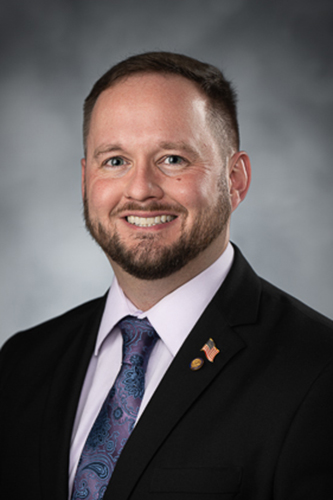
Elliott Pritt
Elliott Pritt House · District 50
R
Strong +
100% 3
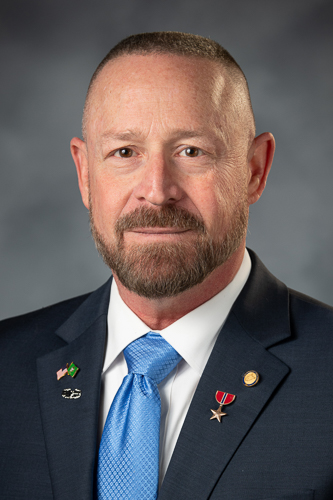
Doug Smith
Doug Smith House · District 39
R
Support
75% 4
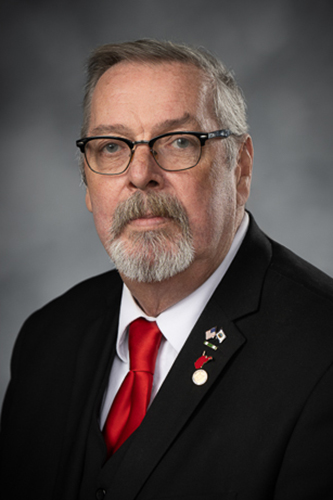
Jonathan Pinson
Jonathan Pinson House · District 17
R
Support
75% 4
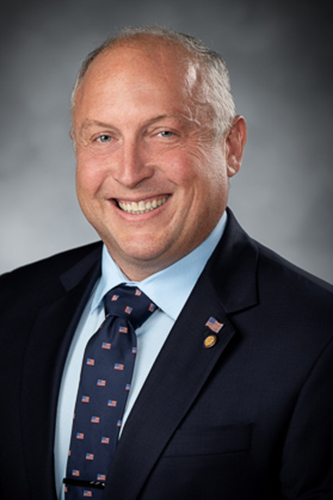
Margitta Mazzocchi
Margitta Mazzocchi House · District 31
R
Support
75% 4
Marshall Clay
Marshall Clay House · District 51
R
Support
75% 4
Mickey Petitto
Mickey Petitto House · District 70
R
Strong −
0% 3
Adam Vance
Adam Vance House · District 35
R
Oppose
25% 4
Bill Anderson
Bill Anderson House · District 10
R
Oppose
25% 4
Bill Flanigan
Bill Flanigan House · District 4
R
Oppose
25% 4
Bob Fehrenbacher
Bob Fehrenbacher House · District 11
R
Oppose
25% 4
Showing 11–20 of 93 bills

All criminal justice bills

in committee · West Virginia · House of Delegates Feb 3, 2026

HB 5117: Remove felonies from reason to disqualify from voting

HB 5117 would restore voting rights for West Virginia residents who have completed their prison sentence for a felony. Currently, individuals convicted of felonies are barred from voting until they finish all aspects of their sentence, including probation or parole. This bill removes that barrier by making them eligible to register as soon as they are released from prison, without waiting for probation or parole to end. It also requires the state's Division of Corrections to notify people of their voting rights upon release and the Division of Probation to do the same upon discharge.
in committee · West Virginia · Senate Feb 11, 2026

SB 920: Mandating life sentence for first degree murder of minor victim with firearm

SB 920, titled "Koda’s Law," mandates a life prison sentence without parole for anyone convicted of first-degree murder involving a minor victim (under 18) when a firearm is used. This bill directly affects defendants found guilty of this specific offense in West Virginia, replacing standard sentencing options with a mandatory life term. The key provision adds §61-2-2a to the state code, making life without parole the sole penalty for these crimes. The bill does not change murder definitions but requires automatic life sentences in these cases, removing judicial discretion for this subset of offenses.
in committee · West Virginia · House of Delegates Feb 3, 2026

HB 5082: Related to menstrual products in correctional facilities

HB 5082 requires West Virginia correctional facilities, regional jails, and juvenile detention centers to provide free feminine hygiene products (tampons and sanitary napkins) to female inmates and female juveniles upon request, with delivery within eight hours. The bill amends existing laws to explicitly mandate this provision, ensuring no cost to individuals who menstruate while incarcerated. This policy change applies directly to all female individuals in state custody who require these products, addressing a basic health need without financial burden.
in committee · West Virginia · Senate Feb 17, 2026

SB 975: Excluding county reimbursement for any inmate declared incompetent to stand trial

SB 975 amends West Virginia law to exclude counties from receiving reimbursement for inmates declared mentally unfit to stand trial. Specifically, it removes such inmates from the list of individuals for whom counties must pay daily costs to the state correctional fund. This change directly affects counties that currently cover housing costs for inmates in state facilities under §15A-3-16(g). The bill modifies the reimbursement mechanism by excluding these inmates from the per-day cost calculation, shifting the financial responsibility entirely to the state.
Sub-Topics Corrections
in committee · West Virginia · House of Delegates Feb 16, 2026

HB 5599: To make the possession of fentanyl a felony offense

HB 5599 would make possessing fentanyl a felony offense, replacing its current misdemeanor classification. Under the bill, anyone found with fentanyl without a valid prescription could face up to 15 years in prison, a $25,000 fine, or both. The bill specifically targets fentanyl - a synthetic opioid - and applies to all possession, regardless of quantity, directly affecting individuals caught with the drug. This change amends West Virginia law to impose stricter penalties for fentanyl possession, aligning it with penalties for other serious controlled substances.
in committee · West Virginia · House of Delegates Feb 5, 2026

HB 5267: Providing for the reintegration of inmates in correctional facilities

HB 5267 requires West Virginia correctional facilities to assist both juvenile and adult offenders in obtaining three essential identity documents - Social Security number/card, birth certificate, and driver's license - before their release. This applies to all inmates except those convicted of unlawful vehicle operation offenses. The bill amends §15A-3-4 of the state code to mandate this assistance as part of the commissioner’s duties, ensuring these documents are provided prior to release. The policy directly affects individuals transitioning from incarceration back into communities by addressing a common barrier to employment and housing. It focuses on concrete administrative changes within correctional facilities, without specifying outcomes or broader program impacts.
in committee · West Virginia · Senate Feb 17, 2026

SB 973: Creating crime of property disposal for purposes of avoiding debt or asset repayment

SB 973 proposes to create a criminal offense for individuals who dispose of or attempt to dispose of their property to avoid paying debts, fines, or fees without the creditor's knowledge or consent. This law would directly affect debtors who transfer assets to evade payment obligations to creditors. The bill amends West Virginia Code §61-3-24 to specify that such actions constitute a misdemeanor, punishable by up to one year in jail and a $2,500 fine. It clarifies that intentionally hiding or moving property to prevent debt collection is now explicitly prohibited under state law.
Sub-Topics Corrections
in committee · West Virginia · House of Delegates Feb 12, 2026

HB 5477: Relating to federal immigration enforcement.

HB 5477 requires state-supported law enforcement agencies - including county sheriffs, municipal police, and regional jails receiving state funds - to join the federal 287(g) program for immigration enforcement. Larger detention facilities must use the "Jail Enforcement Model" under this program, with a fallback to the "Warrant Service Officer Model" only if federal authorities deny the primary option. The bill mandates reporting, audits, and allows withholding of state public safety funds from noncompliant agencies. It standardizes cooperation with federal immigration enforcement in detention settings across West Virginia.
vetoed · West Virginia · Senate Apr 1, 2026

SB 705: Creating offense of theft by conversion

SB 705 creates a new criminal offense called "theft by conversion" in West Virginia, targeting individuals who unlawfully use funds or property they were entrusted with under an agreement. It directly affects people handling others' assets (like rental companies, contractors, or anyone with a legal obligation to manage property), such as leased equipment or payments. The bill sets penalties: misdemeanors for amounts under $2,500 (up to 1 year in jail or $1,000 fine), and felonies for $2,500 or more (1-10 years in prison or fines up to $2,500). It requires courts to order restitution to victims and specifies where cases can be prosecuted (e.g., defendant’s, victim’s, or property location county). The law applies to property valued over $100, excluding late fees.
in committee · West Virginia · House of Delegates Feb 13, 2026

HB 5493: Provide a penalty of chemical castration or surgical castration for sex abuse crimes against minors.

HB 5493 would require West Virginia courts to offer convicted sex offenders (specifically those found guilty of crimes against minors under §61-8-12 or related statutes) a choice between hormone treatment (medroxyprogesterone acetate or MPA) or surgical castration as an additional penalty, alongside standard sentencing. Courts must first confirm a defendant's medical suitability for MPA treatment through a court-appointed expert, and the treatment duration is specified in the sentence. Refusing MPA treatment after sentencing could result in a 1-5 year prison term. The bill also mandates a prerelease risk assessment for these offenders before their release from prison.
Showing 11 to 20 of 93 bills