

Maddy summaryHB 1180 implements specific recommendations from Washington's Sex Offender Policy Board regarding the criminal offense of failure to register as a sex offender. The bill amends state laws (including RCW 9A.44.132 and 9.94A.515) to clarify registration requirements and adjust sentencing levels for noncompliance. It directly affects individuals convicted of sex offenses who are required to register under state law. The key change updates how failure to register is classified and penalized within Washington's criminal sentencing framework.
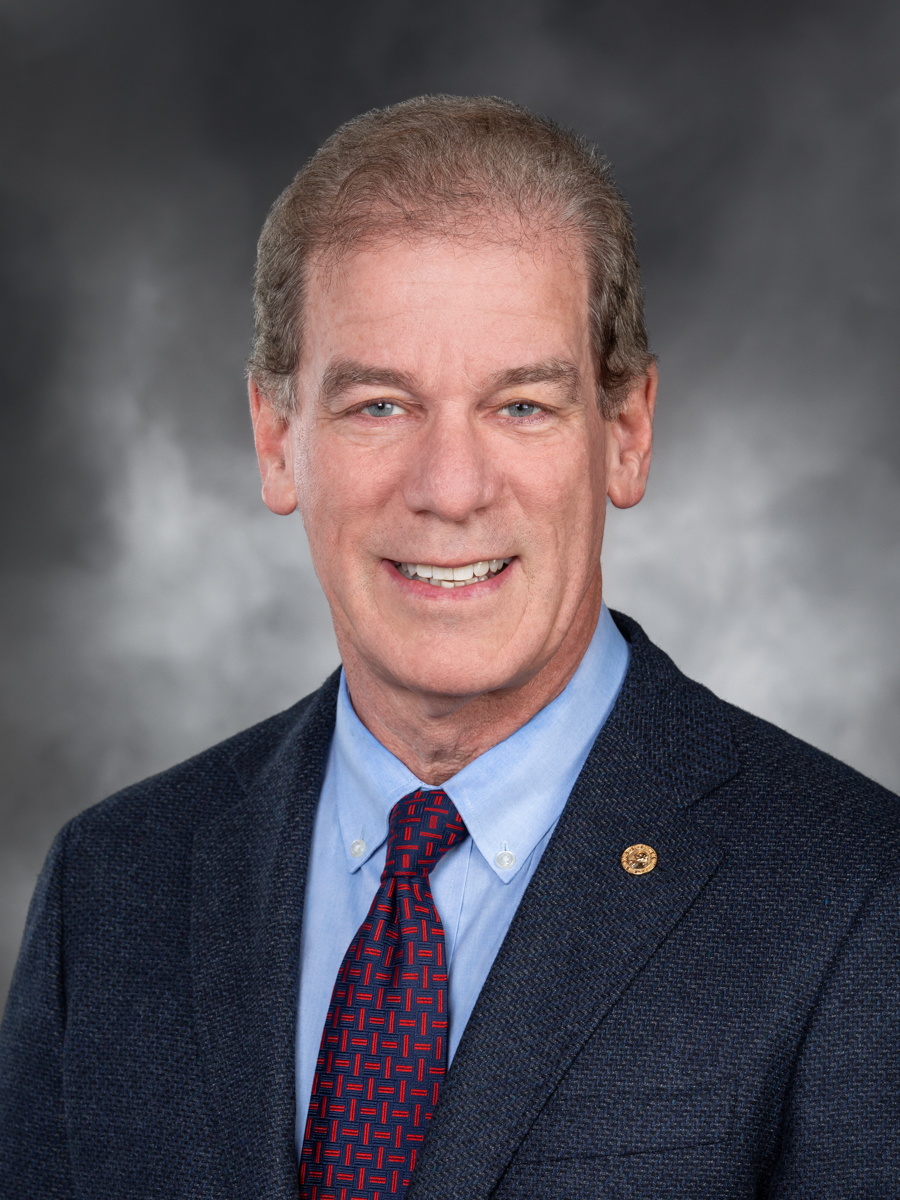
Rep. Roger Goodman
Sponsored bills
Maddy summaryHB 1070 creates a legal presumption that posttraumatic stress disorder (PTSD) is an occupational disease for correctional facility workers in Washington state, directly affecting staff employed at prisons, jails, or community corrections facilities. The bill establishes that after 90 consecutive days of full-time, compensated employment, PTSD claims for these workers are presumed work-related unless the employer provides evidence to the contrary. It also requires employers to cover reasonable appeal costs (including attorney fees) if workers win their claims in court or before the Industrial Insurance Appeals Board. This applies to claims filed within three months per year of employment, up to a maximum of 60 months after leaving the job. The law takes effect January 1, 2026.
Maddy summaryHB 1194 requires owners applying for special collector vehicle (30+ years old) or horseless carriage (pre-1916) license plates in Washington to provide proof of a second vehicle for daily use and maintain specific collector vehicle insurance with minimum liability coverage. The bill mandates these plates be displayed on the rear of the vehicle and prohibits renewal or transfer (except for collector plates under limited conditions). It applies directly to owners of vintage vehicles seeking these special license plates, adding compliance requirements to ensure insurance and daily-use vehicle verification. The law amends existing vehicle registration statutes to enforce these new conditions for obtaining and maintaining such plates.
Maddy summaryHB 1463 expands exemptions allowing families to continue receiving Washington's Temporary Assistance for Needy Families (TANF) cash aid beyond the standard 60-month time limit. It directly affects low-income households nearing or exceeding this limit due to specific hardships. Key provisions add new exemption criteria, including homelessness (per federal McKinney-Vento Act), periods when Washington's unemployment rate was 7% or higher (starting March 2020), family violence, and having a child under age two requiring infant/toddler care. The bill requires recipients to have already received 52 months of aid before qualifying for these extensions, ensuring exemptions apply only to those with significant, documented hardship.
Maddy summaryHB 1519 increases specific vehicle-related service and filing fees in Washington State. It raises the service fee for title changes, ownership transfers, and lost title affidavits from $15 to $18, and registration renewal/permit fees from $8 to $11. It also increases the vehicle registration filing fee from $4.50 to $6 and the title application fee from $5.50 to $6.50. These changes apply to registrations due or title transactions processed on or after January 1, 2026, affecting vehicle owners, county auditors, and subagents who collect these fees.
Maddy summaryHB 1424 creates an independent Jail Oversight Board within the governor's office to improve transparency and safety in Washington's city, county, and regional jails. The board, appointed by the governor, will include seven members representing diverse perspectives such as jail administrators, health care providers, and individuals with lived experience of incarceration. Its role is to ensure safe and humane conditions for jail staff and people held in custody while promoting a more rehabilitative approach to jail operations. This new oversight structure replaces the previous system eliminated in 1987 and aligns with practices in 29 other states.
Maddy summaryHB 1110 allows individuals convicted of driving under the influence (DUI) or related offenses (RCW 46.61.502/504) to apply to have their conviction records vacated, meaning the conviction is removed from their legal record. To qualify, applicants must have completed all sentence terms (including fines), have no pending charges, and not have recent alcohol/drug violations or domestic violence convictions. The bill specifically restricts vacating records for DUI offenses if the applicant has a subsequent DUI conviction within five years, is on probation for a DUI, or holds a commercial driver's license. It also includes special provisions for victims of trafficking or domestic violence. This process applies only to misdemeanor or gross misdemeanor DUI convictions meeting all specified criteria.
Maddy summaryHB 1113, known as the public SAFE-T Act, creates a pathway for individuals charged with certain simple or gross misdemeanors in Washington state to have their charges dismissed. Under this bill, a court may agree to dismiss a misdemeanor charge if the defendant waives their right to a speedy trial and substantially complies with court-ordered conditions and programs for up to 12 months. Full restitution is a required condition for dismissal, although inability to pay due to indigence is not a barrier if progress is made. However, the bill explicitly excludes a wide range of specific offenses, such as domestic violence, DUI-related charges, and certain assault or firearm offenses, from this dismissal process.
Maddy summaryHB 1158 requires Washington's Department of Social and Health Services to contract directly with service providers for community inclusion services supporting individuals with developmental disabilities. It establishes new standards: services must occur in integrated community settings, allow group interactions (not just one-on-one care), limit billing for administrative tasks to 15 minutes per client weekly, and ensure service hours remain stable even if bundled with other services. The bill specifically defines "community inclusion services" to include skill development, community engagement, and relationship-building opportunities in typical community environments. These changes directly affect people with developmental disabilities receiving state-funded community services and the providers delivering them.
Maddy summaryHB 1433 would establish a regulated system in Washington for adults 21+ to access psychedelic substances for therapeutic use under licensed professionals. It directs the Department of Health to license facilitators and service centers, and the Liquor & Cannabis Board to oversee manufacturers and testing, requiring sessions in controlled environments with trained guides. The bill emphasizes reducing costs to improve equity, particularly for historically disadvantaged communities, while explicitly stating it does not require insurance coverage or override federal law. This would create a legal framework for safe, supervised use and research, pending legislative approval.