

Maddy summaryHB 1021 ensures military-connected students can stay in their current school through the end of the school year (or graduation for grades 9-12) if a parent’s active duty transfer requires a move. It allows schools to accept enrollment applications conditionally using temporary military housing (like on-base billeting) as proof of residency, finalizing enrollment once documentation is provided. The bill also clarifies that school districts aren’t required to provide transportation for these students unless mandated by law. This directly affects children of active-duty military parents and their school districts across Washington State.
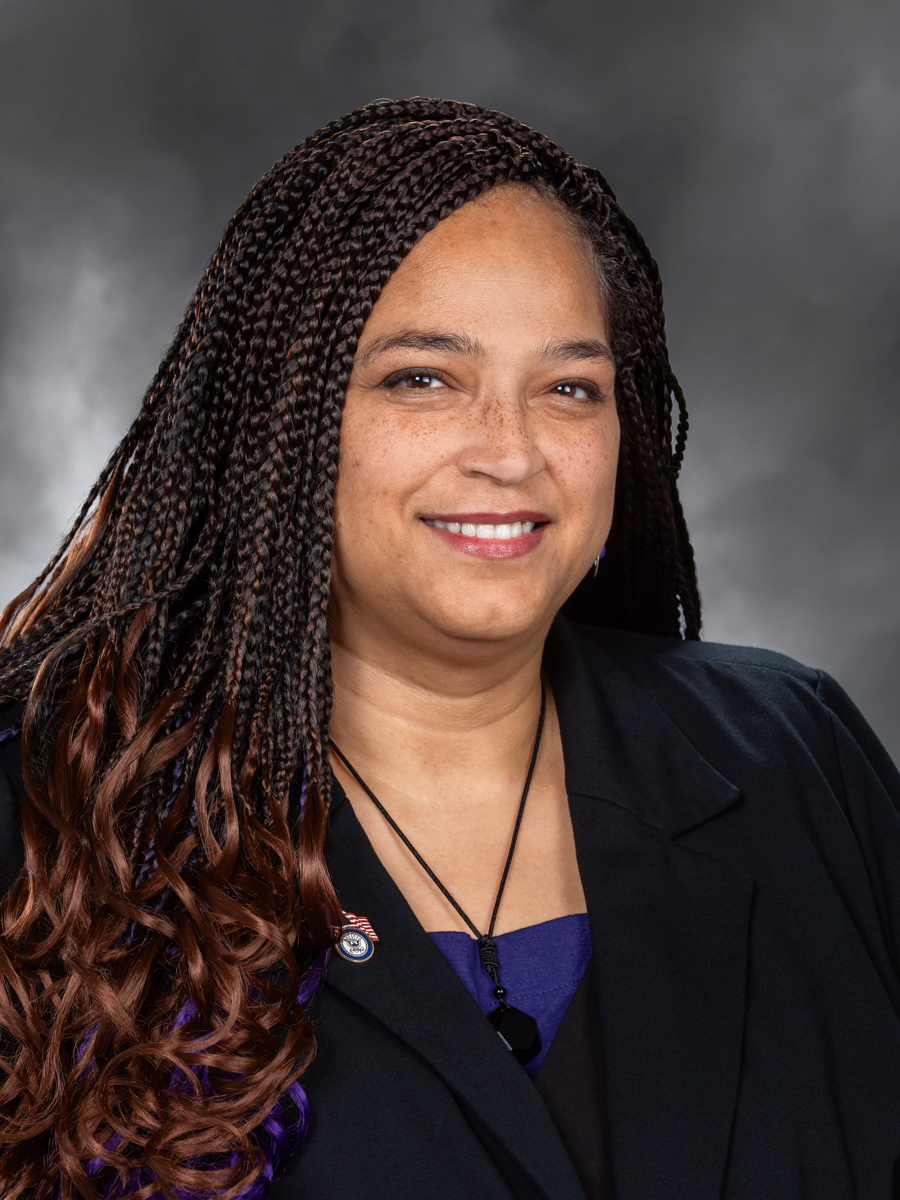
Rep. Brandy Donaghy
Sponsored bills
Maddy summaryHB 1312 changes how Washington state retirement benefits are handled when a retiree or beneficiary dies mid-month. Currently, if someone dies on the 25th of a 30-day month, their estate must repay five days of benefits already received that month. The bill requires the Department of Retirement Systems to pay benefits through the end of the death month (e.g., until the 30th), with survivor benefits starting the first day of the next month. This applies only to future cases starting January 1, 2026, and does not affect past repayments made before that date.
Maddy summaryHB 1423 authorizes cities in Washington State with populations of at least 2,000 to participate in a pilot program using automated vehicle noise enforcement cameras. These cameras would be deployed in designated "vehicle-racing camera enforcement zones" to detect vehicles exceeding maximum permissible sound levels. The Washington Traffic Safety Commission is tasked with overseeing this program and reporting on its implementation and findings to the legislature by January 2028. The section establishing this pilot program is set to expire in July 2028.
Maddy summaryHouse Bill 1394 modifies the requirements for how long hospitals in Washington State must retain medical records. It mandates that hospitals preserve all medical records for a minimum of 26 years from the date the record was created, replacing the prior 10-year retention period. This new rule applies to both existing records currently held by hospitals and all future medical records, allowing for retention in paper, electronic, or other formats. It also clarifies that all information from each unique patient visit is considered a medical record under this section.
Maddy summaryHB 2015 establishes a new grant program to improve public safety by providing direct financial support to local and tribal law enforcement agencies. These grants are intended to help agencies with hiring, retaining, and training law enforcement officers, as well as peer counselors and behavioral health personnel for co-response teams. To qualify for funding, agencies must meet specific requirements, including implementing state policies on use of force and de-escalation, participating in mandated trainings, and demonstrating compliance with data collection standards. Grant funds can cover up to 75 percent of entry-level salaries and benefits for new officers and support costs for required officer training.
Maddy summaryHB 1878, titled "Improving young driver safety," enacts new requirements for young adults obtaining their initial driver's license in Washington. Beginning in 2027 and phasing in by age, individuals under 22 years old will be required to complete a driver training education course before receiving their license. The bill also mandates that initial license applicants under 25 years old pass an online course on driver work zone and first responder safety from 2026 to 2031. Furthermore, it requires initial license holders under 25 who commit two moving violations to complete a safe driving course, with license suspension as a consequence for not doing so.
Maddy summaryHB 1418 modifies the governing bodies of public transportation benefit areas (PTBAs) by adding two new voting members who are transit users. This increases the maximum number of voting members for single-county PTBAs to 11 and for multi-county PTBAs to 17. One new member must primarily rely on public transportation, while the other must represent a community-based organization and occasionally use transit. This aims to include the perspectives of transit riders in the governance of public transportation systems, and meetings must be accessible by transit to facilitate their participation.
Maddy summaryHouse Bill 1023 adopts the Cosmetology Licensure Compact, creating a new multistate licensing program for cosmetologists. This compact allows licensed cosmetologists to practice in any participating member state with a single license issued by their home state, aiming to reduce licensing burdens and enhance mobility for professionals, including military spouses. It establishes a commission to set uniform requirements and facilitate cooperation among states for licensure, investigations, and discipline. The bill's purpose is to improve public access to, and safety of, cosmetology services while addressing workforce shortages. Washington State's adoption of this compact will become effective on June 1, 2028.
Maddy summaryHB 1395 streamlines the background check process for home care workers, long-term care providers, and others working with vulnerable adults and children in Washington state. It prevents the Department of Social and Health Services (DSHS) from automatically disqualifying individuals for certain past criminal convictions, such as specific theft or assault charges, once a specified number of years have passed. However, DSHS or authorized entities can still consider these convictions during a "character, competence, and suitability review," and clients must be informed of an approved provider's background check results before services begin. The bill also allows some providers to work for up to 30 days while their review is pending, with client notification, and limits when new suitability reviews are required for previously cleared non-disqualifying issues.
Maddy summaryHouse Bill 1970 modifies the procedures for state highway construction projects, primarily affecting the Washington State Department of Transportation (WSDOT). The bill exempts WSDOT from needing to obtain certification or project-specific approval from a committee when using alternative contracting methods like "design-build" or "general contractor/construction manager." Additionally, it removes a previous monetary threshold for competitively bid highway construction contracts that may be constructed using a design-build procedure. These changes aim to streamline WSDOT's ability to utilize these alternative procurement methods for infrastructure projects.