

Maddy summaryHB 1404 expands access to free school meals in Washington state by removing income-based eligibility requirements. It mandates that all public school students who request a meal receive it at no cost, regardless of family income, to address food insecurity and support academic success. The bill amends several education funding statutes (including RCW 28A.235.135 and 28A.235.160) to align meal access with this new policy. It directly affects every public school student in Washington, ensuring no child experiences hunger during the school day. The policy change replaces previous tiered eligibility systems with universal free meals for all requesting students.
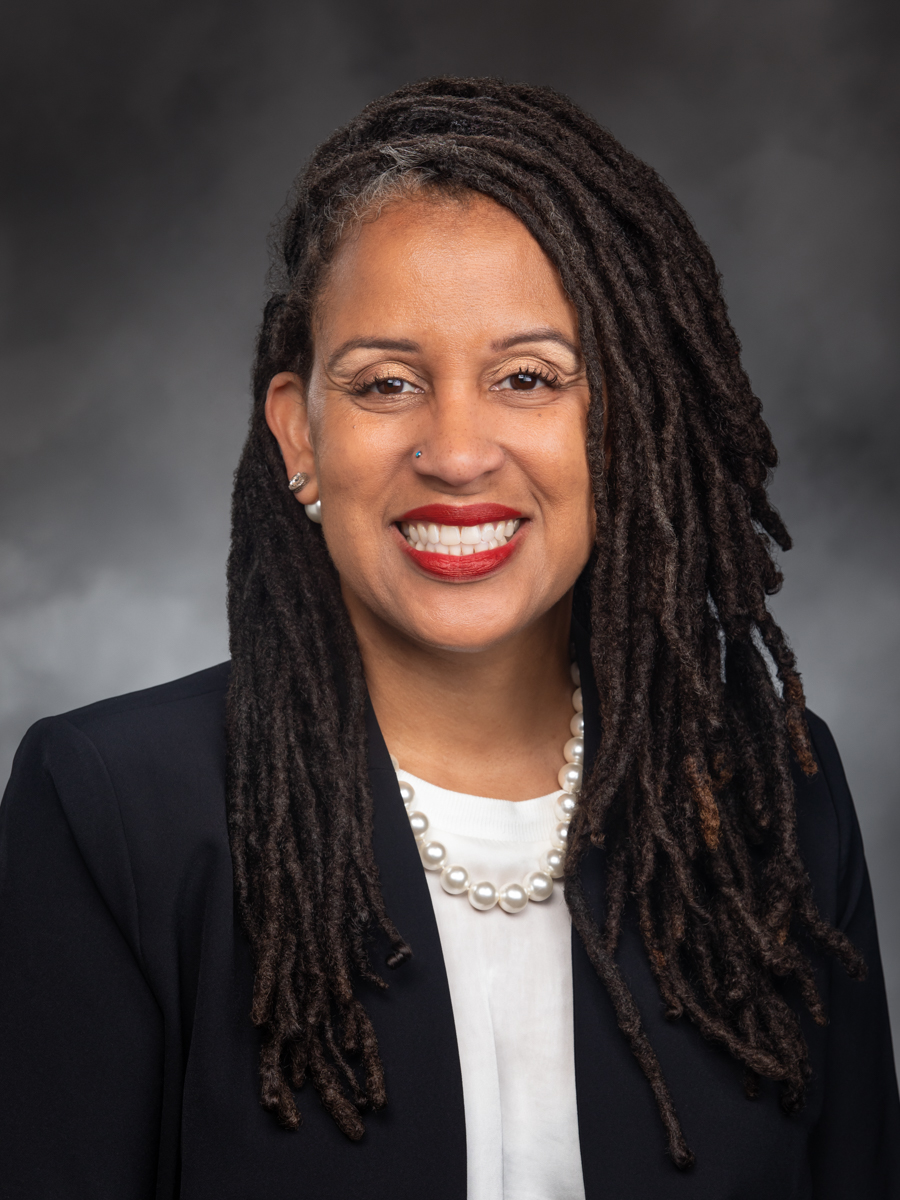
Rep. April Berg
Sponsored bills
Maddy summaryHB 1071 aims to increase Washington's recycling rate to 65% for packaging by requiring producers to use more recycled content in their products and establishing a single statewide list of accepted recyclable materials to reduce confusion. It mandates a state-specific needs assessment to identify funding and infrastructure needs, addresses contamination in recycling streams, and expands recycled content requirements for packaging and paper products. The bill directly affects manufacturers (producers) of packaging and paper goods, as well as local governments managing curbside recycling programs. Key provisions include standardizing what can be recycled across the state, studying non-recyclable packaging labels, and ensuring equal access to affordable recycling services. The legislation builds on Washington's existing recycling infrastructure while targeting greenhouse gas reductions in the solid waste sector.
Maddy summaryHB 1356 adjusts Washington state's K-12 school funding by updating local enrichment levy limits and creating a state matching program. It sets new per-pupil funding caps ($2,500 for districts under 40,000 students, $3,000 for larger districts) through 2030, adjusted annually for inflation plus a temporary 3.33% annual increase (2027-2030), then raises the cap to $5,035 starting in 2031. The bill requires school districts to get approval for how they spend local levy funds before voting on them and links state funding to local effort - matching districts that raise less than $1.50 per $1,000 in property value. This directly affects all public school districts and state-tribal education compact schools by changing how local taxes and state funds combine to support school programs.
Maddy summaryThis bill establishes new reimbursement rules for health insurers covering Washington public employees' health plans. Starting in 2027, insurers must pay at least 150% of Medicare rates for primary care and behavioral health services, while capping payments at 200% of Medicare for most hospital services (350% for children's specialty hospitals). Rural hospitals and critical access facilities must receive minimum payments of 101% of Medicare costs. These requirements specifically apply to insurers serving public employees, not general health coverage.
Maddy summaryHB 1059 strengthens oversight of self-insured employers and their third-party administrators in Washington State by requiring them to act in good faith when handling workers' compensation claims. It creates a new rule that allows the state director to withdraw a self-insurer's certification after three proven violations of good faith within three years (e.g., coercing workers to accept less compensation or hiding injury reports). Employers found violating this duty must pay penalties ranging from 1 to 52 times the worker’s average weekly wage, with investigations triggered by written complaints. The law applies to all workers’ compensation claims regardless of injury date and takes effect January 1, 2026.
Maddy summaryHB 1153 creates a framework for cities to use "tree banks" that allow developers to remove trees in one area if they plant or pay to add trees elsewhere in neighborhoods needing greater canopy coverage - such as those facing environmental inequality, urban heat islands, or areas critical for salmon/orca recovery. It requires the Department of Natural Resources to develop voluntary model regulations for local governments, emphasizing the protection of "vital trees" first while enabling housing development. The bill amends state law to define key terms like "tree bank," "highly impacted community," and "urban forest," ensuring local rules balance tree preservation with housing needs. It does not mandate adoption of the model rules, leaving implementation decisions to individual cities and counties.
Maddy summaryHB 1588 creates a state action plan to help Washington farmers transition to organic and regenerative farming by identifying certification barriers, expanding markets, and supporting job creation - especially for youth and underrepresented communities. It also establishes a $25,000 microgrant program for farmers using climate-smart practices (like cover cropping or soil health improvements), prioritizing projects in overburdened communities and those measuring environmental benefits like carbon sequestration. The action plan must be submitted by June 2027, and the microgrants program expires June 2028. These provisions directly affect agricultural producers, processors, and distributors seeking to adopt sustainable practices while addressing certification costs and infrastructure gaps.
Maddy summaryHB 1058 creates tax credits for eligible railroads to fund infrastructure improvements. It directly affects small regional railroads (class II/III), public entities like ports/cities, and industrial property owners with rail spurs in Washington. The bill provides a 50% tax credit on qualified expenses for maintenance, new rail development, or modernization projects (e.g., track upgrades, bridges, safety equipment), with annual limits of $500,000 per taxpayer and a total $8 million statewide cap. Credits can be carried forward for up to five years or transferred to other eligible taxpayers.
Maddy summaryHB 1603 requires insurers to offer Medicare supplemental (Medigap) coverage without health-based denial to Washington residents who voluntarily leave a Medicare Advantage plan (Part C) and switch to Original Medicare (Parts A and B). The bill mandates that eligible individuals - specifically those who disenroll from Medicare Advantage and enroll in Parts A/B - must be guaranteed access to a Medigap plan within 63 days of disenrollment, provided they submit proof of termination. This applies to all insurers offering Medigap plans to new enrollees, prohibiting discrimination based on health status or preexisting conditions during this transition window. The policy directly affects seniors switching from Medicare Advantage to Original Medicare, ensuring they can maintain supplemental coverage without barriers. The bill amends Washington’s RCW 48.66.055 to codify this "guaranteed issue" requirement under subsection (3)(b)(E).
Maddy summaryHB 2046 imposes a tax of $8 for every $1,000 in market value on Washington residents' financial intangible assets (like stocks, bonds, and mutual funds) exceeding $50 million in value. It exempts assets such as private company ownership, pensions, retirement accounts, and the first $50 million of holdings. Revenue from this tax will fund K-12 schools, early learning programs, child care, and higher education through the Education Legacy Trust Account. The bill targets high-value financial investments held by residents while excluding common retirement and private business assets.