

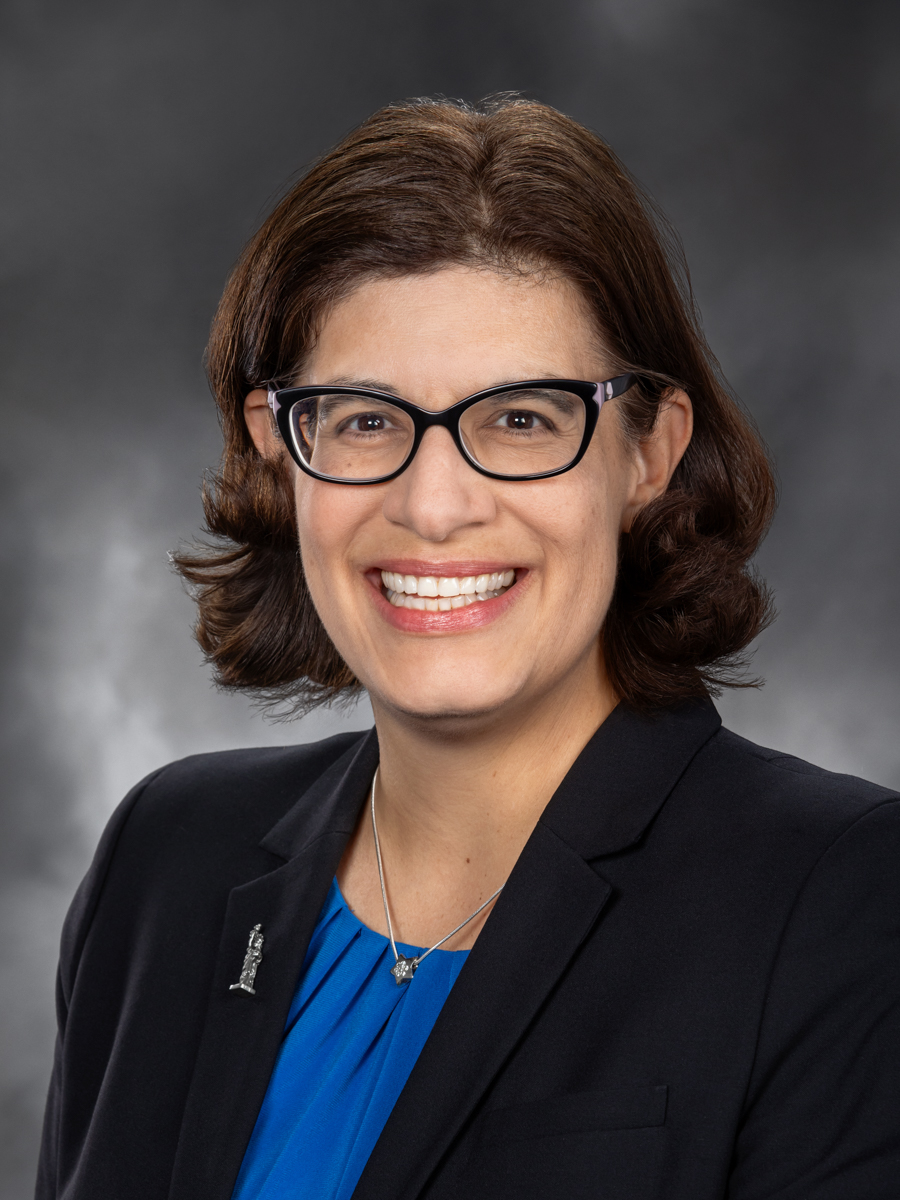
Maddy summaryHB 2254 proposes changes to how mental health program costs are funded in Washington State. It requires health carriers, self-funded health plans, and employers to pay a proportional share of administrative costs for partnership access lines and psychiatric consultation services based on their share of insured residents served by these programs. The bill allows third-party administrators' reasonable costs to be included in the assessment, but excludes the Health Care Authority's own administrative expenses. This would shift some funding responsibility from state budgets to covered health entities while maintaining state funding for programs under Chapter 74.09 RCW.
Rep. Nicole Macri
Sponsored bills
Maddy summaryHB 2317 amends Washington State's early learning program licensing rules by adding "outdoor nature-based child care" as a defined program type, requiring such programs to operate in approved outdoor spaces for at least four hours daily and follow a nature-based curriculum. It expands the definition of "early learning" to explicitly include services like preschool, child care subsidies, parent education, and nature-based programs. The bill clarifies exemptions for certain providers, including seasonal camps, military-affiliated programs, and nature-based programs meeting specific criteria, removing them from full licensing requirements. These changes directly affect child care centers, family providers, and early learning programs operating under state oversight.
Maddy summaryHB 2479 streamlines the process for workers to recover unpaid wages in Washington State. It requires the Department of Labor to investigate wage complaints within 60 days (extendable with notice), limits claims to unpaid wages from the past three years, and mandates employers to pay owed wages plus 1% monthly interest. For willful violations, employers face fines of at least $1,500 or 10% of unpaid wages (adjusted for inflation starting 2030), with penalties deposited into a new "wage recovery account." The bill directly affects workers who haven’t received pay and employers who owe wages, while giving the department expanded authority to investigate multiple violations under a single complaint.
Maddy summaryThis bill is a House resolution that formally recognizes Representative Virginia "Jenny" Graham for her public service in the Washington State House of Representatives. It highlights her eight-year tenure, her advocacy for public safety, and her work on community safety and veterans' issues. The resolution does not create new laws or policies but serves as an official acknowledgment of her contributions and legacy.
Maddy summaryThis bill is a House resolution that formally honors John Michael Sattgast for his 35 years of dedicated service as a communications professional for the House Republican Caucus in the Washington State Legislature. It recognizes his work producing over 4,000 radio stories and coordinating media coverage for state representatives, as well as his leadership roles with the National Conference of State Legislatures. The resolution acknowledges his contributions to sharing legislative history and public information, noting his receipt of the 2023 Legislative Staff Achievement Award. This measure serves as a commemorative tribute rather than establishing new policy or affecting government operations.
Maddy summaryThis bill formally acknowledges the service of Representative Steve Tharinger to his district and the Washington state legislature. It recognizes his long career in public service, including his time as a Clallam County Commissioner, his work on the House Capital Budget Committee, and his advocacy for environmental protection and healthcare. The resolution serves as a commemorative tribute to his contributions and personal qualities rather than establishing new laws or policies.
Maddy summaryHB 2464 requires private detention facilities operating under government contracts to meet specific standards for food services, staff training, and infection control, while mandating timely reporting of serious incidents like abuse, death, or injuries to health and law enforcement. Facilities must provide balanced meals with dietary oversight, maintain safety protocols, and post clear policies on detained persons' rights. Starting November 2026, law enforcement agencies must annually report to the health department on how they responded to facility incidents, including whether victims received police reports or prosecutions occurred. The bill directly affects private detention facilities with government contracts, aiming to improve oversight and accountability in their operations.
Maddy summaryHB 2515 requires data centers with 20+ megawatt demand - defined as "emerging large energy use facilities" - to transition to 100% clean energy over time and publicly disclose their electricity, water, and refrigerant usage. The bill aims to protect energy affordability, grid reliability, and environmental health by mandating transparency and clean energy standards for these rapidly growing facilities. It amends existing energy laws to establish new definitions and oversight for data centers, which are projected to become the largest source of electricity demand growth in the Pacific Northwest. The policy applies directly to data center operators, with requirements phased in to align with industry innovation while safeguarding public interests.
Maddy summaryHB 2637 expands exemptions under Washington state law to protect specific sensitive personal information from public disclosure. It directly affects students, healthcare patients, taxpayers, and individuals using public services by exempting data like student records, medical information, financial details (e.g., credit card numbers), geolocation data, driver's license records, and utility account information. Key provisions clarify that agencies cannot release this information unless required by other law, with limited exceptions for emergencies or legal mandates. The bill updates existing privacy protections to cover new data types, such as precise location coordinates and consumer utility data, while maintaining transparency requirements for certain disclosures like total license plate numbers.
Maddy summaryHB 1175 requires cities in Washington to permit neighborhood stores (like mini-markets selling food, drinks, or household items) and neighborhood cafés (with at least 500 square feet) in residential zones, provided cafés serve food if they offer alcohol. Cities may still regulate parking (if feasible), operating hours (cafés must operate at least 12 consecutive hours), and maximum building size. The bill applies to all cities and code cities, mandating implementation by 2027 for cities updating comprehensive plans or within two years for others. It directly affects small business owners seeking to operate in residential areas and local governments managing zoning rules.