

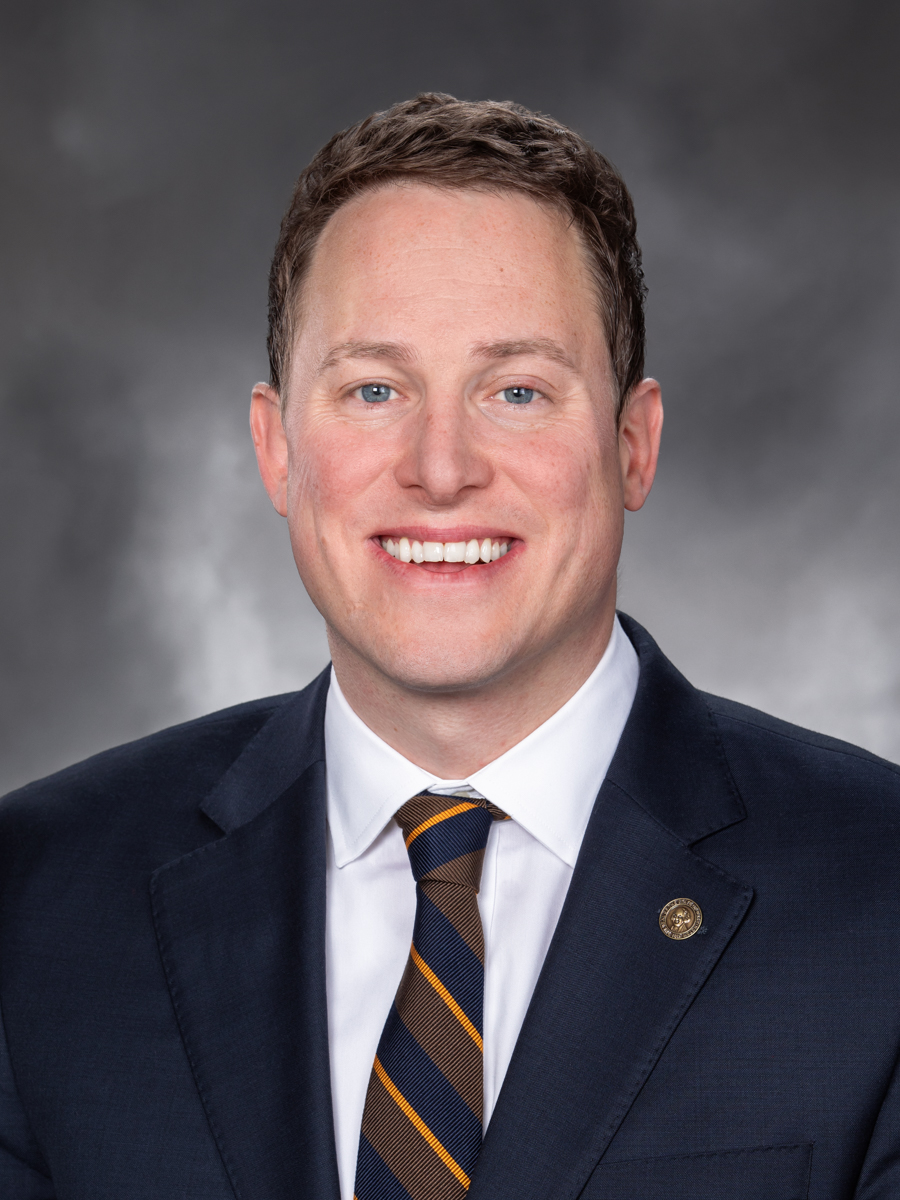
Photo of Joe Timmons
D Washington House · District 42 On the 2026 ballot

Rep. Joe Timmons

Compare
Total votes
2,532
all sessions
Attendance
100%
1 missed
Higher than 81% of chamber peers
With party
90%
of cast votes
Lower than 95% of chamber peers
Bipartisan score
5%
crosses aisle rarely
Higher than 93% of chamber peers
Sponsored
328
bills & resolutions
Near the chamber average
Committees
4
assignments
328 bills and resolutions

Sponsored bills

Total
328
Primary
32
Co-sponsor
296
This page
328
matching current filters
Co-sponsor HR 4714
Passed · Washington House · Co-sponsor
Honoring Representative Graham.

Maddy summaryThis bill is a House resolution that formally recognizes Representative Virginia "Jenny" Graham for her public service in the Washington State House of Representatives. It highlights her eight-year tenure, her advocacy for public safety, and her work on community safety and veterans' issues. The resolution does not create new laws or policies but serves as an official acknowledgment of her contributions and legacy.

Passed Mar 12, 2026 1 co-sponsor
Co-sponsor HR 4713
Passed · Washington House · Co-sponsor
Honoring John Michael Sattgast.

Maddy summaryThis bill is a House resolution that formally honors John Michael Sattgast for his 35 years of dedicated service as a communications professional for the House Republican Caucus in the Washington State Legislature. It recognizes his work producing over 4,000 radio stories and coordinating media coverage for state representatives, as well as his leadership roles with the National Conference of State Legislatures. The resolution acknowledges his contributions to sharing legislative history and public information, noting his receipt of the 2023 Legislative Staff Achievement Award. This measure serves as a commemorative tribute rather than establishing new policy or affecting government operations.

Passed Mar 12, 2026 1 co-sponsor
Co-sponsor HR 4715
Passed · Washington House · Co-sponsor
Honoring Representative Tharinger.

Maddy summaryThis bill formally acknowledges the service of Representative Steve Tharinger to his district and the Washington state legislature. It recognizes his long career in public service, including his time as a Clallam County Commissioner, his work on the House Capital Budget Committee, and his advocacy for environmental protection and healthcare. The resolution serves as a commemorative tribute to his contributions and personal qualities rather than establishing new laws or policies.

Passed Mar 12, 2026 1 co-sponsor
Co-sponsor HB 1002
Passed · Washington House · Co-sponsor
Recognizing posttraumatic stress disorder as an occupational disease for county coroners, examiners, and investigative personnel.

Maddy summaryHB 1002 recognizes posttraumatic stress disorder (PTSD) as an occupational disease for county coroners, medical examiner personnel, and investigative staff in Washington State. It amends workers' compensation rules (RCW 51.08.142) to allow these workers to file claims for PTSD-related injuries, which were previously excluded. The bill requires pre-employment psychological exams for some groups (like firefighters and law enforcement) hired after specific dates to confirm no preexisting PTSD. This change directly affects public safety workers in high-stress roles who develop PTSD from job-related trauma, expanding their eligibility for workers' compensation coverage.

Passed Mar 12, 2026 1 co-sponsor
Co-sponsor HB 1073
Passed · Washington House · Co-sponsor
Keeping our Washington national guard strong act.

Maddy summaryHB 1073 creates the Washington National Guard Retention Program to help the state retain military personnel. It directs the Adjutant General to study retention needs - such as length of service and critical skills - and determine reenlistment bonuses to encourage members to extend their service. The program requires clear eligibility criteria and bonus payment schedules, with the state military department mandated to report on retention needs to the governor and legislature every three years starting in 2027. The bill directly affects Washington National Guard members who may qualify for reenlistment bonuses.

Passed Mar 12, 2026 1 co-sponsor
Co-sponsor HB 2554
Signed into law · Washington House · Co-sponsor
Recognizing judicially affirmed and treaty-reserved fishing rights and promoting state-tribal cooperative agreements in the management of salmon, trout, and steelhead resources.

Maddy summaryHB 2554 repeals five sections of Washington State law (RCW 77.110.010-040 and 900) that conflicted with judicially confirmed tribal fishing rights and existing state-tribal cooperative agreements. The bill directly affects tribal nations and state fisheries management by removing outdated legal barriers. It eliminates provisions that declared state policy on fish management, denied rights based on cultural heritage, and required congressional transmittal, aligning state law with treaty obligations and current cooperative agreements for salmon, trout, and steelhead resources.

Signed into law Mar 11, 2026 1 co-sponsor
Co-sponsor HB 2472
Signed into law · Washington House · Co-sponsor
Ensuring that work on fire protection sprinkler systems is performed by licensed contractors and certified fitters.

Maddy summaryHB 2472 requires all contractors and certified fitters working on fire sprinkler systems in Washington to hold state-issued licenses and certificates. Fire code officials can demand to see these credentials during inspections, and failure to provide them results in an immediate stop-work order until compliance is verified. The law also empowers officials to order removal and replacement of improperly installed systems if public safety is at risk. These requirements apply directly to contractors and fitters performing fire sprinkler work across the state.

Signed into law Mar 11, 2026 1 co-sponsor
Co-sponsor HB 2088
Signed into law · Washington House · Co-sponsor
Concerning the dietitian licensure compact.

Maddy summaryHB 2088 creates a multi-state licensure compact for dietitians, allowing licensed professionals to practice across participating states without obtaining separate licenses in each location. The bill establishes a "compact privilege" that recognizes a dietitian's home-state license as valid in other member states, eliminating the need for duplicate licensing. It directly affects licensed dietitians (especially those relocating, including military members and spouses), patients seeking care across state lines, and participating states' regulatory systems. Key mechanisms include standardized requirements for practice, shared data systems for disciplinary information, and provisions to protect public health while reducing administrative burdens on both professionals and states.

Signed into law Mar 11, 2026 1 co-sponsor
Co-sponsor HB 2606
Signed into law · Washington House · Co-sponsor
Concerning performance measures, duties, and reporting requirements for the office of privacy and data protection.

Maddy summaryHB 2606 creates an Office of Privacy and Data Protection within Washington State's government to centralize data privacy oversight. It requires the office to conduct annual privacy reviews and training for state agencies, develop privacy best practices, coordinate data protection efforts (including for AI projects), and serve as a resource for local governments and the public on data privacy. The bill mandates that the office submit detailed performance reports to the legislature every four years, tracking metrics like training participation, public contacts, privacy assessments completed, and coordination with privacy experts. These reports must demonstrate progress on improving privacy policies and practices across state agencies and local governments.

Signed into law Mar 9, 2026 1 co-sponsor
Co-sponsor HB 1859
Signed into law · Washington House · Co-sponsor
Expanding opportunities for affordable housing developments on properties owned by religious organizations.

Maddy summaryHB 1859 allows Washington religious organizations to develop affordable housing on their properties with increased density allowances. To qualify, at least 50% of units must be permanently affordable for low-income households (earning at or below 80% of local median income) for 50 years, with no discrimination based on protected characteristics. Religious organizations must cover all development fees and costs, and local governments must approve such projects if requested. This applies to new construction and rehab projects on religiously owned land, amending zoning laws to support affordable housing expansion.

Signed into law Mar 9, 2026 1 co-sponsor
Showing 11 to 20 of 328 bills