

Maddy summaryHB 1710 requires certain local governments (designated as "covered jurisdictions" due to documented voting rights issues) to obtain pre-approval before implementing specific voting changes. These changes include altering election methods, redrawing district boundaries, restricting language access for voters, or modifying early voting sites. Before any such "covered practice" takes effect, the local government must either seek a court declaration or get certification from the Attorney General that the change won’t diminish minority voting access. This applies to jurisdictions with a history of voting discrimination or current disparities in voter registration, participation, or other metrics affecting protected groups. The bill aims to enforce compliance with Washington’s Voting Rights Act of 2018 by adding a pre-clearance step for high-impact voting decisions.
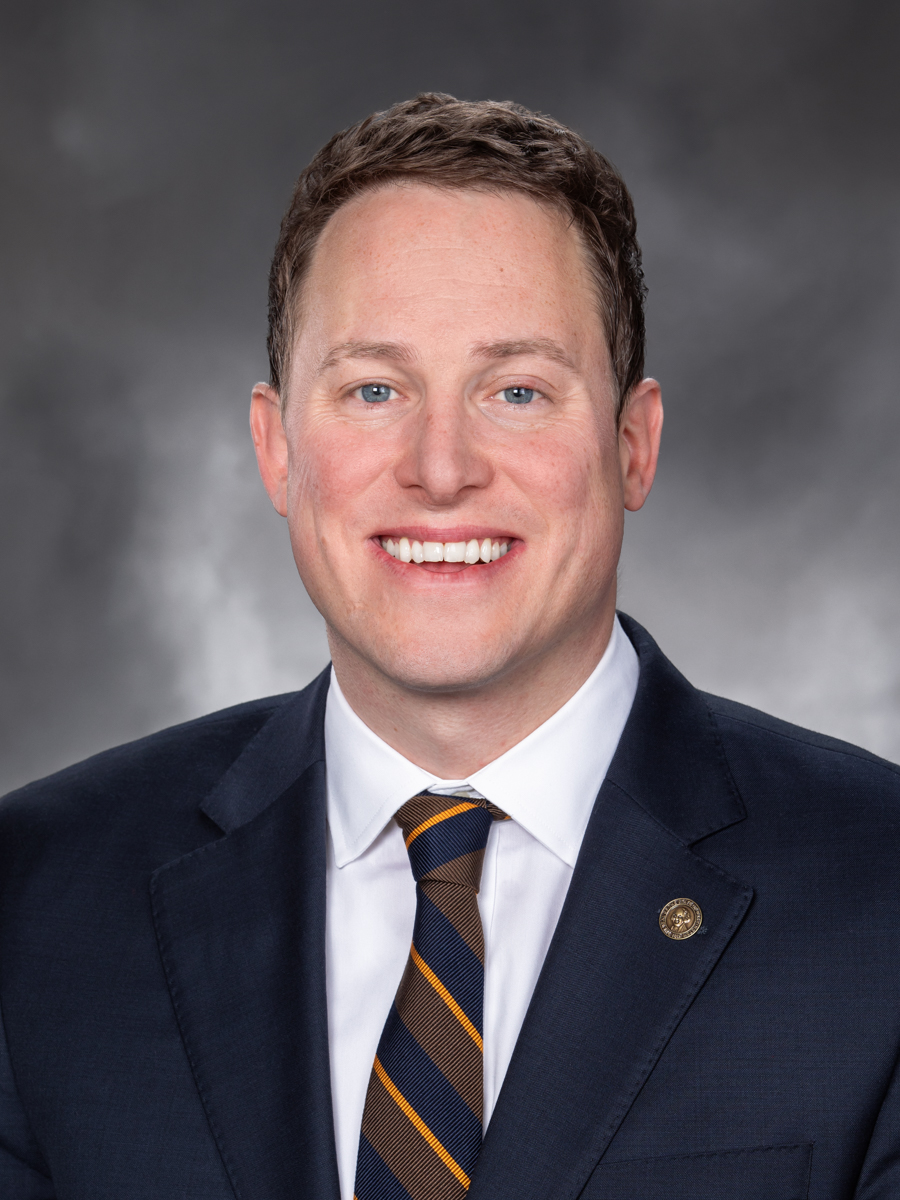
Rep. Joe Timmons
Sponsored bills
Maddy summaryHB 2532 makes it a gross misdemeanor to sell, distribute, or give away nitrous oxide in containers like canisters or tanks (including flavored versions), except for specific exempt uses. The law specifically targets recreational nitrous oxide sales by criminalizing these transactions, with penalties including up to 364 days in jail. Key exemptions include licensed medical, dental, or veterinary use; nitrous oxide used as a food propellant; and industrial or automotive applications. The bill does not ban nitrous oxide itself but regulates its sale in consumer containers for non-exempt purposes.
Maddy summaryHB 2588 updates Washington's rules for county-operated ferry districts. It clarifies that districts may operate passenger-only ferry services, adjusts property tax limits for funding (capping most districts at $0.75 per $1,000 assessed value, with lower limits for large-county districts), and allows districts to issue bonds for ferry infrastructure using these tax revenues. The bill also revises a 10-mile restriction rule for new ferry routes near state-operated crossings, requiring the state ferry commission to grant waivers for private operators under specific conditions. These changes directly affect county ferry districts and the coordination between county and state ferry systems.
Maddy summaryHB 1069 amends Washington state law to allow collective bargaining between public employers and employee organizations regarding contributions for certain supplemental retirement benefits. Currently, state law prevents bargaining over retirement plans and benefits administered by the Department of Retirement Systems. This bill clarifies that employers can now negotiate over contributions for additional retirement benefits, including medical plans, as long as these benefits are administered by or on behalf of an employee organization. This change enables discussions over these specific benefit contributions, while still excluding the core state retirement plans from collective bargaining.
Maddy summaryHB 2192 updates Washington's Traffic Safety Commission to more systematically identify risk factors causing roadway fatalities. It establishes a new "fatality review committee" of traffic safety experts to analyze collisions resulting in death or serious injury, including those involving bicyclists, pedestrians, and motorists. The bill amends the Commission's purpose to focus explicitly on identifying these risk factors and coordinating statewide safety programs. This change directly affects the Commission's operations and how collision data is reviewed to inform future safety initiatives.
Maddy summaryHB 1302 allows local governments that operate municipal utilities to waive connection charges for public or private organizations utilizing industrial symbiosis. Industrial symbiosis involves collaboration among businesses to exchange materials, energy, and byproducts to optimize resource use and enhance environmental and economic outcomes. This bill aims to encourage the development and use of sustainable technologies and promote resiliency. It specifies that waived charges must be funded through general funds, grants, or other revenue streams, and maintains existing provisions for waiving charges for affordable housing providers.
Maddy summaryHB 1128 creates a Washington state Child Care Workforce Standards Board to set minimum compensation and employment standards for child care workers. The board, composed of nine members including worker representatives (from family child care, center workers, and school-age programs), employer representatives, parent advocates, and state agency officials, will address low pay and poor working conditions that contribute to workforce instability. It requires the board to hold public hearings, establish standards with a six-member vote, and protect workers from retaliation for participating in the process. The law aims to improve child care quality and affordability by ensuring fair compensation and stable employment for workers directly serving children.
Maddy summaryHB 1570 grants collective bargaining rights to student employees (those enrolled in academic or certificate programs) at Central Washington University, Eastern Washington University, Western Washington University, and The Evergreen State College. It defines specific bargaining topics, including tuition remission and waivers, while excluding issues like academic calendars, tuition amounts, student admissions, and termination based on academic performance. Compensation agreements must align with legislative budget limits, though institutions may offer additional pay beyond these limits. The bill applies only to employees not already covered by other collective bargaining laws at these institutions.
Maddy summaryHouse Bill 1980 allows certain private employer transportation services to use designated public transportation facilities, directly affecting employers who provide employee shuttles and the authorities managing these routes. It permits private employer transportation service vehicles, defined as marked, regularly scheduled employee shuttles with capacity for eight or more passengers, to use reserved limited access facilities (like HOV lanes) if their use does not interfere with public transit efficiency. In counties with over two million people, local authorities may also issue fee-for-use permits for these private services to use specific transit-only lanes that allow access to abutting businesses, with approval from public transportation providers. These permits require adherence to operational performance standards to ensure public transit efficiency, and generated revenues cover administrative costs and lane maintenance.
Maddy summaryHB 2467 updates Washington State's vehicle length limits to specifically address fifth-wheel travel trailers used for recreation. It sets two key length limits for these trailers (hitched to pickup trucks): 38 feet for single-axle models and 40 feet for multi-axle models, measured from the kingpin to the rearmost axle. The bill directly affects recreational vehicle owners who use fifth-wheel trailers, replacing a previous general 46-foot limit for "travel trailer" under the same section. These changes clarify permissible sizes for this common type of travel trailer on state highways.