

Maddy summaryHouse Bill 1068 removes the exclusion of Washington management service employees at the Department of Corrections from interest arbitration. This change grants these employees access to an alternative process for resolving disputes over their collective bargaining agreements. If negotiations and mediation fail to reach an agreement, an independent arbitrator will be appointed to make a binding decision on the terms of their employment. The arbitrator's decision will consider factors such as the department's financial ability, comparable wages, and the ability to retain employees.
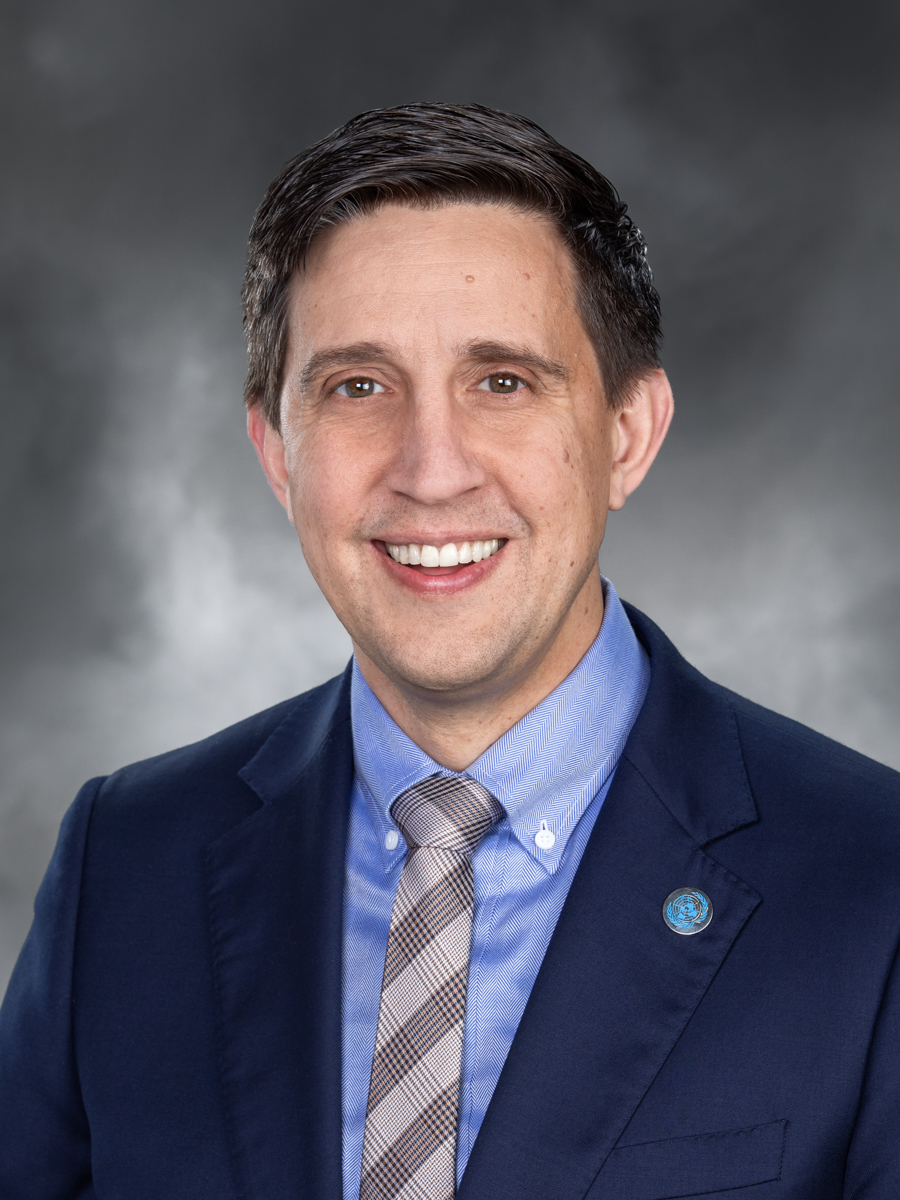
Rep. Alex Ramel
Sponsored bills
Maddy summaryEngrossed Substitute House Bill 1875 expands the reasons for which employees in Washington state can use their accrued paid sick leave. It allows employees to use this leave to prepare for or participate in judicial or administrative immigration proceedings for themselves or a family member. For absences exceeding three days for this purpose, employees can provide verification through documentation from an immigration advocate, attorney, or clergy, or a written statement from the employee, without disclosing sensitive immigration status details. The bill ensures that employees can attend these proceedings without losing pay.
Maddy summaryHB 1971 requires health plans to provide reimbursement for a 12-month refill of covered prescription hormone therapy, obtained at one time, for their enrollees. This aims to increase access to these medications for patients of all ages. Starting January 1, 2026, health plans must comply, unless the enrollee requests a smaller supply, the provider instructs a smaller supply, or the therapy is a controlled substance. The 12-month supply applies to medications that can be safely stored at room temperature, while controlled substances must be covered for the maximum refill allowed by law. Prescription hormone therapy is defined as FDA-approved drugs that medically adjust hormone levels, excluding certain glucagon-like peptide-1 medications.
Maddy summaryHouse Bill 1494 modifies existing property tax exemptions for new and rehabilitated multiple-unit dwellings in urban centers. The bill clarifies definitions related to "affordable housing" and the population requirements for cities to qualify for these exemptions. A key provision expands the definition of "rehabilitation improvements" to include modifications to occupied buildings that increase the number of multi-family housing units. These changes do not extend the duration of the exemptions or expand them to include conversions of market-rate buildings to affordable housing. The bill primarily affects property owners, developers, and residents involved with multi-unit housing projects in designated urban areas.
Maddy summaryHB 1791 aims to increase the flexibility of existing funding sources for public safety and other facilities by modifying the local real estate excise tax. The bill amends provisions within the real estate excise tax law, specifically updating language related to the definition of a "sale." These updates include minor textual changes to timeframes, such as how "controlling interest" transfers are determined over a 36-month period and the 60-day period for tax payment on certain property transfers. This legislation primarily affects local governments and entities involved in real estate transactions subject to this tax.
Maddy summaryHouse Resolution 4664 is a commemorative bill that honors the life and legacy of former Speaker Frank Chopp. It recognizes his extensive public service, advocacy for social justice and housing, and his record as the longest-serving Speaker in Washington state history.
Maddy summaryHB 1141 grants agricultural workers involved in cultivating, growing, harvesting, or producing cannabis the right to collective bargaining. It places these workers and their employers under the jurisdiction of the Public Employment Relations Commission (PERC). PERC will oversee the process for employees to organize, elect bargaining representatives, and engage in good faith negotiations with employers on wages, hours, and working conditions. The bill also defines and prohibits unfair labor practices by employers related to these organizing rights.
Maddy summaryThis bill modifies Washington's covenant homeownership program, which provides down payment and closing cost assistance to eligible first-time homebuyers from historically marginalized communities. It raises the household income eligibility threshold for participants from 100% to 140% of the area median income. The bill also introduces a provision allowing for full loan forgiveness after five years for participants whose household income is at or below 80% of the area median income at the time of the loan. Additionally, it adjusts the membership of the program's oversight committee.
Maddy summaryHouse Bill 1531 establishes a state policy that public health responses to communicable diseases must be guided by the best available science and evidence-based measures, including immunizations and vaccines. It requires state and local health officials to implement and promote these measures within available resources. The bill also prohibits the state or any local government from enacting laws or policies that forbid the implementation and promotion of such measures, declaring any existing prohibitive policies null and void. This legislation clarifies the ability of public health officials to use scientifically proven methods to control disease spread, without creating new requirements for individuals to receive vaccines.
Maddy summaryHB 1540 expands eligibility for the "students experiencing homelessness and foster youth program" to include accredited public tribal colleges in Washington. This program, previously available only at public four-year institutions, provides assistance to students experiencing homelessness and those who were in the foster care system when they graduated high school. Support services can include access to laundry, storage, reduced-price meals, technology, housing assistance, and case management. Participating institutions are also enabled to develop affordable housing from surplus property and are required to submit annual reports to the legislature on the program's impact.